
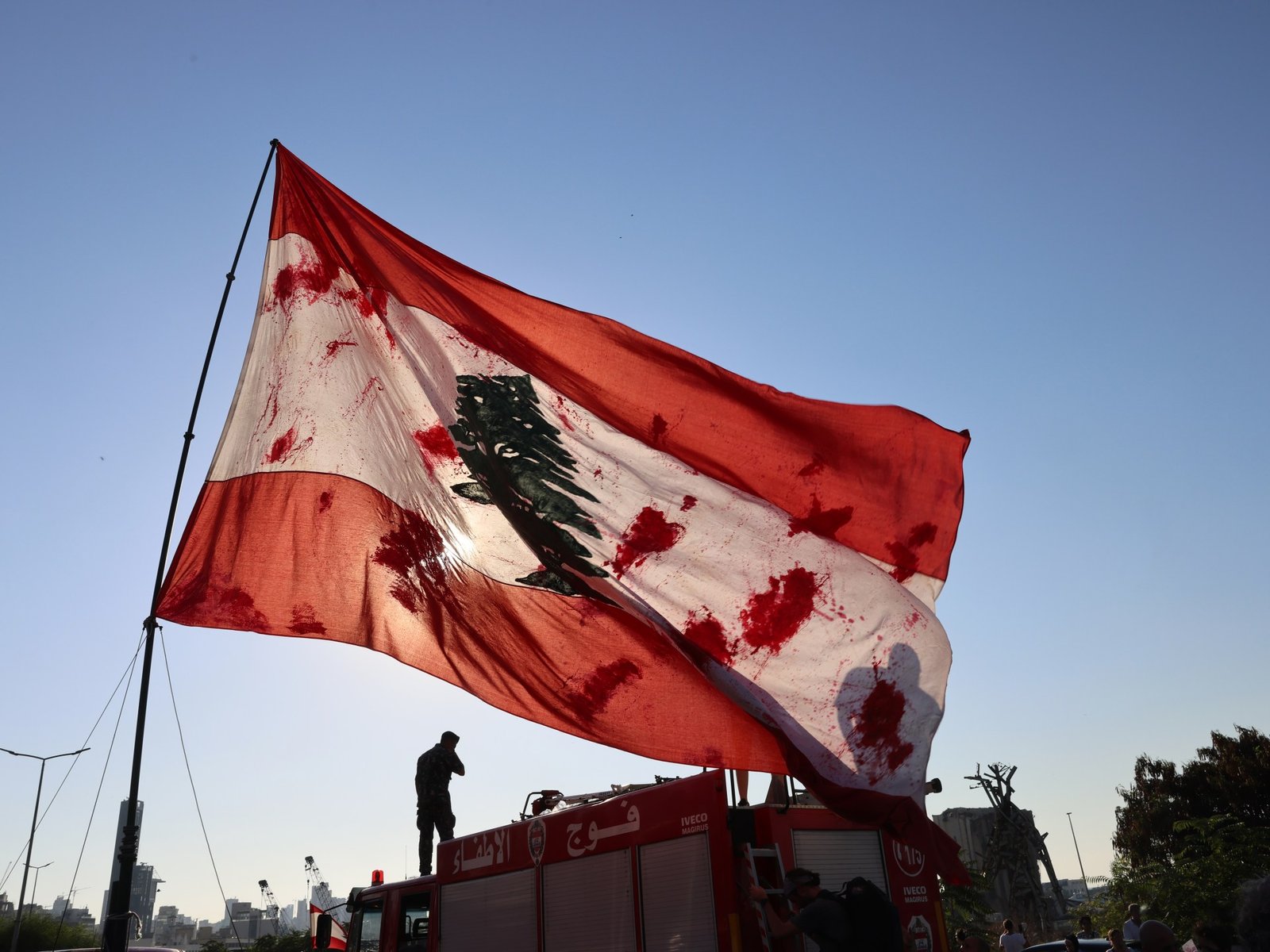
The investigation was derailed by political interference, but a new government is trying to get justice back on track.
When 2,750 tonnes of ammonium nitrate exploded in Beirut’s port on August 4, 2020, it ripped through the city, killing more than 218 people. Among them was three-year-old Alexandra Naggear.
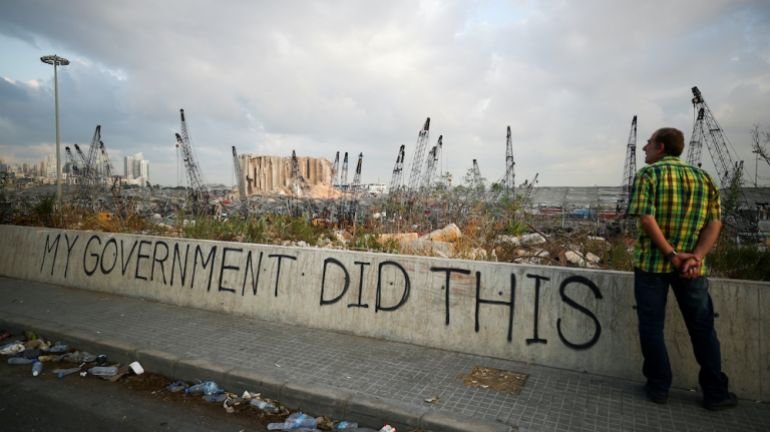
Five years later, the investigation into who is at fault for the blast has been delayed, and at times derailed, by political interference.
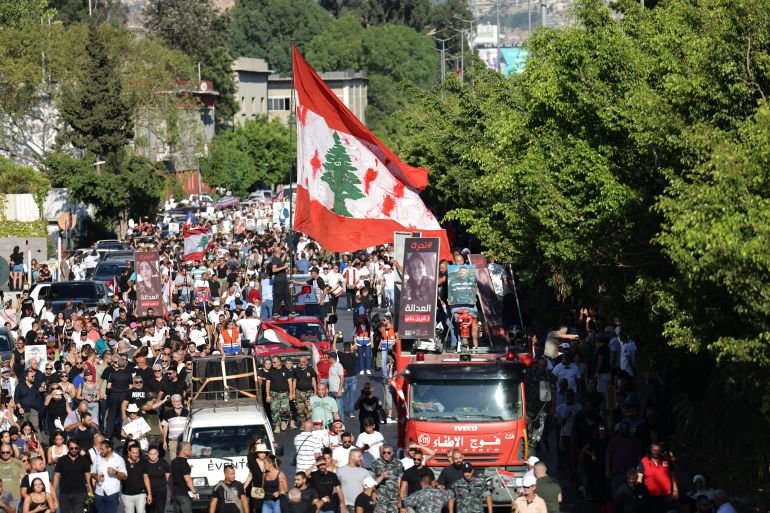
“The most important thing for us is not for the decision, but for full justice to happen,” Tracy Naggear, Alexandra’s mother and a key activist advocating for the blast’s victims, told media by phone. “And we won’t accept a half-truth or half-justice.”
As the fifth anniversary of the tragedy approaches, there is some optimism that the judicial investigation is finally moving in the right direction after facing obstacles, mostly from well-connected politicians refusing to answer questions and the former public prosecutor blocking the investigation.
A decision from the lead prosecutor is expected soon, activists and legal sources familiar with the matter told media. And while the road to justice is still long, for the first time, there is a feeling that momentum is building.
Justice derailed
“You can feel a positive atmosphere [this time],” lawyer Tania Daou-Alam told media.
Daou-Alam now lives in the United States, but is in Lebanon for the annual commemoration of the blast, which includes protests and a memorial.
Her husband of 20 years, Jean-Frederic Alam, was killed by the blast, which was one of the largest non-nuclear explosions in modern history.
Daou-Alam is also one of nine victims suing the US-based company TGS in a Texas court for $250m, claiming it was involved in chartering the Rhosus, a Moldovan-flagged ship that carried the ammonium nitrate into Beirut’s port in 2013.
She told media that the case is more about “demanding accountability and access to documents that would shed more light on the broader chain of responsibility” than it is about compensation.
The population of Beirut is used to facing crises without government help. Numerous bombings and assassinations have occurred, with the state rarely, if ever, holding anyone accountable.
Frustration and a sense of abandonment by the state, the political system, and the individuals who benefit from it already boiled over into an uprising in October 2019, less than a year before the blast.
In the immediate aftermath of the explosion, residents cleaned up the city themselves. Politicians who came for photo opportunities were chased out by angry citizens, and mutual aid filled the gap left by the state.
The end of Lebanon’s 15-year civil war in 1990 set the tone for the impunity that has plagued the country ever since. Experts and historians say militia leaders traded their fatigues for suits, pardoned each other, awarded themselves ministries and began rerouting the country’s resources to their personal coffers.
Preliminary investigations found that the explosion was caused by ammonium nitrate stored at Beirut port in improper conditions for six years.
They also found that many top officials, including then-President Michel Aoun, had been informed of the ammonium nitrate’s presence, but chose not to act.
Judge Fadi Sawan was chosen to lead the full investigation in August 2020, but found himself sidelined after calling some notable politicians for questioning. Two ministers he charged with negligence asked that the case be transferred to another judge.
A court decision, seen by Reuters, claimed that because Sawan’s house had been damaged in the blast, he would not be impartial.
Replacing him in February 2021 was Judge Tarek Bitar. Like Sawan, Judge Bitar called major political figures in for questioning and later issued arrest warrants for them. Among them are Ali Hassan Khalil and Ghazi Zeiter, close allies of Lebanon’s Speaker of Parliament Nabih Berri, who still refuse to respond to Judge Bitar’s requests and claim they have parliamentary immunity.
Despite much popular support, many of Judge Bitar’s efforts were impeded, with Lebanon’s Internal Security Forces at times refusing to execute warrants and the former Court of Cassation public prosecutor, Ghassan Oueidat, ordering his investigation halted.
A new era
In early 2025, Lebanon elected a new president, Joseph Aoun, and a new prime minister, Nawaf Salam.
In their inaugural addresses, both spoke about the importance of finding justice for the victims of the port explosion.
“The current justice minister seems determined to go all the way, and he has promised that the judge will no longer face any hurdles and that the ministry will provide all help required,” Karim Emile Bitar, a Lebanese political analyst with no relation to the judge investigating the port explosion, told media.
Human Rights Watch reported in January 2025 that Judge Bitar had resumed his investigation, “after two years of being stymied by Lebanese authorities”.
On July 29, Salam issued a memorandum declaring August 4 a day of national mourning. On July 17, Aoun met with the families of victims killed in the explosion.
“My commitment is clear: We must uncover the whole truth and hold accountable those who caused this catastrophe,” Aoun said.
Oueidat, the former public prosecutor, was replaced by Judge Jamal Hajjar in an acting capacity in 2024, before being confirmed as his successor in April 2025.
In March 2025, Hajjar reversed Oueidat’s decisions and allowed Judge Bitar to continue his investigation.
Legal experts and activists have been pleased by the progress.
“Actual individuals implicated in the case are showing up to interrogations,” Ramzi Kaiss, Lebanon researcher at Human Rights Watch, told media. Among them are Tony Saliba, the former director-general of State Security, Abbas Ibrahim, former director-general of the General Directorate of General Security, and Hassan Diab, prime minister at the time of the explosion.
But this is still not enough for those wanting justice to be served after five years of battles, activists and experts note.
“We are asking for laws that are able to protect and support the judiciary and the appointments of vacant judge [posts], so these things will show the government is on our side this time,” Daou-Alam said.
Even with the new government pushing for accountability, some are still trying to disrupt the process.
Hassan Khalil and Zeiter still refuse to appear before Judge Bitar, and a fight has emerged over the country’s judicial independence.
“We can only get justice if the judiciary acts independently so that they can go after individuals and so the security services can act independently without political interference,” Kaiss said.
Time for accountability
The last few years have been a turbulent period of myriad crises for Lebanon.
A banking collapse robbed many people of their savings and left the country in a historic economic crisis. Amid that and the COVID-19 pandemic came the blast, and international organisations and experts hold the Lebanese political establishment responsible.
“The time has come to send a signal to Lebanese public opinion that some of those responsible, even if they are in high positions, will be held accountable,” political analyst Bitar said.
“Accountability would be the first step for the Lebanese in Lebanon and the diaspora to regain trust,” he said, “and without trust, Lebanon will not be able to recover.”
Still, Bitar maintained, progress on the port blast dossier doesn’t mean every answer will come to the forefront.
“This crime was so huge that, like many similar crimes in other countries, sometimes it takes years and decades, and we never find out what really happened,” he said.
Blast victim Tracy Naggear noted that “[our] fight… is mainly for our daughter, for Alexandra, of course”.
“But we are [also] doing it for all the victims and for our country,” she said. ‘[It’s] for every single person that has been touched by the 4th of August, from a simple scratch to a broken window.”
