Close Menu
    What's Hot

    Bowen: Trump and Netanyahu wanted to reshape the Middle East – now they risk a permacrisisThe US and Israeli leaders have lost control of the consequences after miscalculating the Iran war.1 hr agoMiddle East

    June 9, 2026

    Murder of Lyhanna, 11, enrages France and turns up heat on government Protesters are angry that the suspect had already been reported to police last August in a separate case.6 hrs agoEurope

    June 9, 2026

    Version of AI tool 'too powerful for public' released to publicClaude Fable 5 is a version of Anthropic's Claude Mythos, an AI program which caused a stir among technology, finance, and government leaders.2 hrs agoTechnology

    June 9, 2026
    Facebook X (Twitter) Instagram
    • Politics
    • Economy
    Facebook X (Twitter) Instagram
    Gulf News Week
    Subscribe
    Tuesday, June 9
    • Home
    • Politics
      • Europe
      • Middle East
      • Russia
      • Social
      • Ukraine Conflict
      • US Politics
      • World
    • Region
      • Middle East News
    • World
    • Economy
      • Banking
      • Business
      • Markets
    • Real Estate
    • Science & Tech
      • AI & Tech
      • Climate
      • Computing
      • Science
      • Space Science
      • Tech
    • Sports

      Dominant PSG put Liverpool on the brink with 2-0 Champions League quarter-final first-leg win

      April 9, 2026

      Dubai Basketball U-18 Elite Crowned Basket Cup Sarajevo 2026 Champions in Historic Debut

      April 6, 2026

      Saudi boxing crowns 20 champions as Kingdom’s Elite Belt concludes in Riyadh

      April 4, 2026

      “He Signed for a Real Fight”: Pacquiao Contradicts Mayweather Over Rematch Status

      April 3, 2026

      Arsenal Hold Off Chelsea Fightback to Reach Women’s Champions League Semi-Finals

      April 2, 2026
    • Health
    • Travel
    • Contact
    Gulf News Week
    Home»Most Viewed News»Bowen: Trump and Netanyahu wanted to reshape the Middle East – now they risk a permacrisisThe US and Israeli leaders have lost control of the consequences after miscalculating the Iran war.1 hr agoMiddle East
    Most Viewed News

    Bowen: Trump and Netanyahu wanted to reshape the Middle East – now they risk a permacrisisThe US and Israeli leaders have lost control of the consequences after miscalculating the Iran war.1 hr agoMiddle East

    Gulf News WeekBy Gulf News WeekJune 9, 2026No Comments7 Mins Read
    Share Facebook Twitter Pinterest Copy Link LinkedIn Tumblr Email VKontakte Telegram
    Bowen: Trump and Netanyahu wanted to reshape the Middle East - now they risk a permacrisisThe US and Israeli leaders have lost control of the consequences after miscalculating the Iran war.1 hr agoMiddle East
    Share
    Facebook Twitter Pinterest Email Copy Link
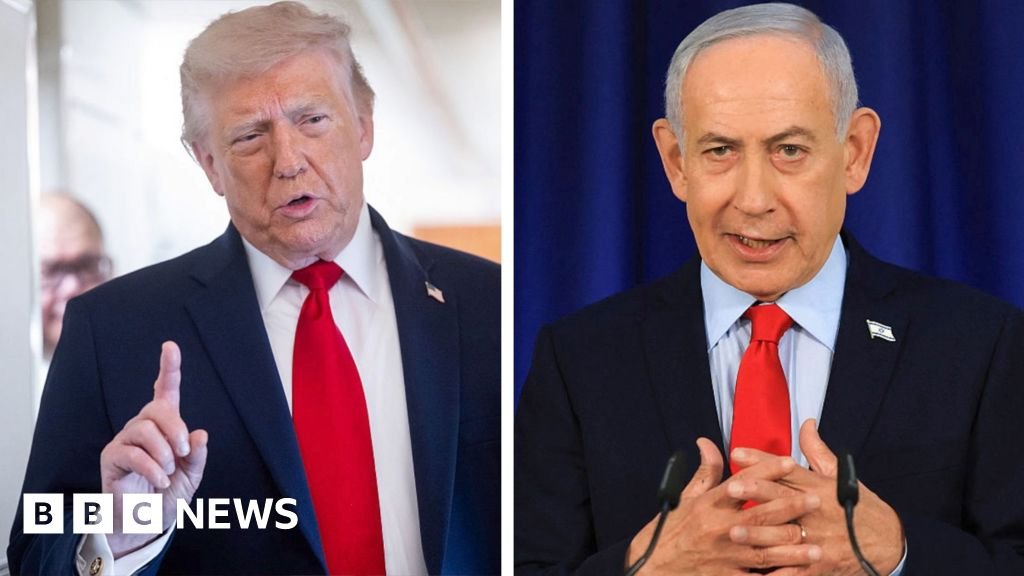
    Getty Images A composite image shows President Donald Trump on the left holding a finger up and wearing a suit, shirt and tie as he speaks to reporters. On the right Prime Minister Benjamin Netanyahu also wears a suit, shirt and tie and interlaces his fingers as he speaks during a press conference.Getty Images

    Donald Trump and Benjamin Netanyahu believed that victory over Iran would reshape the Middle East.

    The region is being reshaped. But not in the way they expected. The Islamic Republic of Iran has not been defeated. The risk now is of a long, attritional permacrisis that will lurch in and out of outright conflict.

    The Iranian regime has proved to be a much harder nut to crack than Trump and Netanyahu had assumed. Their judgement was wrong, and they have lost control of the consequences.

    The latest of those is Iran’s downing of the US Apache helicopter. It is another reminder that Iran’s rulers can still hurt the Americans and will not budge in their determination to come out of this war on top. For them, victory equals survival and enhanced deterrence, in the shape of acknowledgement of their control of the Strait of Hormuz, one of the world’s most strategic waterways.

    Trump has been banking on a deal with Iran to reopen the Strait of Hormuz and agree the terms of much longer-term talks over the big issues, starting with Iran’s stockpile of enriched uranium and its wider nuclear plans.

    The war is unpopular in America and he wants a way out he can present as a victory. It is proving to be a tough challenge.

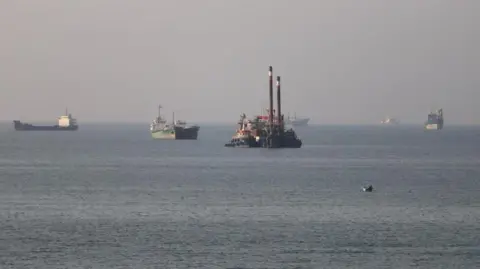
    Reuters Six shipping vessels in the Strait of Hormuz near Bandar Abbas, Iran on Monday.Reuters
    The Strait of Hormuz, once one of the world’s busiest waterways, has ground to a halt since February

    Trump and Israel’s Prime Minister Benjamin Netanyau are learning an old lesson.

    Ever since humans discovered the art and curse of war, leaders have found out that it is easier to start a war than to end one with a clear victory.

    When they led their countries to war with Iran on the last day of February, both issued video statements, choosing words that reflected an assumption that a moment of historical change was coming. The regime that had ruled Iran since the Shah was overthrown in 1979 was on the way out.

    In the small hours of the morning at Mar-a-Lago, his Florida resort, Trump, picked up on the promise he had made to Iranian opponents of the regime in January that “help is on its way.”

    “To the great proud people of Iran, I say tonight that the hour of your freedom is at hand. Stay sheltered. Don’t leave your home. It’s very dangerous outside. Bombs will be dropping everywhere. When we are finished, take over your government. It will be yours to take. This will be probably your only chance for generations.”

    The next morning, Netanyahu stood in the sunlight on the roof of the Kyria, Israel’s high rise defence ministry in central Tel Aviv, to record his address. Like Trump, he spoke as if victory was certain.

    “This coalition of forces allows us to do what I have yearned to do for 40 years: smite the terror regime hip and thigh. This is what I promised – and this is what we shall do.”

    Throughout his political life, Netanyahu has argued that the real threat to Israel comes from Iran, not from the Palestinians or his country’s Arab neighbours. He had tried and failed to get other American presidents to join him in attacking Iran. Trump was different.

    For more than two years, since Hamas attacked Israel on 7 October 2023, Netanyahu had told Israelis that the power of their military, backed by America, would vanquish their enemies and usher in a richer and safer future. Force, not diplomacy, was the answer.

    Netanyahu had the air of a man whose moment had come. In contrast, when he faced the cameras after Trump told him to cancel his plans to attack Beirut on Monday, the leading Israeli newspaper columnist Ben Caspit said he looked like a deflated balloon.

    Caspit is one of the prime minister’s most vociferous critics. But it is clear that Netanyahu’s strategy of using force to bend the region to his will has failed.

    Israel and Iran flare-up could strengthen Tehran’s negotiating hand

    Bowen: ‘Middle East is in turmoil’ as Iran and Israel attack each other

    Trump expected a quick victory. He had watched with delight as the US military abducted the president of Venezuela and his wife, sent them to a jail in New York and installed a compliant successor in Caracas. Textbook regime change, he believed, way better than the forever wars fought by his predecessors in Iraq and Afghanistan. Iran would be next on the list.

    Both men must be wondering what went wrong. The United States has the world’s most powerful military. Israel is the superpower of the Middle East.

    Trump and Netanyahu saw a regime in Tehran reeling from economic crisis caused by sanctions, mismanagement and corruption. Israel had delivered hammer blows to its allies, Hamas in Gaza and Hezbollah in Lebanon. Its other key ally, Bashar al Assad had been deposed as president of Syria and fled to Moscow. In January the regime crushed huge demonstrations against it by killing thousands of Iranian citizens.

    They underestimated the resilience, ruthlessness and guile of the Islamic regime. They believed that killing its supreme leader and his closest lieutenants would cause the regime to collapse from within.

    They overestimated the efficacy of military force against a regime that had faced repeated threats for almost 50 years, had engineered itself to survive an attack and had thought hard about a conception of national security backed up by its religious and ideological convictions.

    The Gulf oil states, allies of the US, and in the case of the UAE and Bahrain of Israel too, have suffered hammer blows. It is not simply lost revenue from petrochemicals and their byproducts, like fertiliser. They have built their futures around creating an oasis of stability and multi-billion-dollar business in the Gulf. Potential investors, and tourists, see the war turning that vision into a mirage.

    The Iranian regime believes its survival and the ease with which it put a chokehold on the world economy by closing the Strait of Hormuz and attacking its Gulf Arab neighbours can be translated into long-term deterrence against the US and Israel.

    The men who have replaced the old guard of Iranian leaders killed by Israel and the US are just as ideological as their predecessors but much more willing to take risks in what they see as an existential struggle. They believe that words alone will not stop more attacks in the future from the US or Israel. Instead, they want to demonstrate that more attacks on Iran will lead to painful consequences.

    A key part of its strategy is linking the war in Lebanon with the war in the Gulf. The regime’s message to Trump is that he cannot hope for any kind of deal if Israel continues to bomb Lebanon and to try to destroy Hezbollah, the militia and political movement that it has nurtured since the 1980s as its forward defence against Israel.

    By curbing Israel’s plans to attack Beirut, on the grounds that a deal was near (a claim he has made before, erroneously), Trump has shown implicitly that he accepts the link between what happens in Lebanon and what happens in the Gulf.

    On Monday, Netanyahu said he would not accept the linkage. It was he said, “intolerable and completely unacceptable.” His problem is that Trump will put his interests and desire to end the war ahead of Netanyahu’s determination for it to continue until he can declare the Islamic regime in Tehran has been crippled.

    Netanyahu cancelled a planned attack on Beirut, but since then Israel’s military, the IDF, has continued to hit southern Lebanon very hard.

    When the Strait of Hormuz was closed in March, there were dire warnings of global economic consequences if it was still closed by June.

    Not only does the vital waterway that was open until the US and Israel attacked Iran remain closed. Without remarkable diplomatic breakthroughs, it is hard to see it reopening any time soon.

    Israeli air strikes hit Lebanese city of Tyre despite Iranian warning to stop attacks

    Iran and Israel say they will pause strikes but warn of retaliation if ceasefire breached again

    ‘Please send help’: Crew’s distress call after ship hit by US missile

    Israel
    Iran war
    Middle East
    Iran
    Donald Trump
    Benjamin Netanyahu
    Share. Facebook Twitter Pinterest LinkedIn Tumblr Email Telegram Copy Link
    Gulf News Week

    Related Posts

    Most Viewed News

    Murder of Lyhanna, 11, enrages France and turns up heat on government Protesters are angry that the suspect had already been reported to police last August in a separate case.6 hrs agoEurope

    June 9, 2026
    Most Viewed News

    Version of AI tool 'too powerful for public' released to publicClaude Fable 5 is a version of Anthropic's Claude Mythos, an AI program which caused a stir among technology, finance, and government leaders.2 hrs agoTechnology

    June 9, 2026
    Most Viewed News

    Nasa names next astronauts for Artemis Moon programmeNasa names its next Artemis crew, though they will not be walking on the Moon or even going anywhere near it.56 mins agoUS & Canada

    June 9, 2026
    Most Viewed News

    LIVEPolice and political leaders in Northern Ireland call for calm after Belfast knife attackPolice say the suspect is a Sudanese man in 30s who was granted leave to remain after entering Northern Ireland and claiming asylum in 2023.

    June 9, 2026
    Most Viewed News

    Man reportedly shot at Kenya protest against US Ebola quarantine centreProtesters are concerned about cross-border infection risks and the lack of transparency from the government about the treatment centre.2 hrs agoAfrica

    June 9, 2026
    Most Viewed News

    Israeli air strikes hit Lebanese city of Tyre despite Iranian warning to stop attacksIran warned Israel on Monday that it could resume hostilities if attacks on its Lebanese ally Hezbollah do not stop.45 mins agoMiddle East

    June 9, 2026
    Add A Comment
    Leave A Reply Cancel Reply

    Editors Picks

    Bowen: Trump and Netanyahu wanted to reshape the Middle East – now they risk a permacrisisThe US and Israeli leaders have lost control of the consequences after miscalculating the Iran war.1 hr agoMiddle East

    June 9, 2026

    Murder of Lyhanna, 11, enrages France and turns up heat on government Protesters are angry that the suspect had already been reported to police last August in a separate case.6 hrs agoEurope

    June 9, 2026

    Version of AI tool 'too powerful for public' released to publicClaude Fable 5 is a version of Anthropic's Claude Mythos, an AI program which caused a stir among technology, finance, and government leaders.2 hrs agoTechnology

    June 9, 2026

    Nasa names next astronauts for Artemis Moon programmeNasa names its next Artemis crew, though they will not be walking on the Moon or even going anywhere near it.56 mins agoUS & Canada

    June 9, 2026
    Latest Posts

    Murder of Lyhanna, 11, enrages France and turns up heat on government Protesters are angry that the suspect had already been reported to police last August in a separate case.6 hrs agoEurope

    June 9, 2026

    Version of AI tool 'too powerful for public' released to publicClaude Fable 5 is a version of Anthropic's Claude Mythos, an AI program which caused a stir among technology, finance, and government leaders.2 hrs agoTechnology

    June 9, 2026

    Nasa names next astronauts for Artemis Moon programmeNasa names its next Artemis crew, though they will not be walking on the Moon or even going anywhere near it.56 mins agoUS & Canada

    June 9, 2026

    Subscribe to News

    Get the latest sports news from NewsSite about world, sports and politics.

    Advertisement
    Demo
    Gulf News Week

    Your source for the serious news. This demo is crafted specifically to exhibit the use of the theme as a news site. Visit our main page for more demos.

    We're social. Connect with us:

    Facebook X (Twitter) Instagram Pinterest YouTube
    Latest Posts

    Bowen: Trump and Netanyahu wanted to reshape the Middle East – now they risk a permacrisisThe US and Israeli leaders have lost control of the consequences after miscalculating the Iran war.1 hr agoMiddle East

    June 9, 2026

    Murder of Lyhanna, 11, enrages France and turns up heat on government Protesters are angry that the suspect had already been reported to police last August in a separate case.6 hrs agoEurope

    June 9, 2026

    Version of AI tool 'too powerful for public' released to publicClaude Fable 5 is a version of Anthropic's Claude Mythos, an AI program which caused a stir among technology, finance, and government leaders.2 hrs agoTechnology

    June 9, 2026

    Subscribe to Updates

    Get the latest creative news from FooBar about art, design and business.

    © 2026 Gulf News Week. Designed by HAM Digital Media.
    • Home
    • Politics
    • Economy
    • Sports

    Type above and press Enter to search. Press Esc to cancel.