
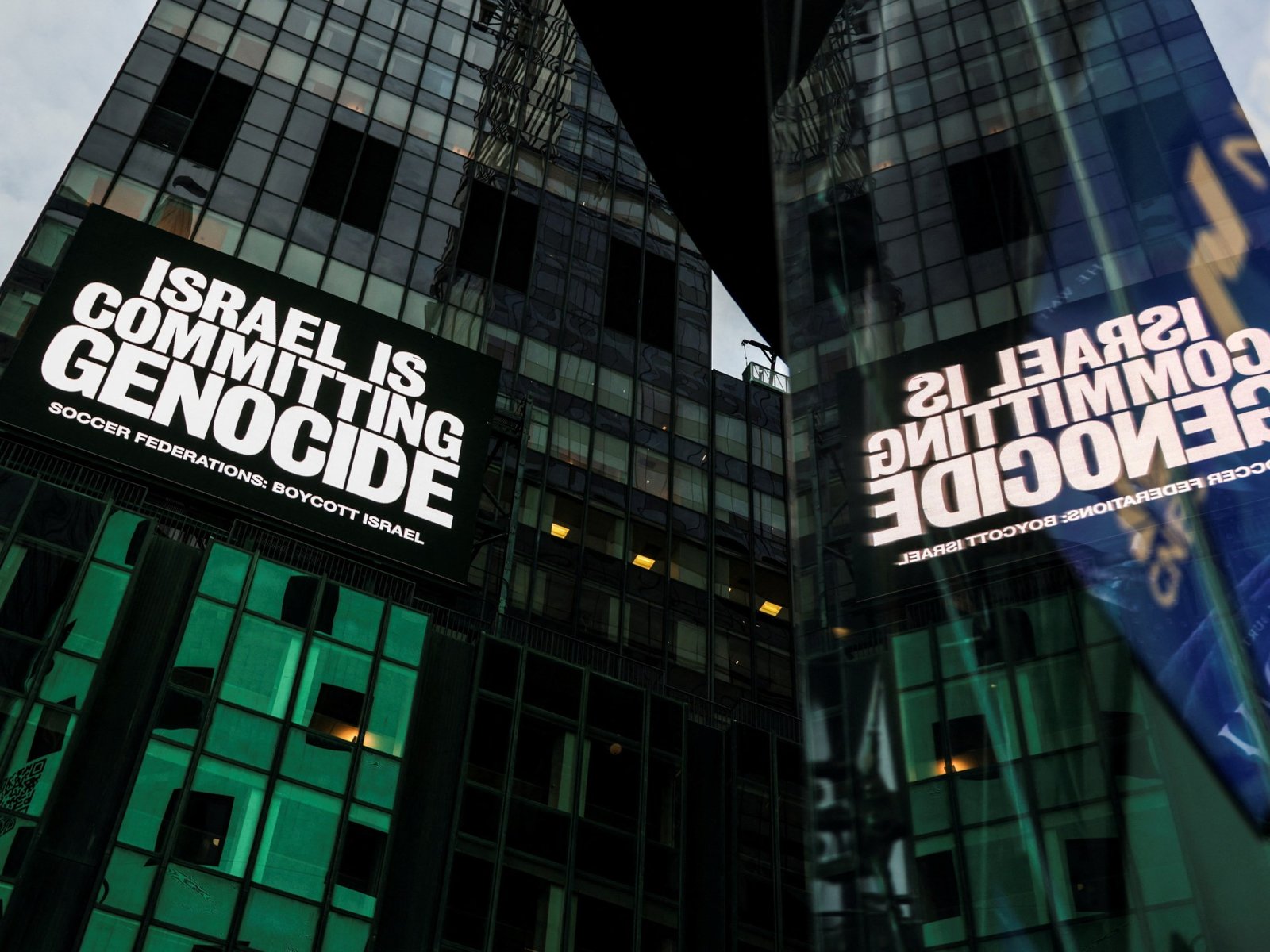
With the global spotlight shifting from Gaza, the campaign to isolate Israel has never been more urgent, experts say.
Israel’s genocidal war on Gaza has pushed the plight of the Palestinian people to the forefront of global attention. For more than two years, the world has witnessed the mass killing, disease and starvation imposed upon the enclave by Israel.
Faced with a sense of helplessness, calls have grown for boycotts of Israeli goods, for companies profiting from Israel or its settlements in the occupied West Bank to divest, and for politicians to expand sanctions that some have already imposed on Israeli ministers.
Recommended Stories
list of 4 items
- list 1 of 4Belfast rallies for Palestine hunger strikers as memories of 1981 return
- list 2 of 4Palestine advocates praise NYC’s Mamdani for revoking pro-Israel decrees
- list 3 of 4Australian writers’ festival cancelled after Palestinian author axed
- list 4 of 4What’s UpScrolled, the app gaining popularity after TikTok’s US takeover?
end of list
However, with other world events, such as the war in Ukraine and the United States’s face-off with Iran now dominating much of the world’s headlines, the Boycott, Divestment, Sanctions (BDS) movement faces a challenge to keep attention on Gaza and Israel’s illegal occupation of Palestine.
Gains made
The war on Gaza has led to Israel facing unprecedented condemnation from around the world.
Israel has moved closer to pariah status for its attacks not just in Gaza – killing more than 70,000 Palestinians – but in Lebanon and elsewhere in the Middle East.
The country’s Prime Minister Benjamin Netanyahu, as well as former Defence Minister Yoav Gallant now find themselves facing International Criminal Court arrest warrants for war crimes.
At home, at least two of Israel’s far-right government ministers, Finance Minister Bezalel Smotrich and National Security Minister Itamar Ben-Gvir, have also been sanctioned by governments worldwide.
And on top of that hangs the judgement of the International Court of Justice in January 2024, that the state of Israel may plausibly be engaged in genocide, in an ongoing case brought by South Africa.
Criticism of Israel has also entered the mainstream culturally in Western countries, particularly among young people horrified by the death rained upon Gaza.
And importantly, there have been economic consequences for Israel and some of those doing business in it – echoing the boycott movement against apartheid South Africa in the 1980s.
Companies such as the French supermarket chain Carrefour were forced to close a number of outlets in the Middle East amid public anger over its links to Israeli firms operating in illegal settlements in the occupied West Bank.
Other companies associated with Israel’s actions, including Airbnb – which allows Israelis in illegal settlements to rent their properties – and Microsoft, whose Azure cloud services have supported the Israeli military, have all faced internal dissent and reputational damage because of their ties to the Israeli government.
As a consequence of public pressure, pension funds from around the world, including Spain, Norway, Denmark, France and Ireland, have divested from Israeli assets linked to settlements, or withdrawn investments from companies tied to Israel.
“BDS and boycotts have changed Israel’s global trade landscape,” Avi Balashnikov, chairman of the Israel Export Institute, conceded in September 2024.
“We fight every day, hour by hour, for Israeli industry abroad,” he added. “Economic boycotts and BDS organisations present major challenges, and in some countries, we are forced to operate under the radar.”
Moving spotlight
Despite a US-brokered “ceasefire“, Israeli attacks on Gaza have killed more than 500 people since the agreement was reached in October, including at least 31 on Saturday. The fact that Israel has continued to kill Palestinians, while much of the world looks away, highlights the difficulty now facing the BDS movement and whether it can maintain the energy it has gained.
“It is not uncommon for the observance of a boycott to rise and fall according to the prominence of an issue and success of specific campaigns to raise awareness or promote adherence to the boycott,” Nick Cull, a historian and authority on cultural boycotts at the University of Southern California, told media.
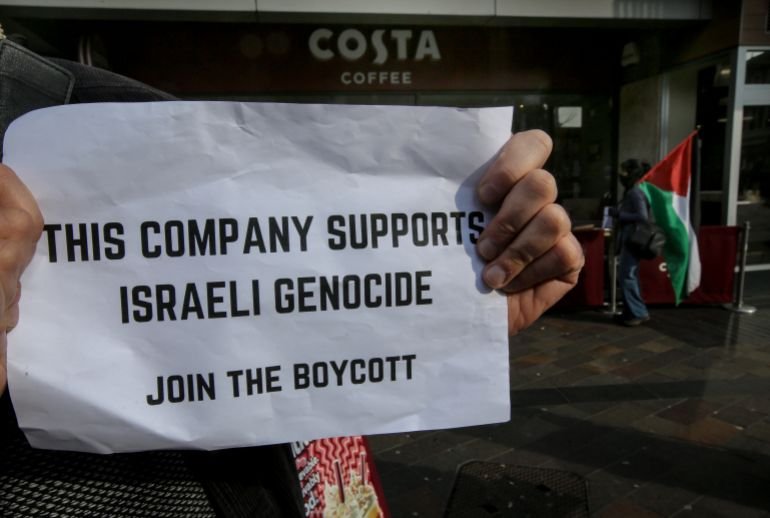
“I think that the power of a boycott is cumulative,” Cull continued. “Just as advertising associates a brand with good feelings and positive experiences – think how over many decades Coca-Cola link their drink to ideas of friendship – as part of the ‘buy-me’ message, so a boycott’s ‘don’t buy’ message becomes a negative branding associating a product and its place of origin with negative feelings: training a revulsion impulse rather than a logical inner debate over the merits of a particular case.”
“Since the ceasefire, a less-visible form of genocide has been unfolding,” Saleh Hijazi, Policy Coordinator with the BDS movement, told media, pointing to the mounting death toll in Gaza from Israeli attacks and the restrictions that Israel was imposing on access to food and medicine.
“Israel and the US, a full partner in this genocide, have used the so-called ceasefire as an attempt to rescue apartheid Israel from a downward spiral, to launder its global image and muffle international outrage. It’s meant to push Palestinians out of the headlines, weaken calls for boycotts and sanctions, and make our struggle seem less urgent,” Hijazi said.
Lasting damage
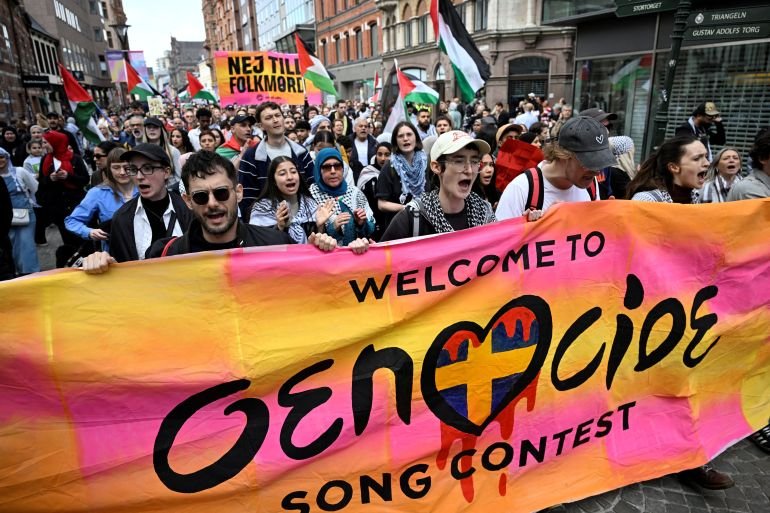
However, while the media spotlight may have broadened from its formerly sharp focus on Gaza, the reputational damage inflicted on companies trading with Israel as a result of its genocide, as well as new initiatives to culturally isolate it, are gaining ground.
“I still feel odd about brands demonised during [South Africa’s] apartheid and artists who violated the boycott,” Cull added, emphasising the lasting reputational damage of boycotts. “This training of people into a negative reflex is what makes boycotts so powerful.”
More initiatives are now taking hold, attempting to build on the sense of cultural isolation many in Israel feel.
One, Game Over Israel, led by political strategist Ashish Prashar, aims to remove Israel from European football.
“We launched our campaign to kick Israel out of football with a huge billboard in Times Square on September 16, the same day the UN’s [Commission of Inquiry] report on genocide came out,” Prashar said.
“The idea is to appeal to what they call the ‘integrity of the game,’” he said, explaining that the campaign would continue despite the “ceasefire”. “We’re running a campaign the same way we would an election strategy. Our next target is to go after [European football’s governing body] UEFA in Switzerland.”
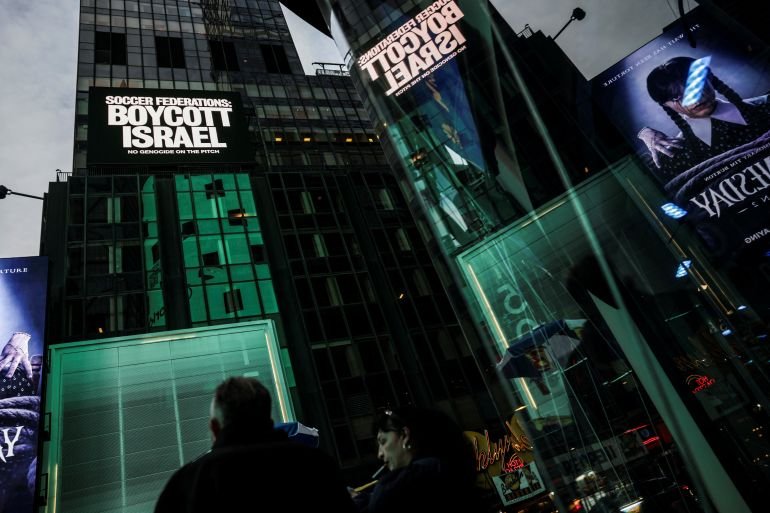
“Ninety percent of Israel’s games are played through UEFA,” Prashar said. “Suspending them would probably help lots of the clubs, their towns and the fans. Just the cost of policing an Israeli game … costs a fortune. Most councils can’t afford that. Other stadiums are closed off, which means that fans can’t go and clubs lose the ticket money, or they’re moved, which means no one makes any money.”
“It’s not about football,” he said. “It’s about not accepting the normalisation of Israel. It’s the institutional resistance to this that’s frightening. This shouldn’t be on people or small groups of activists. This should be on governments.”
