Close Menu
    What's Hot

    UAE banks step up resilience drive as sector assets top Dh5.3t

    April 12, 2026

    ADX lists AI and Shariah income ETFs in push to expand thematic investing

    April 12, 2026

    Seven ways America can win the ceasefire and end the war

    April 12, 2026
    Facebook X (Twitter) Instagram
    • Politics
    • Economy
    Facebook X (Twitter) Instagram
    Gulf News Week
    Subscribe
    Sunday, April 12
    • Home
    • Politics
      • Europe
      • Middle East
      • Russia
      • Social
      • Ukraine Conflict
      • US Politics
      • World
    • Region
      • Middle East News
    • World
    • Economy
      • Banking
      • Business
      • Markets
    • Real Estate
    • Science & Tech
      • AI & Tech
      • Climate
      • Computing
      • Science
      • Space Science
      • Tech
    • Sports

      Dominant PSG put Liverpool on the brink with 2-0 Champions League quarter-final first-leg win

      April 9, 2026

      Dubai Basketball U-18 Elite Crowned Basket Cup Sarajevo 2026 Champions in Historic Debut

      April 6, 2026

      Saudi boxing crowns 20 champions as Kingdom’s Elite Belt concludes in Riyadh

      April 4, 2026

      “He Signed for a Real Fight”: Pacquiao Contradicts Mayweather Over Rematch Status

      April 3, 2026

      Arsenal Hold Off Chelsea Fightback to Reach Women’s Champions League Semi-Finals

      April 2, 2026
    • Health
    • Travel
    • Contact
    Gulf News Week
    Home»Featured Science & Tech»New study challenges a site that’s key to how humans got to the Americas
    Featured Science & Tech

    New study challenges a site that’s key to how humans got to the Americas

    Gulf News WeekBy Gulf News WeekMarch 19, 2026No Comments3 Mins Read
    Share Facebook Twitter Pinterest Copy Link LinkedIn Tumblr Email VKontakte Telegram
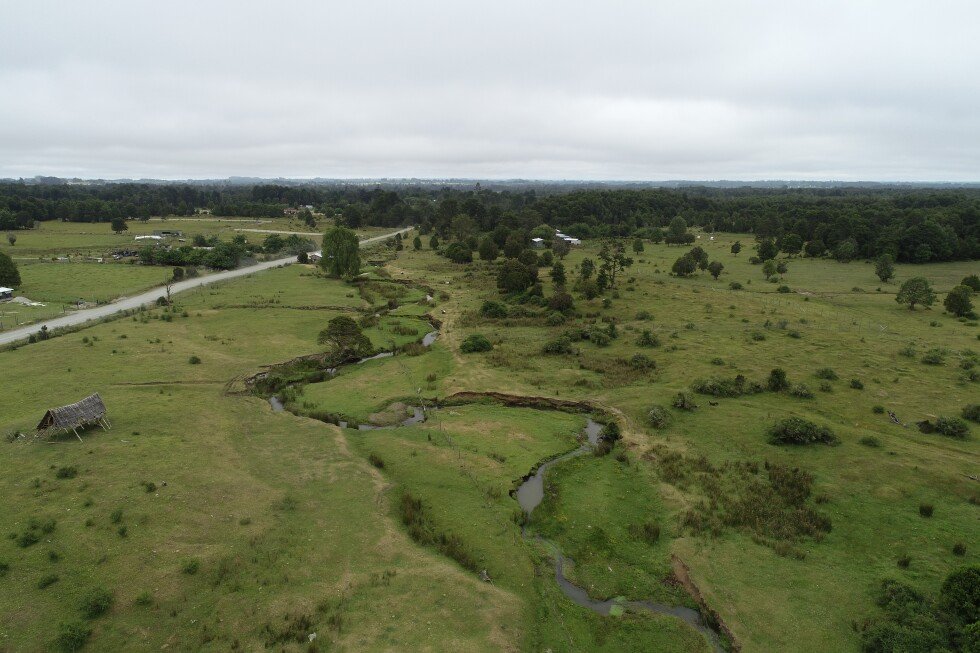
    New study challenges a site that's key to how humans got to the Americas
    Share
    Facebook Twitter Pinterest Email Copy Link

    NEW YORK (news agencies) — For decades, the strongest evidence for the earliest human settlement in the Americas came from a site in Chile called Monte Verde.

    Scientists found echoes of human presence dating back to around 14,500 years ago, including footprints, wooden tools, foundations for a building and the remains of an ancient fire pit. They dated sediments and artifacts from the site to this time frame.

    A new study challenges the age of this important site, suggesting Monte Verde might be much younger than scientists thought. But not everyone agrees with the findings.

    Scientists sampled and dated sediments from nine areas along the Chinchihuapi Creek by the site and analyzed how the landscape changed over thousands of years. They uncovered a layer of volcanic ash from an eruption dating back to about 11,000 years ago.

    Anything above that layer — in this case, the Monte Verde wood and artifacts — had to be younger, according to study co-author Claudio Latorre.

    “We basically reinterpreted the geology of the site. And we came to the conclusion that the Monte Verde site cannot be older than 8,200 years before present,” said Latorre, who works at the Pontifical Catholic University of Chile.

    The researchers think changes to the landscape, including a stream wearing down the rocks, may have mixed old layers with new, causing researchers to date ancient wood as part of the Monte Verde site.

    The findings were published Thursday in the journal Science. Several scientists, including those involved with the original excavations, take issue with the results.

    “They have provided, at best, a working hypothesis that is not supported by the data they presented,” said Michael Waters of Texas A&M University, who had no role in either study.

    Experts not involved with the research say the study includes analysis of samples from the area surrounding Monte Verde, where the geology isn’t comparable to the site itself. And they say there’s not enough evidence that the layer of volcanic ash once covered the entire landscape.

    They also say the study doesn’t offer a sufficient explanation for the artifacts found at the site that have been directly dated to 14,500 years ago, including a mastodon tusk fashioned into a tool, a wooden lance and a digging stick with a burned tip.

    “This interpretation disregards a vast body of well-dated cultural evidence,” archaeologist Tom Dillehay of Vanderbilt University, who led the site’s first excavation, said in an email.

    The new study’s authors disagree with these criticisms, saying they sampled within, upstream and downstream of the site. And there’s not enough evidence that the dated artifacts at the site really are that old, said co-author Todd Surovell, of the University of Wyoming.

    The Monte Verde site is critical to scientists’ understanding of how people got to the Americas. Scientists used to think the first arrivals were a group of people 13,000 years ago who made tipped stone tools known as Clovis points. The discovery and dating of Monte Verde, which was initially mired in controversy, appeared to put that to rest.

    It’s unclear how a new date for the site might affect the human story. Since Monte Verde, researchers have uncovered sites in North America that predate the Clovis people, such as Cooper’s Ferry in Idaho and the Debra L. Friedkin site in Texas.

    Central America Chile Claudio Latorre Latin America Science South America Todd Surovell
    Share. Facebook Twitter Pinterest LinkedIn Tumblr Email Telegram Copy Link
    Gulf News Week

    Related Posts

    Tech

    Apple at 50: The Products That Redefined How We Use Technology

    April 1, 2026
    Featured Science & Tech

    Newly discovered photos show astronaut Neil Armstrong after the Gemini 8 emergency

    March 21, 2026
    Featured Science & Tech

    NASA hauls its repaired moon rocket from the hangar back to the pad for an early April launch

    March 20, 2026
    Featured Science & Tech

    NASA clears its Artemis moon rocket for an April launch with four astronauts following repairs

    March 13, 2026
    Featured Science & Tech

    Old NASA science satellite plunges back to Earth

    March 12, 2026
    Featured Health

    FDA finds little evidence that a drug touted by Trump can help people with autism

    March 10, 2026
    Add A Comment

    Comments are closed.

    Editors Picks

    UAE banks step up resilience drive as sector assets top Dh5.3t

    April 12, 2026

    ADX lists AI and Shariah income ETFs in push to expand thematic investing

    April 12, 2026

    Seven ways America can win the ceasefire and end the war

    April 12, 2026

    Lessons from the Iran war

    April 12, 2026
    Latest Posts

    Apple at 50: The Products That Redefined How We Use Technology

    April 1, 2026

    Newly discovered photos show astronaut Neil Armstrong after the Gemini 8 emergency

    March 21, 2026

    NASA hauls its repaired moon rocket from the hangar back to the pad for an early April launch

    March 20, 2026

    Subscribe to News

    Get the latest sports news from NewsSite about world, sports and politics.

    Advertisement
    Demo
    Gulf News Week

    Your source for the serious news. This demo is crafted specifically to exhibit the use of the theme as a news site. Visit our main page for more demos.

    We're social. Connect with us:

    Facebook X (Twitter) Instagram Pinterest YouTube
    Latest Posts

    UAE banks step up resilience drive as sector assets top Dh5.3t

    April 12, 2026

    ADX lists AI and Shariah income ETFs in push to expand thematic investing

    April 12, 2026

    Seven ways America can win the ceasefire and end the war

    April 12, 2026

    Subscribe to Updates

    Get the latest creative news from FooBar about art, design and business.

    © 2026 Gulf News Week. Designed by HAM Digital Media.
    • Home
    • Politics
    • Economy
    • Sports

    Type above and press Enter to search. Press Esc to cancel.