
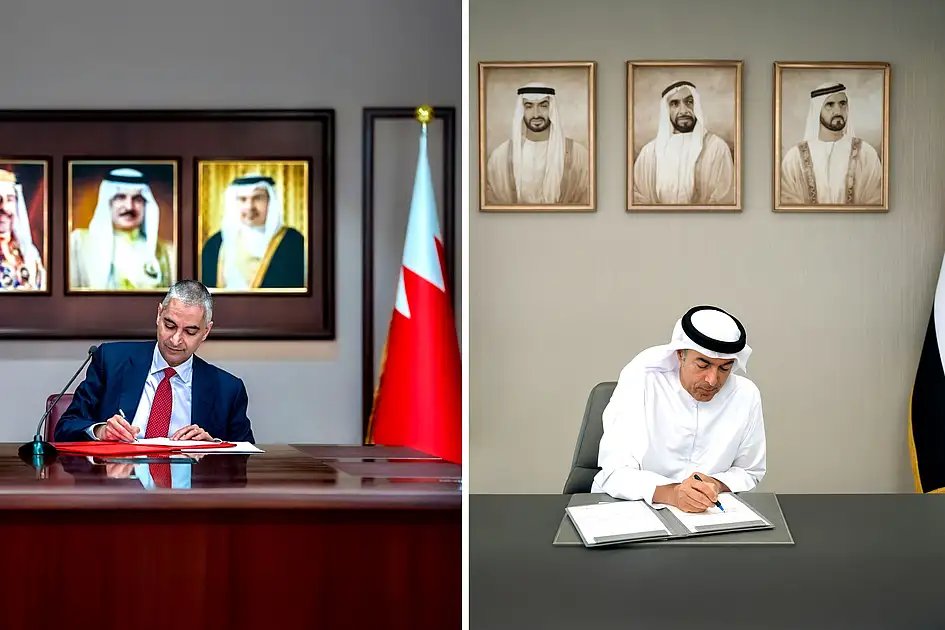
The Central Bank of the UAE and the Central Bank of Bahrain have signed a Dh20 billion (BHD2 billion) currency swap agreement aimed at strengthening financial cooperation, supporting trade in local currencies and enhancing regional monetary stability.
The five-year agreement was signed virtually by Khaled Mohamed Balama, Governor of the Central Bank of the UAE, and Khalid Humaidan, Governor of the Central Bank of Bahrain, marking a fresh step toward deeper Gulf financial integration.
A currency swap agreement allows two central banks to exchange their national currencies with each other up to a pre-agreed limit. In simple terms, this means banks and businesses in both countries can access dirhams or dinars more easily when needed, helping them settle trade and investment transactions without relying heavily on the US dollar.
Such arrangements are particularly useful during periods of market volatility because they ensure liquidity remains available in domestic currencies and help stabilise financial systems.
Governor Balama said the agreement reflects the UAE and Bahrain’s shared commitment to expanding monetary cooperation and strengthening bilateral trade and investment ties. He noted that encouraging the use of local currencies in cross-border transactions would deepen financial links and support long-term economic stability.
Governor Humaidan described the swap line as a milestone in the longstanding relationship between the two countries, adding that it would enhance cooperation between their central banks and support regional financial integration.
Analysts say currency swap lines are increasingly becoming an important policy tool among central banks worldwide, especially as countries seek to reduce exposure to exchange-rate volatility and strengthen resilience against global financial shocks.
For businesses, the agreement could gradually lower transaction costs by reducing dependence on intermediary currencies. It also improves confidence among investors by signalling closer policy coordination between the two financial systems.
The UAE and Bahrain already maintain strong economic ties across banking, trade and investment. The new swap arrangement is expected to facilitate smoother capital flows between the two markets while reinforcing the Gulf region’s broader push toward greater monetary cooperation and financial stability.
