
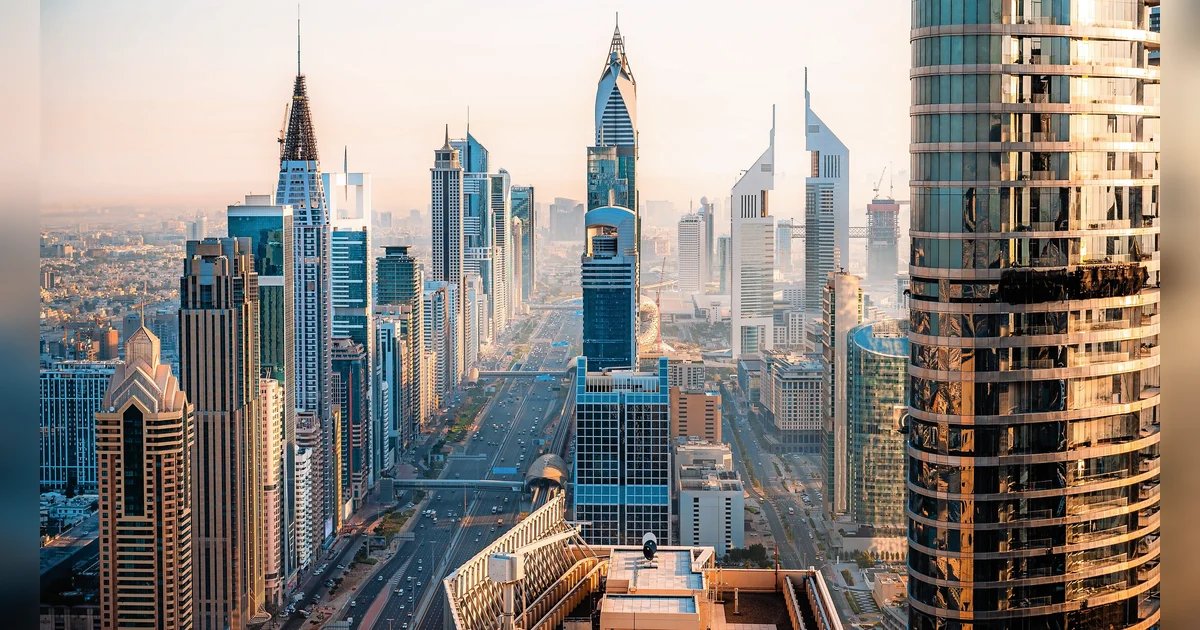
In a world where capital is increasingly restless — unsettled by abrupt tax changes, geopolitical friction and policy unpredictability — the UAE has transformed stability into its strongest economic currency and Dubai into the destination global investors and high-net-worth individuals keep returning to.
What was once seen largely as a regional commercial hub has evolved into a full-spectrum global wealth centre: a place where entrepreneurs base headquarters, family offices anchor long-term capital and millionaires build multi-jurisdictional lives with the Emirates at the core.
The wealth shift
The shift is unmistakable in both capital flows and migration patterns. Greenfield foreign direct investment into the UAE surged to a record $33.2 billion in 2025, a rise of 78%, placing the country among the world’s fastest-growing investment destinations and second globally by number of announced projects at 1,491. Over the past five years, the UAE has attracted nearly $100 billion in greenfield investment across more than 5,600 projects, reflecting international confidence in its long-term economic trajectory.
Preferred gateway
Dubai has emerged as the epicentre of this momentum. The emirate accounted for more than four-fifths of total project inflows, hosting over 1,200 new investment initiatives and ranking among the world’s leading city destinations for foreign direct investment. Its diversified economic base, deepening financial ecosystem and strong real estate sector continue to reinforce its position as a preferred gateway for capital targeting the Middle East, Africa and South Asia.
Economic strategy
The UAE Minister of Economy Abdulla bin Touq Al Marri has said the country’s economic strategy is focused on building a globally competitive investment ecosystem anchored in innovation and openness. “The UAE continues to strengthen its position as a global investment destination by developing a flexible legislative environment that supports new-economy sectors and attracts high-quality investments,” he said in recent remarks, underscoring the role of diversification and advanced industries in driving growth.Rare alignment
Investors and economists say the UAE’s ascent reflects a rare alignment of policy clarity, political stability and long-term strategic planning. In an era marked by volatile regulations and shifting tax regimes in many traditional wealth centres, the Emirates offers consistency and predictability — qualities increasingly prized by globally mobile capital.
The country allows 100% foreign ownership in most sectors, full repatriation of profits and long-term residency through initiatives such as the Golden Visa, creating a framework that encourages investors to shift not only assets but also personal and corporate bases.
Wealth migration
The UAE’s rise has coincided with what wealth advisers describe as the largest private wealth migration in modern history. According to Henley & Partners, the country has led global millionaire inflows for three consecutive years and is projected to attract around 9,800 high-net-worth individuals across 2025 and 2026. These inflows are being driven by entrepreneurs, investors and family offices relocating from Europe, Asia, Africa and parts of the Americas in search of fiscal stability and geopolitical neutrality.
Unmatched mix of incentives
Dominic Volek, group head of private clients at Henley & Partners, said the UAE’s appeal is rooted in a combination of economic and lifestyle factors rarely found in a single jurisdiction.
“The UAE offers an unmatched mix of zero personal income tax, long-term residency options, strong infrastructure and a stable regulatory environment. It remains the strongest magnet globally for mobile private wealth,” he said.
Global wealth migration is accelerating as investors respond to rising taxation, policy uncertainty and geopolitical tensions in several advanced economies. Henley & Partners estimates that the United Kingdom alone recorded a net outflow of roughly 16,500 millionaires in 2025, while similar trends are emerging in parts of Europe and North America. As a result, capital is clustering in a handful of stable, business-friendly destinations — with the UAE firmly at the forefront.
Tax efficiency, security
Nigel Green, chief executive of global advisory firm deVere Group, said wealthy individuals are increasingly treating residency and asset location as strategic decisions rather than lifestyle choices. “High-net-worth individuals are reassessing where they base themselves and their assets in response to tax changes and geopolitical uncertainty. The UAE is benefiting significantly because it offers stability, tax efficiency and long-term security,” he said.
Dubai’s appeal extends far beyond fiscal incentives. Its diversified economy, world-class infrastructure and strategic location linking East and West have positioned it as a global gateway for trade, finance and innovation. Two-thirds of the world’s population lies within an eight-hour flight of the UAE, while its aviation, logistics and digital connectivity rank among the best globally.
Investor confidence
The country’s economic transformation has further strengthened investor confidence. Non-oil sectors now account for more than 70% of GDP, driven by growth in finance, technology, tourism, logistics and renewable energy. Major investments in artificial intelligence, data centres and clean energy are positioning the UAE at the forefront of future industries and reinforcing its attractiveness to long-term capital.
Mohamed Hassan Alsuwaidi, UAE Minister of Investment, said the country is focused on building an ecosystem that enables global investors to scale from the Emirates. “We are creating a globally connected platform that supports innovation, investment and partnerships, enabling businesses and investors to grow from the UAE to international markets,” he noted.
Hub for family offices
Real estate remains a powerful draw for global wealth, particularly in Dubai. The emirate’s prime and ultra-prime property segments have recorded sustained demand from European, Asian and Middle Eastern investors seeking both capital appreciation and secure lifestyle assets. Knight Frank said Dubai has firmly established itself as one of the world’s leading destinations for private capital and family offices.
Faisal Durrani, partner and head of research for Mena at Knight Frank, said the emirate’s strength lies in its unique blend of transparency, tax efficiency and lifestyle appeal. “Dubai has evolved into a global wealth hub, attracting capital from across Europe, Asia and Africa as investors seek both security and growth. Its regulatory clarity and strong real estate fundamentals continue to support long-term demand,” he said.
Investment flows
Beyond property, investment flows are expanding into technology, advanced manufacturing and renewable energy. India and the United States emerged as leading sources of FDI in 2025, driven by major investments in electric vehicle manufacturing, artificial intelligence infrastructure and digital services. The number of foreign investing companies in the UAE has nearly tripled over the past five years, underscoring the scale of international engagement with its economy.
Over 40 free zones
The UAE’s regulatory environment has evolved in tandem. More than 40 free zones offer tax incentives and streamlined business setup, while legal reforms have enhanced investor protection and corporate governance. Long-term residency programmes have transformed the country from a temporary commercial base into a permanent home for global entrepreneurs and wealth creators.
Economists say the dirham’s peg to the US dollar provides additional confidence for international investors by reducing currency volatility and supporting long-term planning. Combined with strong banking regulation and compliance with global standards, this has reinforced the UAE’s reputation as a secure and transparent financial centre.
Policy consistency
As geopolitical and fiscal uncertainties persist worldwide, analysts expect the UAE’s rise as a global investment and wealth hub to accelerate further. Continued policy consistency, infrastructure investment and economic diversification are likely to sustain inflows across sectors ranging from finance and technology to logistics and green energy.
For global investors seeking both opportunity and certainty, the UAE — and Dubai in particular — has moved beyond being merely a business destination. It has become a strategic base for capital, enterprise and lifestyle, offering a rare combination of stability, growth and global connectivity in an increasingly unpredictable world.
