
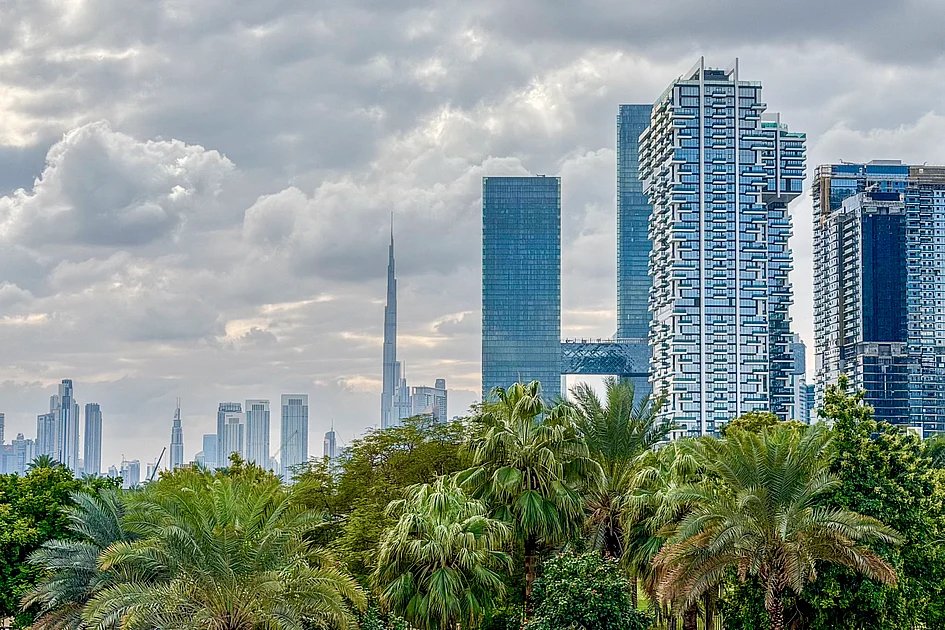
Dubai’s surging population and improving borrowing conditions have propelled the emirate’s real estate market to unprecedented levels, with total property transactions climbing to a record Dh916 billion as demand from new residents and global investors reshapes the residential landscape heading into 2026.
The city’s population has crossed the four-million mark, underscoring its growing appeal as a global hub for business, talent and wealth migration.
The milestone comes after Dubai added nearly 18,000 new residents in a single month by the end of August 2025, reflecting a sustained influx of professionals, entrepreneurs and high-net-worth individuals drawn by job opportunities, lifestyle advantages and long-term residency reforms.
This demographic expansion is translating directly into housing demand across both rental and ownership segments, pushing transaction volumes and values to record highs.
According to Dubai Land Department data, the emirate closed 2025 with more than Dh680 billion in property sales from over 200,000 transactions, the highest annual figures on record.
When mortgages and other property-related deals are included, total real estate transaction value climbed to about Dh916 billion, highlighting the depth and liquidity of the market as participation broadened across segments.
Market activity gathered particular momentum in the second half of the year, with the final quarter alone recording the highest quarterly sales value ever, exceeding Dh187 billion.
Three consecutive record months in late 2025 signalled sustained engagement from end users and investors rather than speculative surges, reinforcing confidence as the market entered 2026.
Analysts say population growth has become the most powerful structural driver of Dubai’s property cycle, creating real demand across price segments from mid-market apartments near business districts to luxury villas and waterfront homes.
“When Dubai adds close to 18,000 residents in a single month, the impact on housing demand is immediate,” said Alec James Smith, head of residential sales and leasing at Savills Middle East.
“We see it in enquiry levels, viewing volumes and the speed at which well-priced homes transact. This demand is driven by genuine relocation and lifestyle migration, supported by investors seeking resilient rental income.”
Dubai continues to outperform many global residential markets, including major cities in Asia-Pacific and Europe, supported by strong employment growth, business relocations and sustained international demand.
The prime segment has been particularly robust, with nearly 6,000 deals above Dh10 million completed in 2025, according to Savills’ latest prime residential report.
Limited supply in established luxury communities and continued wealth inflows have helped keep both capital values and rents resilient, placing Dubai among the world’s top-performing prime residential markets.
Easing borrowing costs is also beginning to reinforce buyer confidence. Following policy moves by the UAE Central Bank, benchmark interest rates were reduced in late 2025, paving the way for gradually lower mortgage costs across the economy.
Although the pace of rate transmission varies across lenders, analysts say improving affordability will support end-user demand, particularly among residents who delayed purchases during the previous high-rate cycle.
Savills noted that lower financing costs typically translate into stronger transaction momentum over subsequent quarters, while investors also benefit as property yields remain attractive relative to other global markets.
Dubai continues to offer some of the highest rental returns among major international cities, further boosting its appeal to foreign buyers and institutional investors.
Looking ahead, market experts expect Dubai’s property sector to remain underpinned by strong fundamentals, though they caution that disciplined supply and infrastructure planning will be crucial to sustaining long-term stability.
Andrew Cummings, head of residential agency at Savills Middle East, said crossing the four-million population mark signals the emirate’s growing global appeal and economic momentum.
“This expansion supports a broad base of housing demand, from first-time buyers to ultra-high-net-worth individuals,” he said.
“The next phase of the market will be shaped by disciplined delivery, infrastructure-led development and a continued focus on quality, placing Dubai in a strong position as it plans for a population approaching six million by 2040.”
Dubai’s 2040 Urban Master Plan aims to accommodate that future growth by expanding residential communities, transport links and social infrastructure while preserving liveability.
With population inflows, easing financing conditions and sustained investor confidence converging, analysts say the emirate’s property market is entering a new phase defined by structural demand rather than short-term speculation.
Market watchers say the record Dh916 billion in transactions signals more than a banner year, reflecting the deepening maturity and resilience of a market increasingly anchored by population growth, long-term planning and global capital flows.
