
Dubai’s residential leasing market is entering a more selective phase amid regional geopolitical tensions, but fresh data from property consultancies suggests the emirate’s real estate sector remains fundamentally resilient, supported by steady landlord confidence, continued off-plan activity and sustained end-user demand across key communities.
New insights from Betterhomes, one of Dubai’s longest-established real estate brokerages, and Smart Bricks, a proptech analytics platform tracking landlord behaviour across UAE property portals, show that while tenant enquiries have softened compared with last year’s exceptionally strong cycle, the market is adjusting rather than weakening — reinforcing Dubai’s reputation as one of the region’s most shock-resistant property destinations.
According to Betterhomes, leasing lead volumes are currently about 30 to 40 per cent below the same period in 2025, reflecting a shift in tenant behaviour during the fifth week of regional uncertainty. However, the slowdown appears cyclical rather than structural. Enquiry volumes rose around 20 per cent week on week in early March, briefly matching last year’s levels during mid-month activity.
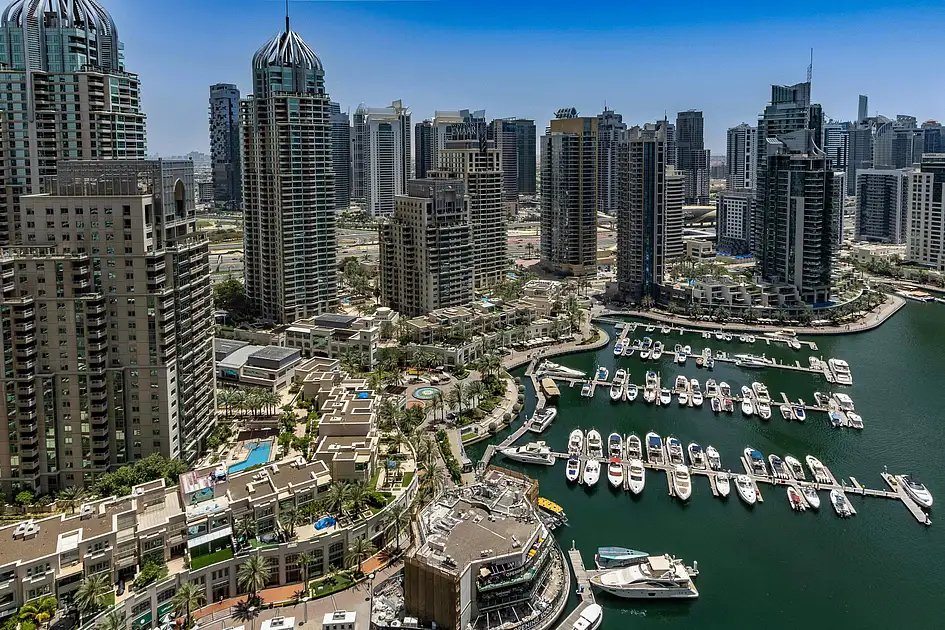
Search demand remains concentrated in established mid-market and lifestyle-driven districts including Dubai Marina, Business Bay, Jumeirah Village Circle (JVC) and Dubai Silicon Oasis, highlighting continued appetite for well-connected, value-oriented rental communities.
Rupert Simmonds, who oversees residential leasing strategy across the brokerage’s UAE portfolio, said market performance is increasingly being shaped by pricing realism and tenant expectations rather than a drop in underlying demand.
“We are seeing many of the same questions from both tenants and landlords, particularly around demand, pricing and how the market is evolving,” Simmonds said. “The market remains active, but outcomes are increasingly shaped by realistic pricing, strong presentation and a clear understanding of tenant behaviour.”
Betterhomes data also shows a 23 per cent increase in rental listings alongside a 16 per cent decline in tenant enquiries compared with March last year — a shift that signals growing choice for renters while encouraging landlords to adopt more flexible leasing strategies.
Despite this adjustment in leasing momentum, there are no signs of stress-driven exits from the ownership side of the market.
Separate analysis by Smart Bricks — a Dubai-based proptech firm that tracks more than 1,000 liquidity and risk indicators per property — shows the number of residential listings across major portals rose modestly from 105,300 units on February 20 to 110,800 by March 16, an increase of just over five per cent, far below the spike typically associated with distressed selling during geopolitical shocks.
A survey of more than 600 Dubai-based landlords reinforces that confidence remains intact. Around 85 per cent said they are not considering selling under current conditions, while only a small minority indicated willingness to accept prices below pre-escalation expectations.
Mohamed Mohamed, chief executive of Smart Bricks, said the market’s behaviour reflects selective liquidity rather than declining confidence. “What we are seeing is not a market in retreat, but one that is becoming more selective,” Mohamed said. “Liquidity is still present, but it is flowing toward assets with stronger fundamentals.”
Transaction data supports that assessment. Between February 28 and March 16, Dubai recorded 6,048 residential deals worth Dh20.2 billion, with nearly 63 per cent concentrated in the off-plan segment — underscoring continued investor confidence in long-term growth rather than short-term speculation.
Ready-home activity, meanwhile, is being driven primarily by end-users and rent-ready purchases, signalling a shift toward stability-led demand rather than flipping behaviour.
This pattern mirrors broader structural trends shaping Dubai’s property market over the past three years, including strong population inflows, expanding Golden Visa eligibility and sustained global investor diversification into the emirate.
Consultancies such as CBRE and Knight Frank have consistently noted that Dubai continues to attract high-net-worth buyers relocating capital from Europe, Asia and emerging markets seeking geopolitical neutrality, tax efficiency and lifestyle advantages — factors that continue to support rental absorption even during periods of uncertainty.
Average gross rental yields across Dubai remain among the highest globally at 6 to 8 per cent, significantly above returns in major gateway cities such as London, Singapore and New York, helping sustain investor appetite despite short-term leasing adjustments.
The absence of panic-driven listings is particularly significant. Historically, sudden surges in inventory have been early warning signals of price corrections. Current data instead suggests landlords are taking a longer-term view of income stability and capital appreciation.
Smart Bricks noted that geopolitical shocks in Dubai’s property market typically appear first through longer transaction timelines and selective tenant behaviour, rather than immediate price declines — a pattern consistent with current conditions.
Importantly, Dubai’s broader economic backdrop continues to support real estate resilience. Non-oil sectors now account for more than three-quarters of the UAE’s GDP, while strong banking liquidity, sovereign wealth buffers and sustained infrastructure investment continue to underpin investor confidence.
Analysts argue that even amid regional volatility, the emirate’s property market is showing signs of recalibration rather than contraction — with landlords holding firm, tenants becoming more selective and long-term capital continuing to flow toward fundamentally strong assets.
