
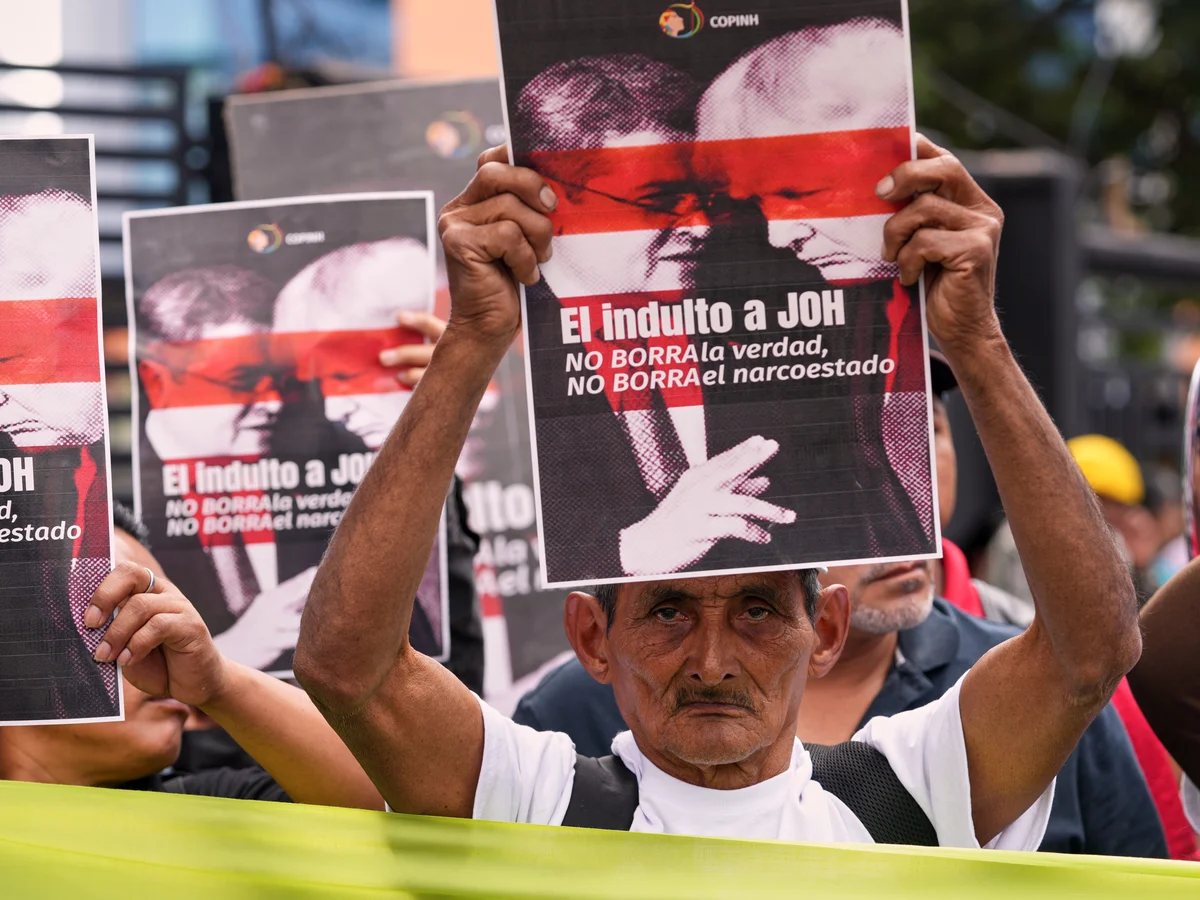
Freed from a US prison sentence, Juan Orlando Hernández breaks his silence, applauds Trump’s role in Honduran politics, and confronts a reactivated domestic arrest warrant.
WASHINGTON — Recently pardoned former Honduran President Juan Orlando Hernández has publicly thanked former U.S. President Donald Trump, crediting him with shifting the political landscape in Honduras. Hernández, convicted on drug charges and later granted clemency by Trump, made the remarks in a Wednesday interview with the conservative network One America News (OAN).
He asserted that Trump’s backing of right-wing presidential hopeful Nasry Asfura helped open “a lot of people’s eyes” in Honduras, framing the nation’s ongoing election as a rebuke of left-wing ideology.
The Honduran election remains too close to call. Asfura, supported by Trump, holds a marginal lead over conservative rival Salvador Nasralla. The process has been stalled by technical failures and fraud allegations. The current leftist government of President Xiomara Castro has denounced the preliminary results and accused Trump of meddling through his endorsement and the pardon of Hernández.
Hernández, who was convicted under the Biden administration, continues to claim the charges were a politically motivated “setup.” His current whereabouts are unknown, and he did not specify if he would seek asylum in the United States, stating only that his focus is on reuniting with his family after four years.
When questioned about seeking refuge in Israel—a nation he allied with by moving Honduras’ embassy to Jerusalem—he dismissed it as financially and logistically unfeasible.
His legal peril persists. Honduran authorities have reopened a domestic arrest warrant for him, a move he calls “political persecution.” Hernández also suggested that returning home would endanger his life, referencing U.S. agency reports about threats against him.
The emergence of the freed former president adds further complexity to Honduras’s volatile electoral moment, highlighting enduring tensions between Washington’s influence and the country’s internal divisions.
