
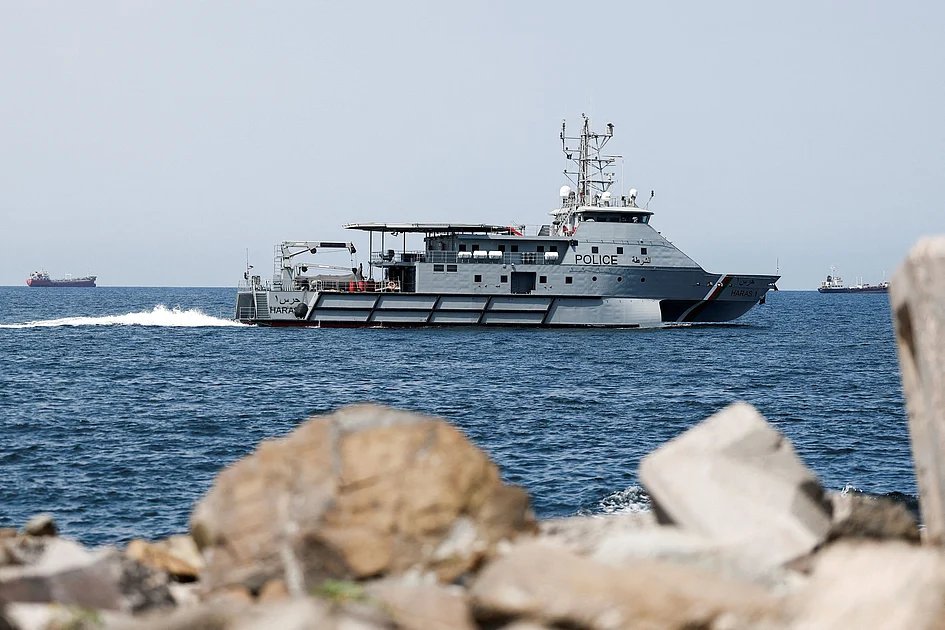
The closure of the Strait of Hormuz is beginning to strain refining operations across the Gulf, raising the prospect of refinery run cuts as storage tanks fill and export routes remain blocked.
Energy analysts warn that the disruption — affecting one of the world’s most critical energy chokepoints — could force refiners across the GCC to scale back operations if refined fuel exports remain constrained for several weeks. The Strait of Hormuz normally handles about 20 million barrels per day (bpd) of crude and petroleum products, roughly one-fifth of global oil consumption, making it the world’s most critical energy transit corridor.
The shutdown has already rattled oil markets. Brent crude briefly spiked to $116.50 per barrel when trading opened after the escalation before easing to around $104.50 after the Group of Seven (G7) signalled it could release strategic reserves if supply disruptions worsen. Even after the pullback, prices remain nearly 45 per cent higher than before the conflict, reflecting fears of prolonged disruption to regional energy logistics.
Analysts say the biggest immediate pressure point may not be crude production but refining systems that rely heavily on export markets.
“With crude supply increasingly stranded in the Gulf, refiners may soon be forced to adjust operations, curtailing runs as product exports stall and directing output mainly to domestic markets,” said Pankaj Srivastava, senior vice president for Commodity Markets – Oil at Rystad Energy.
Srivastava said three key factors will determine how resilient refining operations across the Gulf remain: the ability to bypass Hormuz through alternative routes, the balance between domestic demand and refining capacity, and the proportion of refined products typically exported.
Countries where refining capacity significantly exceeds local demand are the most vulnerable. Bahrain and Kuwait face the highest operational risk because their refining sectors depend heavily on exports and lack alternative transport routes.
In Kuwait, the recently commissioned Al Zour refinery, one of the world’s largest refining complexes, operates alongside Mina Al Ahmadi and Mina Abdullah, creating a massive export-oriented refining system. Roughly three-quarters of refined products are shipped abroad, mostly through Hormuz. If tanker traffic remains restricted, refined product inventories could quickly build up, forcing refiners to reduce utilisation rates.
Bahrain’s Sitra refinery faces similar challenges. With limited domestic fuel demand and strong reliance on export markets, Sitra may have to operate at lower run rates if storage capacity for refined products fills up.
Across the region, several energy facilities have experienced limited disruptions from drone and missile strikes, though most infrastructure remains operational.
While the UAE can bypass Hormuz for crude exports through the Abu Dhabi Crude Oil Pipeline (ADCOP) to Fujairah, refined products from Ruwais still largely depend on tanker routes transiting the strait. This means UAE refiners could still face inventory build-ups if shipping disruptions persist.
Kuwait’s Mina Al Ahmadi refinery continued operating despite minor debris damage. Saudi Arabia’s Ras Tanura terminal — already undergoing scheduled maintenance — extended its outage window following a drone-related incident. Israel’s Haifa refinery reduced operations to prevent damage, while Iran reported strikes near the Bandar Abbas refining hub.
The most significant energy disruption has occurred in Qatar, where LNG production at Ras Laffan and Mesaieed temporarily halted amid security concerns.
Saudi Arabia, the region’s largest oil exporter, has started redirecting crude exports through its East-West pipeline to the Red Sea port of Yanbu in an effort to bypass Hormuz. However, while the pipeline can carry around 5 million bpd, loading constraints at Yanbu limit how much crude can be redirected.
As a result, Saudi refiners — particularly those on the eastern Gulf coast — could eventually face pressure to cut runs if export bottlenecks persist. Analysts say refinery utilisation across the region could fall by 10–20 per cent if tanker movements remain constrained for more than four to six weeks.
With Asia heavily dependent on Gulf fuel exports, a sustained disruption to refining operations could tighten regional product markets even if crude production itself remains largely unaffected.
Analysts say the resilience of Gulf refining systems will depend largely on how quickly maritime traffic through Hormuz resumes — and whether alternative routes can keep refined fuel flowing to global markets.
