
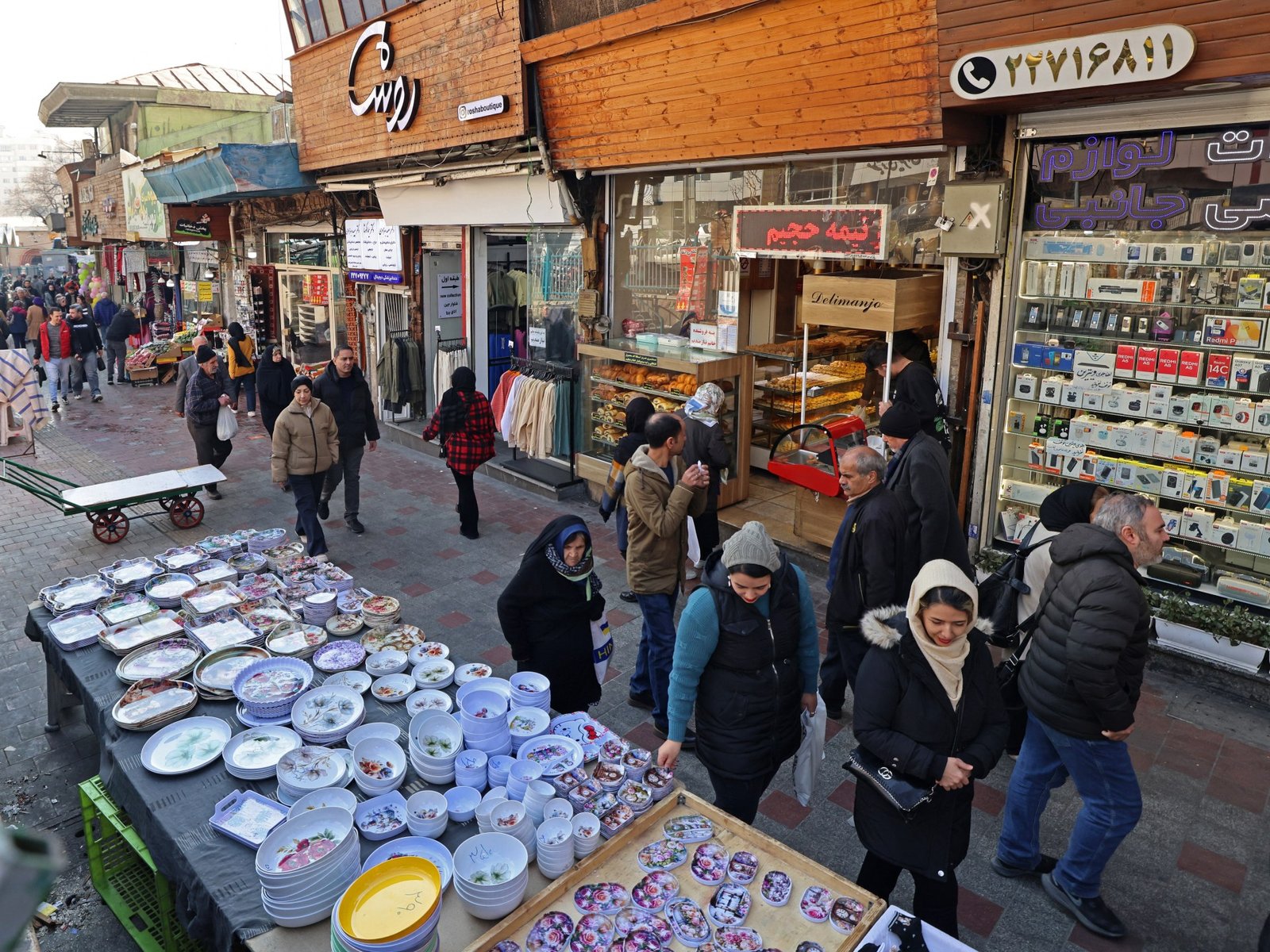
Iranian governors gain new powers as country prepares for possible war amid sanctions and looming geopolitical tensions.
Tehran, Iran – The Iranian government is putting into place contingency plans for basic governance as the threat of another war with the United States and Israel looms large.
President Masoud Pezeshkian gathered governors of Iran’s border provinces as well as his economy minister in Tehran on Tuesday to delegate some responsibilities to the governors if a war breaks out, state media reported. A working group was also formed, tasked with ensuring the increased flow of essential goods, particularly food.
Recommended Stories
list of 3 items
- list 1 of 3Trump says US ready to attack Iran with ‘speed and violence’
- list 2 of 3Rubio says Maduro abduction ‘strategic’ necessity, downplays future attacks
- list 3 of 3Al-Sharaa meets Putin as Russia seeks to secure military bases in Syria
end of list
The governors have been given authority to import goods without using foreign currency, engage in bartering and allow sailors to bring in products under simplified customs rules, according to the government-run IRNA news agency.
“In addition to importing essential goods, governors now have the authority to bring in all goods that are directly linked with the livelihoods of the people and the needs of the market in order to balance the market and prevent hoarding,” Pezeshkian was quoted as saying at the meeting.
“Through enforcing this policy, a considerable part of the pressures resulting from the cruel sanctions are neutralised,” he said in reference to harsh restrictions imposed by the US as well as United Nations sanctions reimposed in September, which the Iranian government blames for the economic crisis the country is going through.
But while the government resorts to focusing on the basics, nearly all of Iran’s 90 million people and all sectors of the country’s beleaguered economy continue to suffer from an unprecedented internet shutdown.
The digital blackout was imposed by the theocratic state on January 8 as nationwide protests reached a boiling point, followed by the killings of thousands of Iranians.
The intranet set up to offer some basic services during the state-imposed shutdown is slow and has failed to shore up online businesses. Traditional shops are also struggling to bring in customers.
Economic trouble persists
Amid a large deployment of armed security personnel, most shops are now open in Tehran’s Grand Bazaar – where the protests against the poor economic conditions started on December 28 – and other downtown business districts.
But a shopkeeper at the Grand Bazaar told media that business activity is a fraction of what it was several weeks ago.
“There’s not much life and energy in the markets these days,” he said on the condition of anonymity. “The worst thing is that everything is still so unpredictable. You can see that in the currency rate too.”
Iran’s rial has been in freefall after markets partially reopened this week, degrading trust in the national currency.
The rial hit a new all-time low of about 1.6 million per US dollar on Wednesday. Each greenback had changed hands for about 700,000 rials a year ago and about 900,000 in mid-2025.
However, Central Bank of Iran chief Abdolnasser Hemmati said at the meeting with the governors in Tehran that the currency market was “following its natural course”.
He said $2.25bn worth of foreign currency deals have in recent weeks been registered in a state-run market set up to manage imports and exports, which he described as an “acceptable and considerable figure”.
The comments from Hemmati – who was also the Central Bank chief from 2018 to 2021 and was impeached as economy minister in March – immediately drew fire from the ultraconservative Keyhan newspaper, whose editor-in-chief is directly appointed by Supreme Leader Ali Khamenei.
The newspaper said his comments run counter to the reality in the tumultuous currency market as well as Hemmati’s promises of price stability for essential goods when he re-emerged as the Central Bank governor last month.
While dealing with foreign pressure, Pezeshkian’s government has also been hounded by hardliners at home who have demanded immediate changes to his relatively moderate cabinet.
The infighting became so serious that the supreme leader publicly intervened, telling lawmakers in parliament and other officials during a speech last week that they are “forbidden” from “insulting” the president at a time when the country must focus on providing essential goods to the people.
Subsidy scheme
For his part, Pezeshkian has kept his rhetoric focused solely on “combating corruption” through an initiative that has eliminated a subsidised currency rate used for imports of certain goods, including food.
Pezeshkian’s government argued the subsidised allocated currency was being misused by state-linked organisations. The scheme was supposed to deliver cheaper imported food, but that has not been the case.
The money freed up by the initiative has been distributed as electronic coupons among Iranians to buy food from select stores at prices set by the government.
But each citizen will get only 10 million rials per month for four months. That figure amounted to just over $7 when it was announced during the protests early this month, but it is now worth closer to $6 as the fall of the national currency further erodes purchasing power.
To add insult to injury, the announcement of the subsidy scheme contributed to an abrupt tripling or quadrupling of prices for some essential goods, including cooking oil and eggs. Iran’s annual inflation rate remains untamed at nearly 50 percent and has been on a rising trajectory in recent months.
The top two state-run carmakers, which hold a large monopoly in Iran’s auto industry, have also been positioning themselves for yet another price hike as the end of the Iranian calendar year approaches in March.
One of the firms, Iran Khodro, said on Tuesday that it would increase prices by up to 60 percent while local media reported that the other, Saipa, was expected to follow suit. The government has reportedly intervened to delay or slow the price hikes.
TEDPIX, the main index of the Tehran Stock Exchange, continued its recent decline on Wednesday, losing 30,000 points to stand at 3,980,000. The index was at an all-time high of 4,500,000 last week, having made gains in early January.
