
Iran is facing multiple crises at home as Israel’s Western allies pile on the pressure and threaten more sanctions.
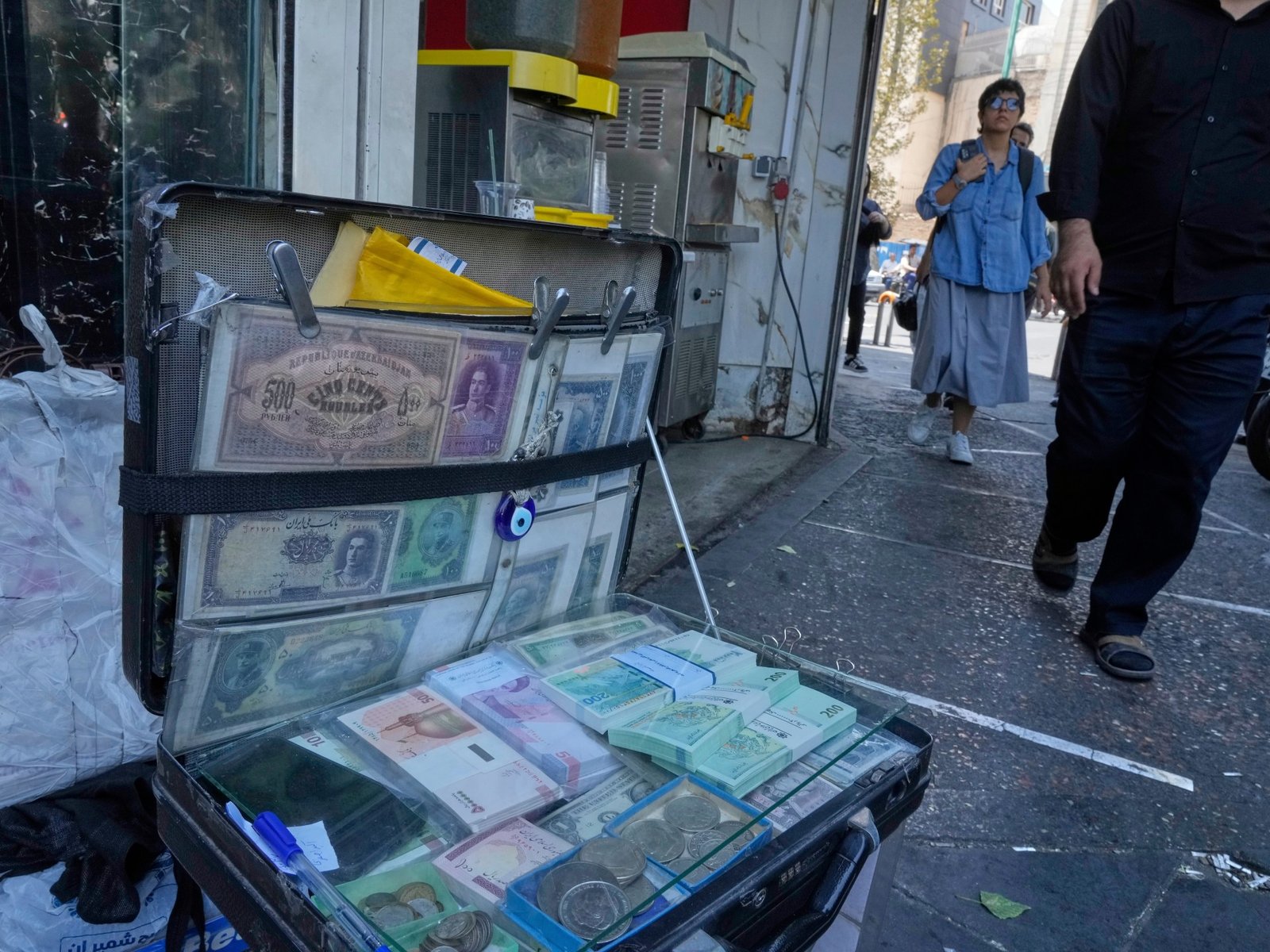
Tehran, Iran – Iran’s currency has been sharply depreciating again as European powers push to reinstate United Nations sanctions against the country amid stalled diplomacy and fears of war with Israel and the United States.
The US dollar hit a price of more than 1.06 million rials in Tehran’s open currency market on Monday, slightly higher than before Tehran and Washington started mediated negotiations in April.
The Iranian government and central bank have once again said the sharp decline of the embattled national currency is not due to a fall in economic activity, and rather reflects a psychological reaction to deteriorating political conditions.
France, Germany and the United Kingdom, the remaining European parties to Iran’s 2015 nuclear deal with world powers, have triggered the “snapback” mechanism of the accord that could automatically reinstate UN sanctions lifted in exchange for curbs on Iran’s nuclear programme.
The European allies have now effectively given Iran a one-month deadline to negotiate an agreement that could defer snapback for a year or less.
The conditions include resuming negotiations with the US, allowing UN inspectors access to its nuclear sites, and accounting for the 408.6kg (900.8 pounds) of highly enriched uranium the International Atomic Energy Agency (IAEA) says the country has.
Iran, which has long maintained that its nuclear programme is peaceful, has said the Western allies have demanded conditions that must be the outcome of negotiations, not the starting point, so they cannot be met.
Hardline lawmakers in the Iranian parliament are also drafting legislation that would see Iran withdraw from the Nuclear Non-Proliferation Treaty (NPT) and cut off all cooperation with the IAEA if sanctions are reinstated.
IAEA inspectors were allowed to oversee fuel replacement at the Bushehr Nuclear Power Plant in southern Iran this week, but have not had further access as Tehran blasts the global nuclear watchdog for purportedly paving the way for Israeli and US strikes on Iran in June.
Tehran has also said that the European powers have no legal basis to initiate the snapback process, because the US torpedoed the landmark nuclear accord by unilaterally withdrawing from it in 2018, and imposing harsh sanctions against Iran.
Those sanctions, imposed by US President Donald Trump during his first tenure in the White House and expanded by President Joe Biden and then again by Trump in his second term, led to Iran gradually ramping up its nuclear efforts and now enriching uranium up to 60 percent – a short technical step below the 90 percent required for a bomb.
Iranian authorities have also tried to reach a coordinated position with China and Russia, other signatories of the 2015 nuclear deal that are opposed to snapback.
The foreign ministers of the three countries released a joint statement on Monday, which said the move by the Europeans contravenes the UN Security Council (UNSC) resolution underpinning the nuclear accord, and is therefore “by default legally and procedurally flawed”. They said the parties must address the root cause of the situation and “abandon sanctions, threats of force”.
Iran’s Foreign Minister Abbas Araghchi said on Monday that the European powers are betraying the mission of the UNSC, turning it into an “instrument of coercion rather than a guardian of global security”.
“The urgent task before us is to restore international law and build upon it to give diplomacy the ground it needs to succeed,” he wrote in a post on X.
The presidents of Iran, China and Russia met during the summit of the Shanghai Cooperation Organisation in the northern Chinese city of Tianjin on Monday. Iran’s President Masoud Pezeshkian reportedly had a two-hour meeting with Russian President Vladimir Putin.
Crises at home
No breakthrough appears in sight despite the Western deadline, and threats of more strikes on Iran have persisted by Israel and the US since the end of the 12-day war in June.
The negative reaction of the currency market in Tehran shows concern over the potential impact of reinstated UN sanctions on an economy that has already been battered by years of stringent sanctions imposed by Washington.
The inflation rate remains above 35 percent in Iran, one of the highest in the world, and UN sanctions would only deepen the country’s isolation from international markets and make it more difficult to sell oil or other exports.
After decades of mismanagement and sanctions, Iran is also battling multiple crises domestically as external pressure piles.
Tehran, as well as cities, towns and villages across the country, have been experiencing daily power blackouts for months as ageing and inefficient infrastructure fails to keep up with demand in soaring summer heat. The outages have frustrated citizens and added insult to injury for industries damaged by the sanctions.
The bustling capital city and expansive areas across Iran are facing a water crisis as well, which stems from chronic mismanagement and overuse of water resources, in addition to intensifying droughts that have made the situation increasingly critical in recent years.
Since the end of the 12-day war with Israel, internet connections have been considerably slower and patchier than usual, and most international apps and websites remain blocked by the state.
The global positioning system (GPS) network remains heavily disrupted by the state, too, especially in Tehran. But officials have not elaborated on how that could protect against more potential Israeli attacks, or how long the disruptions are expected to remain in place.
