
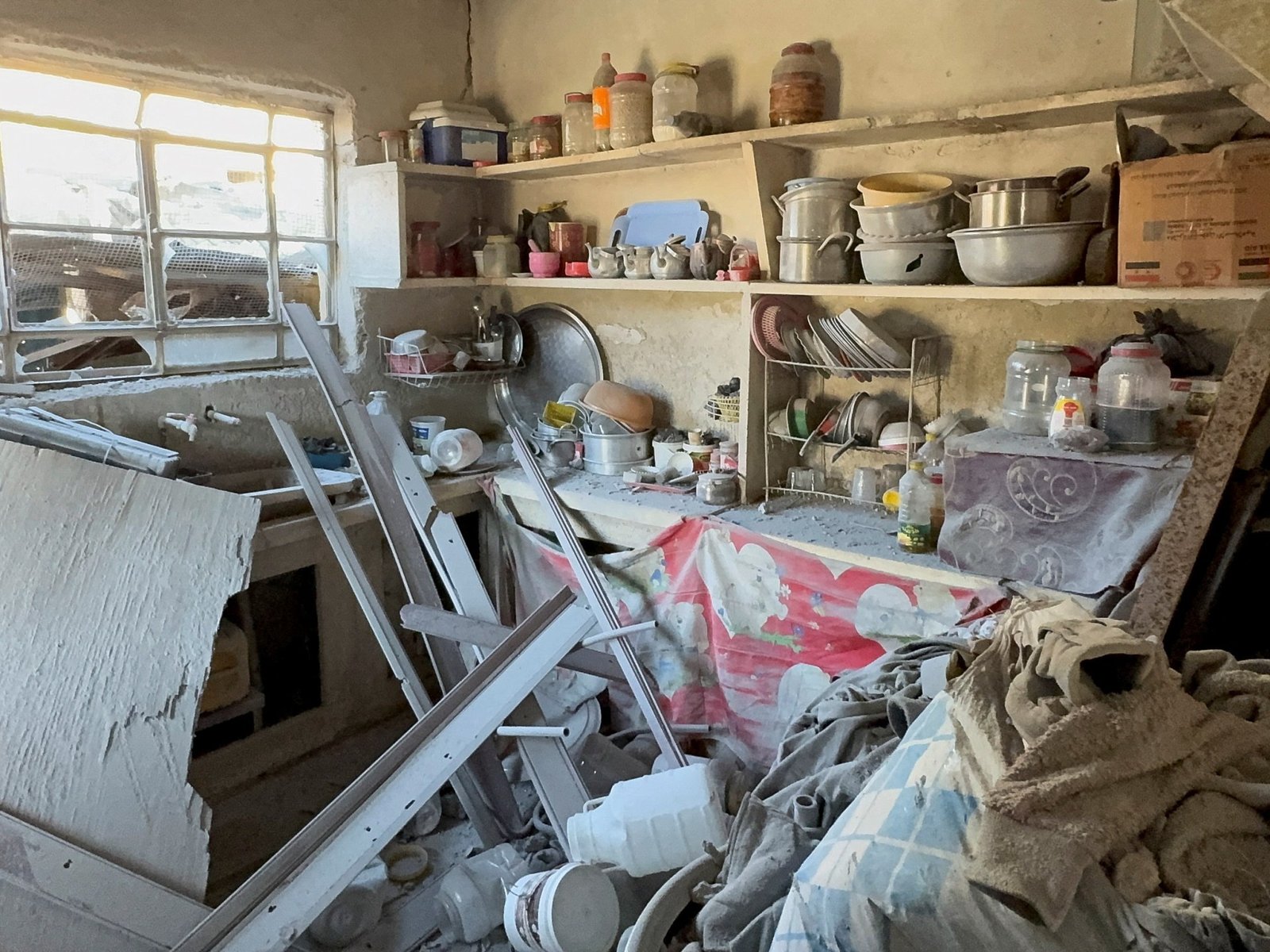
Israel killed 13 people, including two children, in strikes on Syria on Friday after locals resisted an incursion by the Israeli army.
On Friday, Israel killed at least 13 people, including two children, in the Damascus countryside town of Beit Jinn.
The latest air raids came after locals tried to repel an Israeli military incursion into Beit Jinn, leading to clashes.
Recommended Stories
list of 3 items
- list 1 of 3Tens of thousands rally in Europe, demanding justice over Israel’s Gaza war
- list 2 of 3Netanyahu writes to Israeli president requesting pardon in corruption cases
- list 3 of 3“Lack of resources” in Gaza leaves mothers struggling
end of list
Israel claimed it was going after members of the Jamaa al-Islamiya, Lebanon’s branch of the Muslim Brotherhood.
However, rubbishing the Israeli claim, the group said it was not active outside Lebanon.
Here’s everything you need to know about the attack in Beit Jinn and the context behind it.
What happened?
The Israeli army’s 55th Reserve Brigade raided Beit Jinn in the early hours of Friday morning, ostensibly to take three Syrians who live there, claiming they were members of Jamaa al-Islamiya and that they posed a “danger to Israel”.
However, the incursion did not go to plan. Locals resisted, and six Israeli soldiers were wounded in the resulting clashes, three of them seriously, according to the Israeli army.
Israel then sent in its warplanes.
“We were asleep when we were woken up at three in the morning by gunfire,” Iyad Daher, a wounded resident, told the AFP news agency from al-Mouwasat Hospital in Damascus.
“We went outside to see what was happening and saw the Israeli army in the village, soldiers and tanks,” Daher said. “Then they withdrew, the air force came – and the shells started falling.”
This was the deadliest of Israel’s more than 1,000 strikes on Syria since the fall of the Assad regime
Why were Israeli forces in Syria?
This was not the first time Israel raided Syrian territory.
Israeli officials and government-aligned media say Israel can no longer respect its enemies’ borders or allow “hostile” groups along its borders after the Hamas-led attack on October 7, 2023, and Israel has sought to use force in other countries to create buffer zones around itself, in the Gaza Strip, Syria and Lebanon.
Since the fall of the Assad regime last December, Israel has launched frequent air raids across Syria and ground incursions in its south. It set up numerous checkpoints in Syria and detained and disappeared Syrian citizens from Syrian territory, holding them illegally in Israel.
It invaded the buffer zone that separated the two countries since they signed the 1974 disengagement agreement, setting up outposts around Jabal al-Sheikh (Mount Hermon in English).
The new Syrian government, led by Ahmed al-Sharaa, said it would abide by the 1974 agreement.
Israel occupied the Syrian Golan Heights in 1967. A demilitarised zone was later established, but when President Bashar al-Assad was ousted, and his army was in shambles, Israel invaded to take outposts on Syrian-controlled land.
What did the Syrian government say?
That the attack is a war crime.
The Syrian Ministry of Foreign Affairs released a statement, condemning “the criminal attack carried out by an Israeli occupation army patrol in Beit Jinn. The occupation forces’ targeting of the town of Beit Jinn with brutal and deliberate shelling, following their failed incursion, constitutes a full-fledged war crime.”
What is Israel claiming?
Israel’s public broadcaster said the operation was an “arrest raid” targeting Jamaa al-Islamiya members.
An Israeli army spokesperson said three people linked to the group were “arrested”.
Israel claims the group is operating in southern Syria to “recruit terrorists” and plays a role in what it calls the “northern front” – Israel’s northern border with Lebanon.
media’s Osama Bin Javaid reported from Syria that Israel has yet to offer any proof of the claim that the people it was after were involved with the group.
What is Jamaa al-Islamiya?
The group is the Lebanese branch of the Muslim Brotherhood.
It was founded in 1956 and has a stable presence in Lebanon, though it has never been as popular as some of its regional counterparts.
It has one member of parliament and was historically aligned with the Future Movement, founded by former Prime Minister Rafik Hariri.
However, the group moved closer to Iran and Hezbollah politically in recent years. Its armed wing, the Fajr Forces, took part in some operations against Israel in 2023-24.
After Israel’s claims that it was involved in southern Syria, the group released a statement on Friday stating that it was “surprised” Israeli media had involved it in what happened in Beit Jinn.
Denouncing the attack, it said it conducts “no activities outside Lebanon”.
The group added that it has abided by and committed to the ceasefire agreement from November 2024 between Lebanon and Israel.
Has Israel claimed it was attacking this group before?
Yes.
In March 2024, Israel attacked al-Habbariyeh in southern Lebanon, killing seven emergency relief volunteers.
It claimed the attack targeted a member of the group, calling him a “significant terrorist”.
However, the alleged target was never named, the director of the Lebanese Emergency and Relief Corps’ Ambulance Association told media.
