
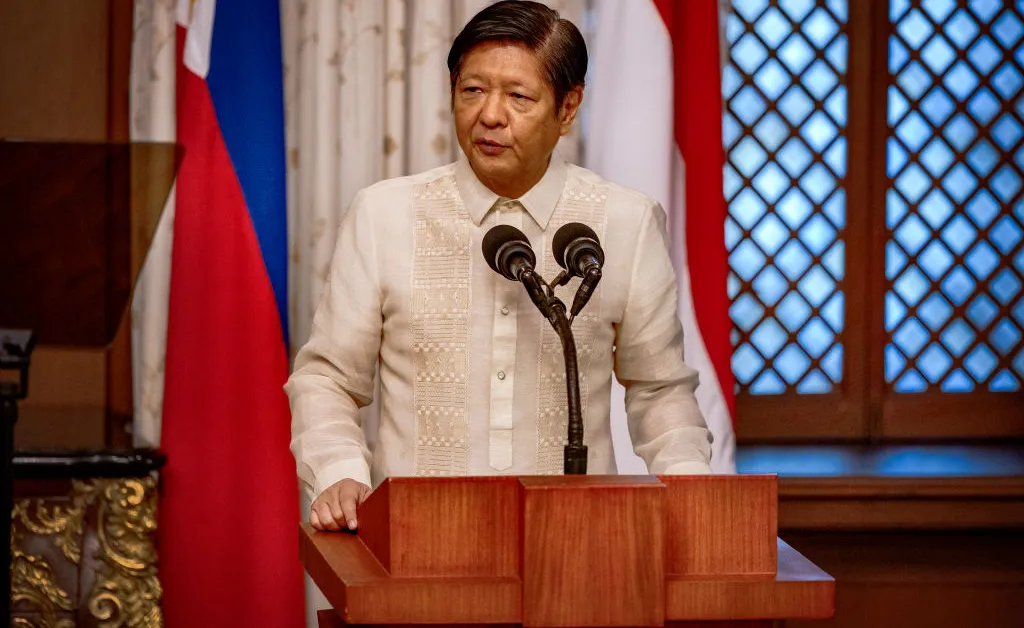
President signs law delaying inaugural polls in Muslim Mindanao for the third time amid legal challenges and political delays
MANILA — President Ferdinand Marcos Jr. has signed a new law postponing the first regular elections for the Bangsamoro Autonomous Region in Muslim Mindanao (BARMM) to September 14, marking the third delay for the long-awaited polls.
The law, Republic Act No. 12317, amends the Bangsamoro Organic Law (Republic Act No. 11054), which originally scheduled the region’s elections to coincide with the national and local elections in May 2022.
Under the new measure, the Bangsamoro Transition Authority (BTA) will continue to serve as the interim government for the southern Philippine region until the elections are held.
Third Postponement Amid Legal Hurdles
The repeated delays stem from multiple factors, including the exclusion of Sulu province from the BARMM—a decision currently being challenged before the Supreme Court. The province’s removal from the regional framework has created legal uncertainties that lawmakers say necessitated the postponement.
The BARMM was established in 2019 following the ratification of the Bangsamoro Organic Law through a plebiscite. It replaced the Autonomous Region in Muslim Mindanao (ARMM), which had existed since 2000. The new political entity was designed to grant Muslim Filipinos greater self-governance, with its own executive, legislative, and judicial branches—a hard-won outcome of decades of peace negotiations between Manila and Bangsamoro groups.
Political Dynamics Complicate Transition
According to the Bangsamoro Organic Law, the region was created “in recognition of the justness and legitimacy of the cause of the Bangsamoro people,” with the goal of securing their identity and allowing meaningful self-governance within the framework of the Philippine Constitution.
However, the transition has been complicated by internal political pressures. Local political families have pushed for the creation of new congressional districts—a move critics say is aimed at consolidating dynastic control—adding to the delays in holding elections.
Historical Context
Muslim Mindanao holds a distinct place in Philippine history. It was home to the powerful sultanates of Sulu and Maguindanao and was the most politically advanced region in the archipelago prior to Spanish colonization. The area resisted both Spanish and American rule, and calls for autonomy or secession have long cited the historical fact that its people were not consulted when the modern Philippine republic was established.
The region, located in the southwestern part of Mindanao Island, comprises 13 ethno-linguistic groups with a unique Islamic-Malay culture that sets it apart from the predominantly Christian lowlands of the country.
