
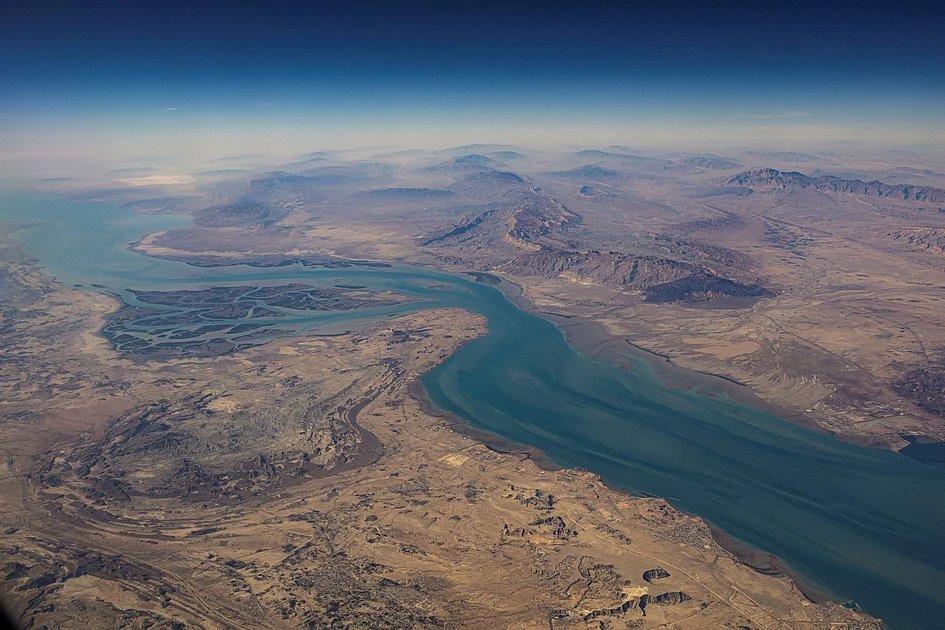
Global oil markets are heading into one of their most precarious reopenings in years after coordinated US-Israel strikes on Iran triggered an aggressive retaliation from Tehran and effectively paralysed traffic through the Strait of Hormuz, the world’s most critical oil chokepoint.
Brent crude, which settled near $82 a barrel on Friday and US benchmark West Texas Intermediate at around $78, is now expected to gap sharply higher when trading resumes. Early indications from market participants and energy consultants suggest prices could jump by $10 to $20 per barrel in a single session if tanker flows remain disrupted. That would potentially propel Brent toward the mid- to high-$90 range, with some extreme scenarios briefly testing $100.
The scale of the risk has shifted dramatically over the weekend. What began as targeted military action has widened into a structural threat to maritime energy flows.
According to Jorge Leon, senior vice president and head of geopolitical analysis at Rystad Energy, Iran’s response has been “far more aggressive and expansive than in prior exchanges,” including reported attacks on US bases and key Gulf allies. The most immediate consequence for markets, he said, is the effective halt of traffic through Hormuz, preventing as much as 15 million barrels per day of crude from reaching global buyers.
While there has been no formal declaration of a blockade, the distinction is increasingly academic. Tanker operators and insurers are reportedly exercising extreme caution, and several vessels have delayed entry into the Strait. Whether closed by force or rendered inaccessible by risk avoidance, the impact on flows is largely the same: a sudden squeeze on nearly 30 per cent of global seaborne crude trade.
Even assuming full utilisation of alternative routes, the buffers are limited. Saudi Arabia can redirect volumes through its East-West pipeline to the Red Sea with capacity of about 5 million barrels per day. The UAE can bypass part of the Strait via its Abu Dhabi crude pipeline with capacity of roughly 1.5 million barrels per day. Yet analysts estimate that between 8 million and 10 million barrels per day would remain exposed if Hormuz stays effectively shut.
That potential loss dwarfs recent supply disruptions elsewhere and would eclipse the spare capacity that Opec+ has painstakingly managed in recent years. Rystad Energy warns that although global inventories are not critically low, the market’s true buffer is thinner than headline numbers suggest because spare capacity is concentrated among a handful of Gulf producers whose exports themselves depend on Hormuz.
Goldman Sachs has previously estimated that a sustained disruption of 1 million barrels per day could lift Brent by $10 to $15. A temporary loss several times that size explains why traders are bracing for an outsized repricing. Rystad now says Brent could jump by around $20 at the open if there are no credible de-escalation signals, reflecting both physical supply risk and extreme uncertainty.
Shipping congestion is another looming factor. Even if transit resumes within one to two weeks — the most likely scenario according to several analysts — the logistical backlog could take weeks longer to unwind. Tanker bunching, rescheduled cargoes and higher freight and insurance premiums would prolong volatility well beyond any formal reopening of the waterway.
There are mitigating cushions. Strategic petroleum reserves held by major consuming nations, including China and members of the International Energy Agency, could be tapped if disruption proves prolonged. The IEA has repeatedly said it stands ready to coordinate stock releases in the event of significant supply interruptions. However, such reserves are designed to smooth temporary shocks, not offset a structural choke on one of the world’s primary energy arteries.
Market intelligence firm Kpler takes a cautiously balanced view. Sumit Ritolia, lead research analyst for Refining and Modelling, notes that while temporary disruptions cannot be ruled out and freight and insurance costs will surge, a prolonged full blockade remains a low-probability scenario given the severe geopolitical consequences it would trigger. Nonetheless, even a short closure would force a rapid repricing of risk across crude, refined products and shipping markets.
The timing adds another layer of complexity. Opec+ is scheduled to meet on 29 February and has reportedly been discussing a larger-than-expected production increase. Under normal circumstances, additional barrels would weigh on prices. Yet if crude cannot physically exit the Gulf, upstream supply decisions become secondary to maritime access. The constraint, in this case, is not production capacity but export routes.
Beyond the oil patch, the implications are global. Inflation in advanced economies has cooled from post-pandemic peaks but remains sensitive to energy shocks. A sustained move above $95 would complicate the policy outlook for central banks, particularly the US Federal Reserve, which has been navigating a delicate balance between taming inflation and supporting growth. Emerging markets heavily reliant on imported energy would feel immediate pressure on trade balances and currencies.
For Gulf producers such as Saudi Arabia and the UAE, the situation is a double-edged sword. Higher prices would lift revenues, but any threat to regional infrastructure or shipping lanes would undermine export stability and investor confidence. Maritime security has long been a strategic priority for Gulf states, and renewed tensions underscore the fragility of global energy logistics.
As markets reopen, traders will focus on real-time maritime tracking data, confirmation of infrastructure damage, diplomatic signals and the posture of Gulf governments. In the absence of swift de-escalation, oil appears set for a sharp upward repricing.
Analysts say whether this becomes a brief spike or the start of a sustained rally will hinge less on the initial strikes and more on the status of a narrow stretch of water that now holds the balance of the global energy system.
