
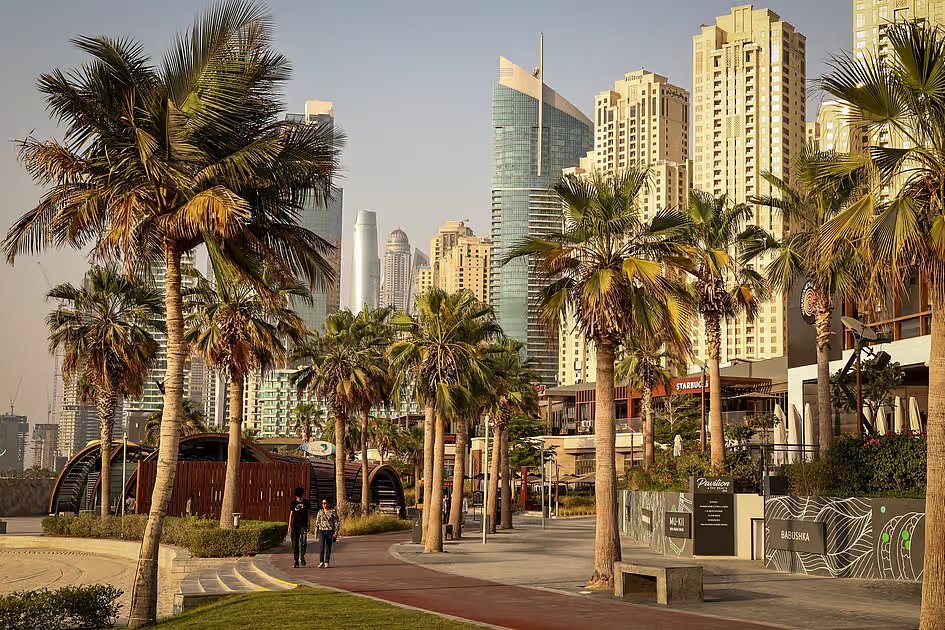
During the daytime, Dubai’s population swells to 6.39 million as 1.81 million commuters, tourists and other visitors enter the emirate
Dubai’s population has crossed 4.74 million after the emirate added more than 161,000 residents since the beginning of 2026, live data showed on Thursday.
The population stood at 4,741,335 at 1.45pm on July 30, according to the Dubai Population Clock. The increase runs counter to claims circulated during the regional conflict that residents were leaving Dubai in large numbers.
This is 161,335 more than the 4.58 million residents recorded at the end of 2025.
The figures represent Dubai’s usual resident population, defined as people who have lived in the emirate for at least six months or intend to remain for the same period.
People aged between 30 and 34 formed Dubai’s largest age group in 2025, accounting for 15.45 per cent of the population and reflecting the emirate’s large working-age community.
Daytime population reaches 6.39 million
The number of people present in Dubai rises significantly during peak daytime hours, reaching an average of 6.392 million.
This includes the resident population and around 1.812 million additional people temporarily present in the emirate during the day.
The majority are in Dubai for work or tourism, while the figure also includes students, shoppers and other short-term visitors.
The additional daytime population is equivalent to about 40 per cent of Dubai’s resident population, making it an important factor in planning roads, public transport, healthcare, schools, utilities and other services.
The live data was released as part of the ‘Dubai Population Now’ Real-Time Population Census and Population Growth Monitoring Initiative, approved by Sheikh Hamdan bin Mohammed bin Rashid Al Maktoum, Crown Prince of Dubai, Deputy Prime Minister, Minister of Defence and Chairman of the Executive Council of Dubai.
Near-record growth in 2025
Dubai’s population grew by approximately 332,000 in 2025, rising from about 4.248 million at the end of 2024 to 4.58 million a year later.
The annual growth rate of 7.5 per cent was among the highest ever recorded in the emirate. Dubai’s record population growth rate was 8.2 per cent, registered in the 1980 census.
Historical records indicate that Dubai had no more than 12,000 residents in 1881. Its population has since grown nearly 380-fold.
Population updated in real time
Dubai previously relied on conventional censuses conducted at fixed intervals, with seven carried out between 1975 and 2005.
The new system instead uses administrative records, government databases and smart systems to update population figures continuously.
Artificial intelligence, machine learning and predictive analytics are also being used to study demographic trends, mobility and residency patterns.
The population data draws on information from government entities responsible for residency, transport, utilities, healthcare, housing, education, tourism and employment.
