
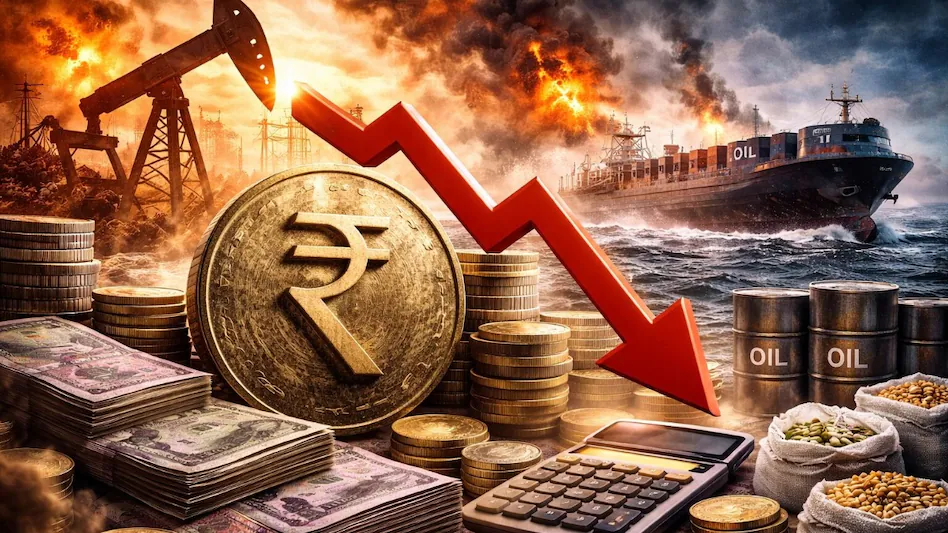
The currency briefly breached the 94-per-dollar mark before RBI intervention steadied it, as surging crude prices, persistent foreign outflows, and a resurgent greenback create a “perfect storm” of volatility.
Mumbai: The Indian rupee came under fresh pressure this week, briefly breaching the 94-per-dollar level for the first time before recovering to around 93.96 (Dh25.6) on Wednesday, as surging crude oil prices, persistent foreign investor outflows, and a resurgent US dollar combined to trigger one of the sharpest bouts of currency volatility in recent years.
The currency slipped 20 paise in early trade on Wednesday after losing 23 paise in the previous session, extending its weak run for the month as global risk sentiment deteriorated and energy markets tightened sharply.
‘Perfect Storm’ of External Shocks
Currency strategists say the rupee’s decline reflects a “perfect storm” of external shocks rather than a single trigger. Escalating tensions in the Middle East have pushed oil prices back above $100 a barrel, sharply increasing India’s import bill and reviving concerns about a widening current account deficit — a key structural driver of rupee weakness.
India imports roughly 88–89 per cent of its crude oil requirements, making the currency particularly vulnerable to energy-market disruptions. With supply risks rising around the Strait of Hormuz, refiners and importers have stepped up dollar purchases to secure cargoes, intensifying pressure on the rupee.
“The rise in oil prices is one of the most immediate transmission channels affecting the rupee,” analysts at Goldman Sachs said in a recent currency outlook, noting that sustained volatility in energy markets typically feeds directly into India’s trade deficit and inflation expectations.
Foreign Outflows and Dollar Dominance
Persistent foreign institutional investor (FII) outflows have added to the pressure. Overseas funds have been trimming exposure to emerging markets amid uncertainty over global growth and expectations that US interest rates will remain elevated for longer. When investors exit Indian equities or bonds, they convert rupee holdings into dollars, increasing supply in the foreign-exchange market and weakening the currency.
Strategists at Morgan Stanley said global portfolio rebalancing toward US assets has intensified as Treasury yields remain attractive, drawing capital away from risk-sensitive emerging-market currencies, including the rupee.
The strength of the US dollar itself remains a dominant force. Higher-for-longer interest-rate expectations from the Federal Reserve have reinforced demand for dollar assets during geopolitical turbulence, prompting investors to prioritise liquidity and safety over emerging-market carry trades.
Economists at Nomura noted that the rupee’s depreciation mirrors broader weakness across Asian currencies, driven by higher US yields and rising energy import costs. Historically, the currencies of oil-importing economies tend to weaken more rapidly during commodity price shocks.
Trade Deficit and Geopolitical Uncertainty
The widening trade deficit is compounding these external pressures. India continues to import large volumes of electronics, fertilisers and energy commodities, creating sustained structural demand for dollars and accelerating depreciation cycles during periods of global stress.
Geopolitical uncertainty has also weighed heavily on sentiment. Traders say concerns that the Middle East conflict could persist longer than expected have increased risk aversion across global markets, prompting investors to reduce exposure to emerging economies. In such environments, currencies like the rupee typically face disproportionate pressure.
RBI Steps In to Contain Volatility
Despite the weakness, policymakers have moved to contain volatility. The Reserve Bank of India has been actively intervening in currency markets using its sizeable foreign-exchange reserves to smooth excessive fluctuations and prevent disorderly movements. Analysts say these interventions helped the rupee recover after briefly breaching the 94-per-dollar mark, signalling the authorities’ readiness to maintain stability during periods of stress.
Inflation Risks and Macro Resilience
At the same time, rising oil prices are beginning to lift inflation risks at home. A weaker rupee increases the cost of imports such as fuel, fertilisers and edible oils, potentially complicating monetary-policy decisions in the months ahead.
Even so, economists stress that India’s macroeconomic fundamentals remain relatively resilient compared with many emerging markets. Strong domestic demand, steady services exports and a well-capitalised banking system continue to provide buffers against extreme currency swings.
According to Oxford Economics, the rupee’s recent decline reflects external shocks rather than any structural deterioration in India’s growth outlook. Sustained capital inflows linked to infrastructure expansion and manufacturing investment could help stabilise the currency once global energy markets normalise.
Outlook: Volatility Expected to Persist
Looking ahead, the rupee’s trajectory will depend largely on three variables: crude oil prices, the strength of the US dollar and the direction of foreign portfolio flows. If oil remains above $100 and geopolitical tensions persist, traders warn the currency could face further pressure toward the 95-per-dollar level.
However, strong reserves, active central-bank intervention and resilient domestic demand suggest a disorderly slide remains unlikely. Instead, the rupee is expected to stay volatile but broadly aligned with global currency trends as markets adjust to shifting geopolitical risks.
