
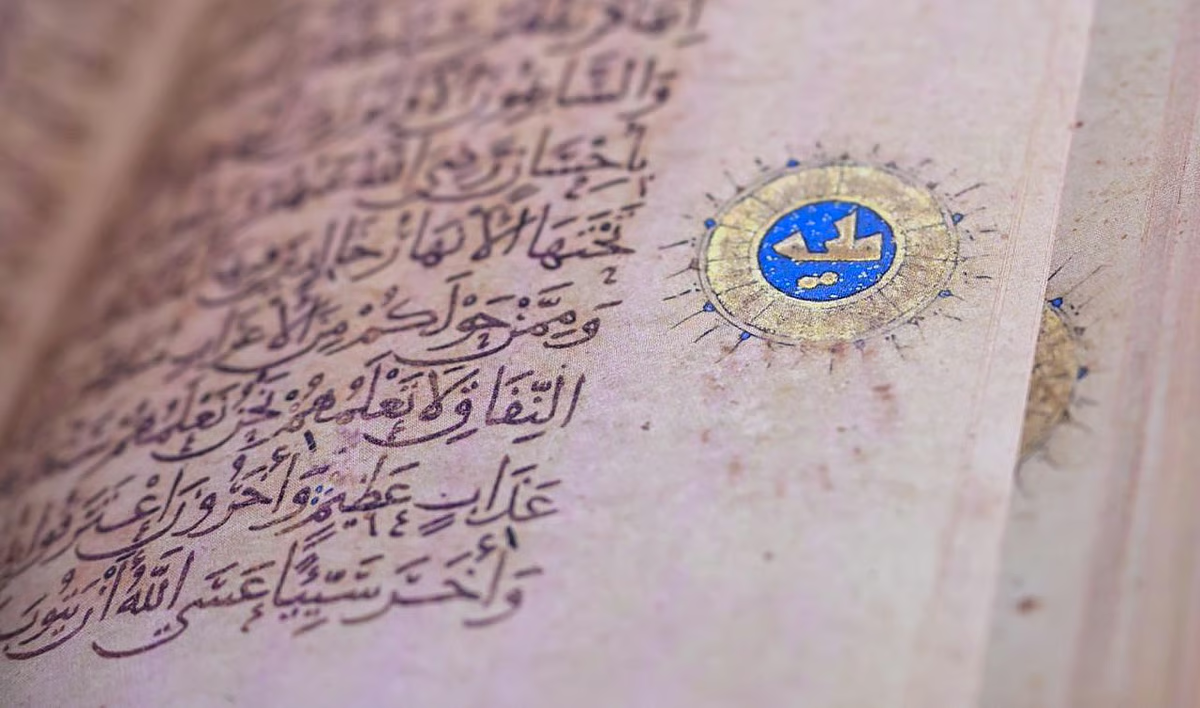
The 1,000-year-old masterpiece by Ibn al-Bawwab, reproduced in precise facsimile, demonstrates the birth of the elegant Arabic script still in use today.
SHARJAH, UAE – A landmark piece of Islamic heritage is now on display at the 44th Sharjah International Book Fair: a rare replica of a Quran manuscript penned by the master calligrapher Ibn al-Bawwab in the year 1000 CE.
Housed at the Iranian pavilion of Safir Ardehal, the exhibit draws visitors into the world of early Arabic calligraphy, showcasing a work that fundamentally shaped the visual identity of the Islamic world.
“This isn’t just a book; it’s a revolution in ink,” said Hamed Deshdashti, a representative from Safir Ardehal. He explained that the original manuscript, safeguarded in Dublin’s Chester Beatty Library, was created by Ibn al-Bawwab (whose real name was Abu al-Hasan Ali Ibn Hilal). “Before him, Arabic script was more rigid. Ibn al-Bawwab introduced the fluid, proportional naskh style, which became the foundation for modern Arabic writing.”
The replica reveals the calligrapher’s stunning precision. Each of the 16 lines per page is a lesson in balance, with letters flowing in a harmonious rhythm. Deshdashti emphasized that the creator was likely a one-man workshop, personally applying the gold leaf and intricate designs alongside the sacred text.
“Crafted with a hand-cut reed pen on vellum, this work represents the peak of artisan skill,” he added. “It connects viewers directly to the mind and hand of a genius from a millennium ago.”
The display offers a unique educational and cultural experience, underscoring how the artistic principles established by Ibn al-Bawwab continue to resonate, inspiring artists and designers across the globe to this day.
