
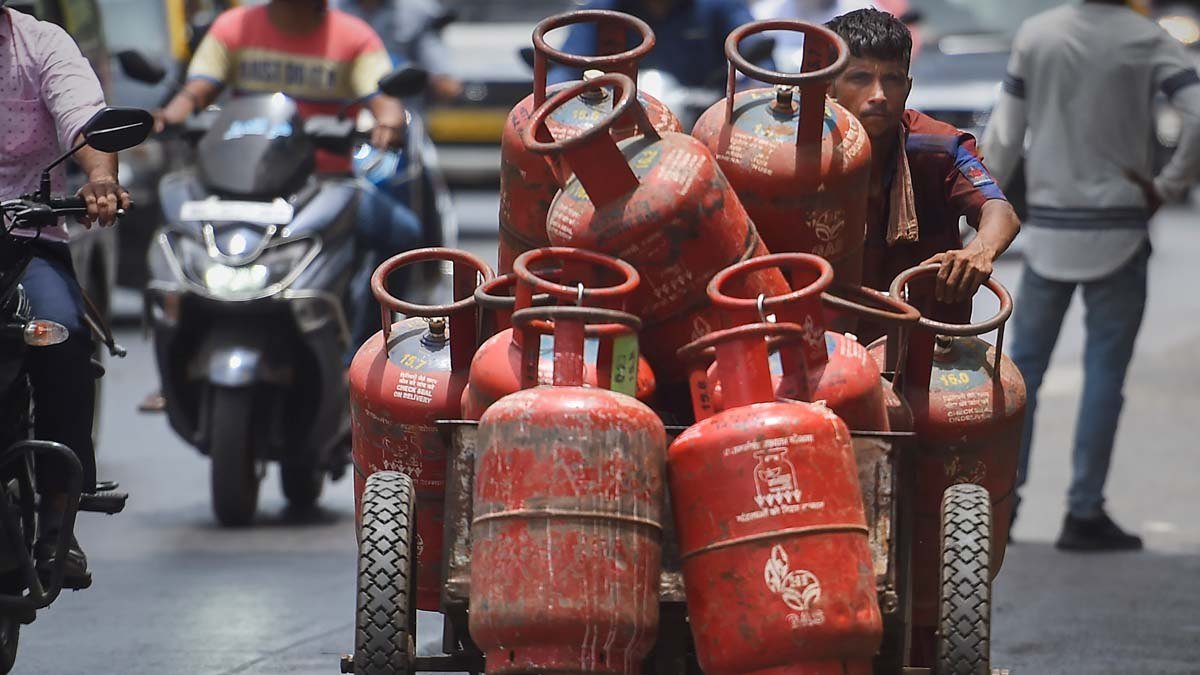
With 90% of India’s LPG imports passing through the conflict-hit Strait of Hormuz, supply disruptions have left millions of households facing rising prices and shortages—reigniting the push for piped natural gas.
SHARJAH — As the US-Israel-Iran war continues to disrupt maritime trade routes, India is facing one of its most severe energy supply shocks in recent years. The closure of the Strait of Hormuz—a critical chokepoint for global energy shipments—has dealt a heavy blow to India’s liquefied petroleum gas (LPG) imports, triggering shortages and soaring prices across the country.
India imports 60% of its total LPG requirement, and nearly 90% of those shipments pass through the Strait of Hormuz. With the strait now effectively closed due to escalating regional conflict, supply chains have been severely disrupted.
For India’s 330 million LPG consumers—most of whom rely on cylinder gas for daily cooking—the crisis has brought long-standing energy vulnerabilities into sharp focus. In response, the government is accelerating efforts to shift urban households toward piped natural gas (PNG).
Here is a detailed look at the two fuels and why India finds itself at the center of an energy crunch.
LPG vs PNG: Key Differences at a Glance
While both LPG and PNG serve domestic cooking needs, their supply chains, costs, and reach differ significantly.
| Aspect | LPG (Liquefied Petroleum Gas) | PNG (Piped Natural Gas) |
|---|---|---|
| Delivery Method | Supplied in cylinders via a vast dealer network; often transported by trucks or even two-wheelers. | Delivered through an underground pipeline network directly to households. |
| Chemical Composition | Propane and butane, stored in liquid form under pressure. | Primarily methane, supplied in gaseous form. |
| Consumer Base | Over 330 million users across urban, semi-urban, and rural areas. | Around 16 million users, concentrated in metros and major cities. |
| Cost | More expensive; subject to global crude price fluctuations. | 30–40% cheaper due to streamlined distribution. |
| Supply Chain Complexity | High—involves bottling plants, storage, and road transport. | Low—direct pipeline connection eliminates intermediaries. |
A Tale of Two Infrastructures
PNG was first introduced in India in 1987 with the commissioning of the 1,750-km Hazira-Vijapur-Jagdishpur pipeline, initially serving industrial users. It wasn’t until 1998 that households in Delhi began receiving piped gas for cooking.
Today, while LPG reaches nearly every corner of the country—from remote villages to urban centers—PNG remains largely confined to metropolitan areas, state capitals, and major cities. Laying pipelines in geographically challenging or sparsely populated regions continues to be a major hurdle.
Why India Is Pushing for PNG
India currently consumes nearly 190 MMSCMD (million metric standard cubic meters per day) of natural gas, with about half of that produced domestically. The government has set an ambitious target of expanding PNG connections to over 125 million households by 2034.
The rationale is twofold:
- Energy Security: Reducing dependence on imported LPG insulates India from geopolitical shocks like the current Strait of Hormuz crisis.
- Cost Efficiency: PNG is not only cheaper for consumers but also benefits from a simpler, more resilient supply chain.
What’s Behind the Current LPG Crisis?
The ongoing US-Israel-Iran war has effectively closed the Strait of Hormuz, the narrow passage through which one-fifth of the world’s oil and a significant share of LPG transits.
For India, this has translated into:
- Sharp decline in LPG imports despite robust domestic demand.
- Rising cylinder prices as supply tightens.
- Increased waiting periods for consumers dependent on dealer deliveries.
While the government is promoting PNG as a long-term solution, the transition will take years. In the interim, India’s vast LPG-dependent population remains exposed to the volatility of global energy markets and regional conflicts.
Looking Ahead
The current crisis has underscored the urgency of diversifying India’s energy mix and accelerating pipeline infrastructure expansion. For now, urban consumers with access to PNG enjoy relative stability, while millions of households across smaller towns and rural areas continue to bear the brunt of the shortage.
As geopolitical tensions in West Asia show no signs of abating, India’s energy security strategy is likely to see a renewed focus on domestic production, alternative fuels, and rapid PNG network expansion.
