Close Menu
    What's Hot

    Gulf countries gear up diplomacy to stave off US-Iran escalation

    January 16, 2026

    Scepticism and hope: Gaza reacts to Trump’s ‘Board of Peace’

    January 16, 2026

    Yemen’s Saudi-backed government appoints new prime minister

    January 16, 2026
    Facebook X (Twitter) Instagram
    • Politics
    • Economy
    Facebook X (Twitter) Instagram
    Gulf News Week
    Subscribe
    Friday, January 16
    • Home
    • Politics
      • Europe
      • Middle East
      • Russia
      • Social
      • Ukraine Conflict
      • US Politics
      • World
    • Region
      • Middle East News
    • World
    • Economy
      • Banking
      • Business
      • Markets
    • Real Estate
    • Science & Tech
      • AI & Tech
      • Climate
      • Computing
      • Science
      • Space Science
      • Tech
    • Sports

      Alcaraz, Sabalenka Lead Seeds for Australian Open; Djokovic Seeded Fourth

      January 14, 2026

      Cunha Strike Saves Manchester United in Tense Draw at Rivals Leeds

      January 5, 2026

      Historic Defense: Saudi Arabia’s Al-Rajhi Begins Dakar 2026 Title Campaign with W2RC Goal in Sight

      January 2, 2026

      Australian Summer of Tennis Ignites with United Cup, Rivalries, and Absent Stars

      January 1, 2026

      Slot Predicts More Goals for Wirtz After £100m Signing Ends Drought at Liverpool

      December 29, 2025
    • Health
    • Travel
    • Contact
    Gulf News Week
    Home»Politics»Middle East»Sudan’s el-Fasher has symbolism that hasn’t died
    Middle East

    Sudan’s el-Fasher has symbolism that hasn’t died

    Gulf News WeekBy Gulf News WeekDecember 14, 2025Updated:December 15, 2025No Comments4 Mins Read
    Share Facebook Twitter Pinterest Copy Link LinkedIn Tumblr Email VKontakte Telegram
    Sudan’s el-Fasher has symbolism that hasn’t died
    Share
    Facebook Twitter Pinterest Email Copy Link

    North Darfur’s capital fell to Rapid Support Forces yet remains a political and spiritual city that cannot be overlooked.

    El-Fasher has a special place in the consciousness of many Sudanese people. For them, it is more than the capital of North Darfur State in western Sudan.

    It is deeply rooted, historically and culturally, in the national identity.

    Between its first fall in 1916 at the hands of British forces and its second fall in October to the Rapid Support Forces (RSF) paramilitary group, el-Fasher stands out as a spiritual, political and social centre.

    Historical roots and symbol of resistance

    Since the era of Sultan Ali Dinar (1898-1916), el-Fasher had been a hub for knowledge, religious education and spiritual heritage. It was a place where the Kiswa, the black cloth that covers the Kaaba in Mecca, Saudi Arabia, was made.

    Many researchers of Sudanese heritage argue that after the end of the sultanate, the city’s spiritual dimension continued to shape the collective consciousness of the inhabitants of Darfur.

    The city and Ali Dinar became symbols of national steadfastness and resistance after the British occupied el-Fasher in November 1916 as part of their colonial strategy to redraw the political map of the region.

    Ali Dinar organised the resistance against the British, but Britain brought an end to the independent Darfur Sultanate and forced its integration into the modern Sudanese state, which was shaped according to the interests of colonial powers.

    Spirit of resistance

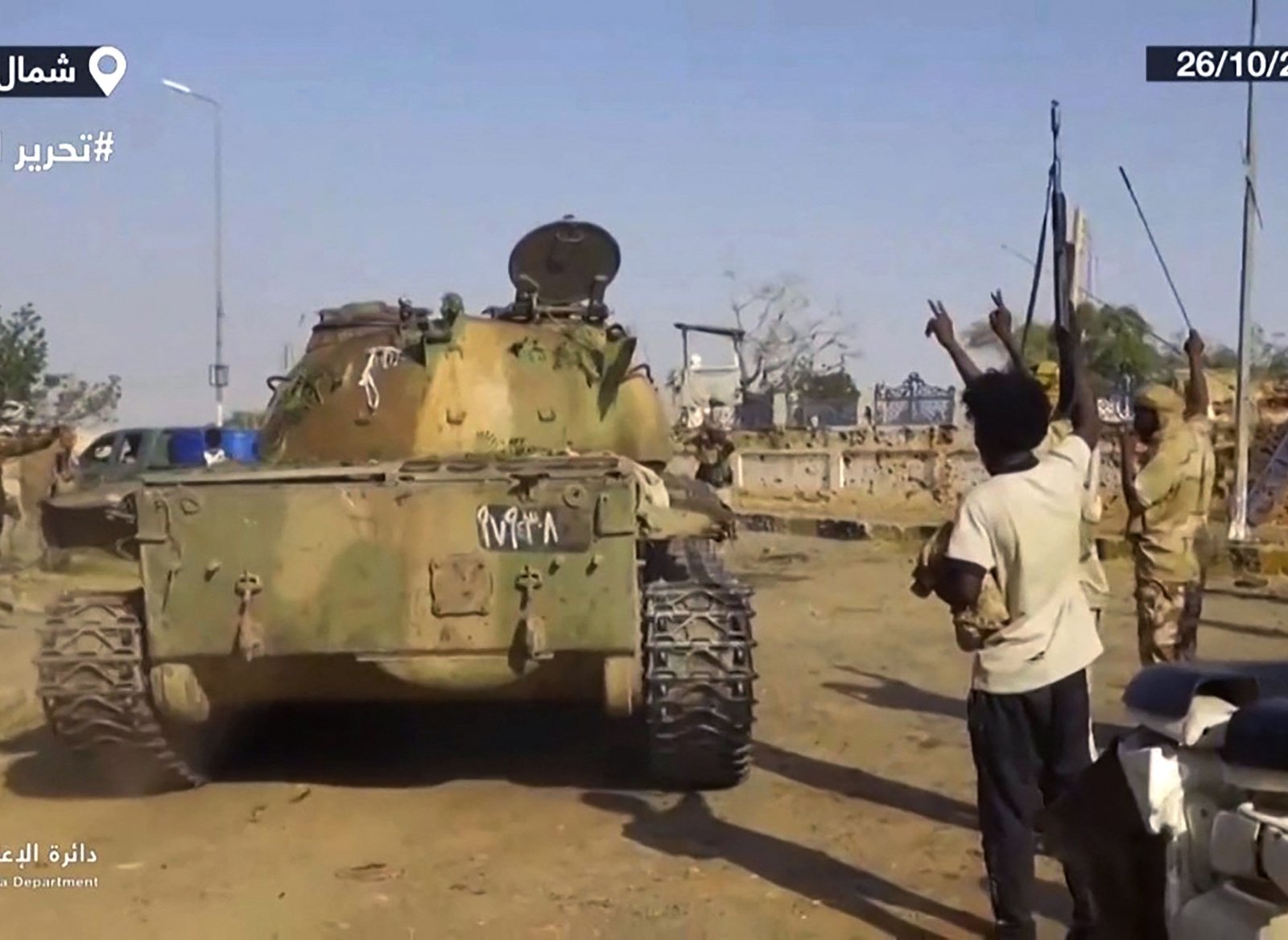
    More than a century after that historic fall, el-Fasher fell again, this time to the RSF, which, according to local reports and Sudanese government officials, pointed to foreign intervention in support of the paramilitary.

    The RSF had besieged the city for more than 18 months. Tens of thousands of people were displaced, and according to the Sudan Doctors Network, at least 1,500 people were killed in 48 hours after the RSF took control of el-Fasher.

    A threatened social fabric

    The city has been distinguished by its tribal and cultural diversity, seen for decades as a model of coexistence in Darfur. However, the war has caused deep fractures as warnings are issued of forced demographic change that threatens the city’s historical social balance.

    “Tribal affiliations have begun to be used as tools in the conflict, leading to a partial breakdown of traditional relationships that underpinned coexistence in el-Fasher,” Hussein Adam, a researcher in sociology and a doctoral candidate at Bursa University in Turkiye, told media.

    “Population shifts caused by displacement and forced migration have begun to disrupt the social structure, potentially reshaping the city’s identity in unpredictable ways,” Adam said, adding that “ignoring the social dimension in any political settlement may lead to future conflicts of greater complexity”.

    A Sudanese girl who fled el-Fasher lines up with other women to receive a meal at al-Afad displacement camp in al-Dabba, northern Sudan, on November 20, 2025 [Ebrahim Hamid/AFP]

    For many, the fall of el-Fasher has caused bitterness, but it has also invoked a sense of resilience and hope.

    “After this fall, the shelling may stop temporarily, but the wounds remain,” Sheikh Abdul Rahim Adam, an imam who fled to West Darfur, told media.

    “Despite the suffering, our memory remains alive with our mosques and Quran schools, and we will return to protect our heritage,” he said.

    “The city will soon be liberated from the grip of the [RSF], and we will continue educating our children,’’ Fatima Abdul Karim, a teacher displaced to the Kurma area west of el-Fasher, told media.

    ‘’This city is … identity and dignity. I saw our schools turn into military barracks, but we will rebuild them soon.”

    Need for recovery

    The war caused economic paralysis in el-Fasher, and its bustling markets became semi-abandoned places. Traders stopped coming from other parts of Sudan, leading to skyrocketing prices and a scarcity of basic goods.

    Sudanese history researcher Ibrahim Saeed Abkar believes that Sudan’s recovery depends on restoring its collective memory and acknowledging the historical roles of cities like el-Fasher.

    Abkar added that the resistance of Ali Dinar represents a model of civilisational resilience, which could inspire reconstruction efforts if peace is achieved in the region.

    Advertisement

    Many observers are calling for an end to the fighting and the start of community dialogue before any political settlement, stressing that repairing the social fabric is no less important than physical reconstruction or political solutions.

    They emphasised that recovery requires addressing the psychological and social wounds left by the war.

    Features Middle East News Sudan Sudan war
    Share. Facebook Twitter Pinterest LinkedIn Tumblr Email Telegram Copy Link
    Gulf News Week

    Related Posts

    Middle East

    Gulf countries gear up diplomacy to stave off US-Iran escalation

    January 16, 2026
    Middle East

    Scepticism and hope: Gaza reacts to Trump’s ‘Board of Peace’

    January 16, 2026
    Middle East

    Yemen’s Saudi-backed government appoints new prime minister

    January 16, 2026
    Middle East

    Saudi to Sudan: Can Pakistan expand military footprint across Arab world?

    January 16, 2026
    Middle East

    UN Security Council holds emergency meeting on deadly protests in Iran

    January 16, 2026
    Middle East

    US says ‘all options on the table’ if Iran protest killings continue

    January 15, 2026
    Add A Comment

    Comments are closed.

    Editors Picks

    Gulf countries gear up diplomacy to stave off US-Iran escalation

    January 16, 2026

    Scepticism and hope: Gaza reacts to Trump’s ‘Board of Peace’

    January 16, 2026

    Yemen’s Saudi-backed government appoints new prime minister

    January 16, 2026

    Saudi to Sudan: Can Pakistan expand military footprint across Arab world?

    January 16, 2026
    Latest Posts

    Gulf countries gear up diplomacy to stave off US-Iran escalation

    January 16, 2026

    Scepticism and hope: Gaza reacts to Trump’s ‘Board of Peace’

    January 16, 2026

    Yemen’s Saudi-backed government appoints new prime minister

    January 16, 2026

    Subscribe to News

    Get the latest sports news from NewsSite about world, sports and politics.

    Advertisement
    Demo
    Gulf News Week

    Your source for the serious news. This demo is crafted specifically to exhibit the use of the theme as a news site. Visit our main page for more demos.

    We're social. Connect with us:

    Facebook X (Twitter) Instagram Pinterest YouTube
    Latest Posts

    Gulf countries gear up diplomacy to stave off US-Iran escalation

    January 16, 2026

    Scepticism and hope: Gaza reacts to Trump’s ‘Board of Peace’

    January 16, 2026

    Yemen’s Saudi-backed government appoints new prime minister

    January 16, 2026

    Subscribe to Updates

    Get the latest creative news from FooBar about art, design and business.

    © 2026 Gulf News Week. Designed by HAM Digital Media.
    • Home
    • Politics
    • Economy
    • Sports

    Type above and press Enter to search. Press Esc to cancel.