
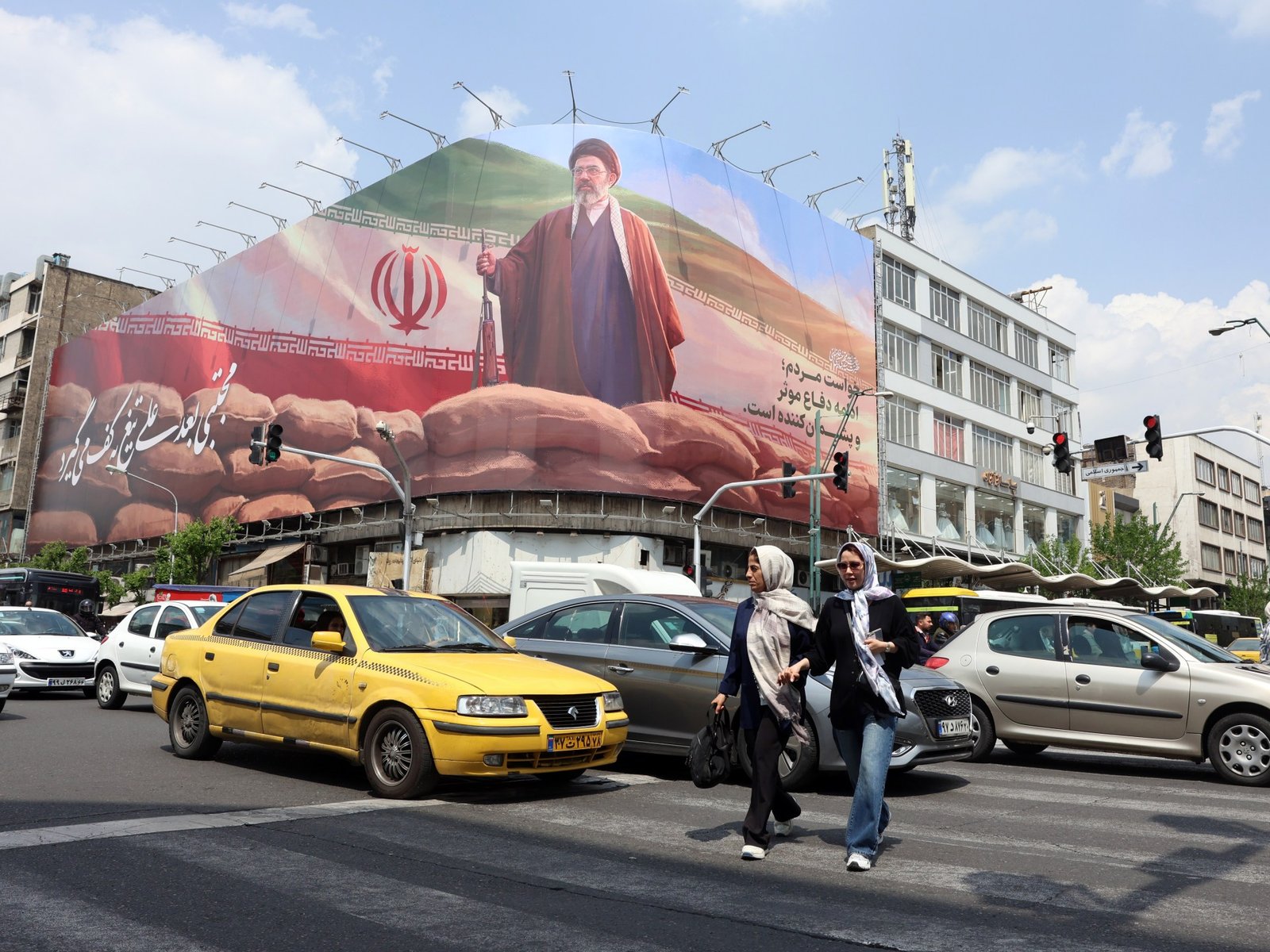
A new narrative about Iran’s leadership mistakes continuity for change – and echoes the regime’s own preferred framing.
The New York Times published a detailed account this week of Iran’s new leadership structure, based on interviews with more than 20 Iranian officials, former officials, Revolutionary Guard members and individuals close to the new supreme leader. It deserves a careful read, but not for the reasons the Times intends.
The piece describes the new supreme leader, Ayatollah Mojtaba Khamenei, as gravely wounded, communicating via handwritten notes passed through a motorcycle courier chain, mentally sharp but with injuries that make speaking difficult, deliberately avoiding video out of concern for appearing weak. The key details of his condition come from unnamed Iranian officials. There is no photograph, no medical record, no independent verification of any kind. The article does not ask readers to weigh the incentives behind those sources. It presents the account as fact.
Reporting from inside an authoritarian state, especially one at war, where the regime decides who speaks to Western journalists and what they are permitted to say, requires deep scepticism that the article does not apply. The sources describing Mojtaba’s condition have a direct interest in the picture they are painting: a living, mentally engaged supreme leader who has simply delegated, but remains very much involved, during a difficult period. That picture serves the regime well. It preserves the fiction of functioning leadership. Perhaps this account is accurate. But reporting sourced entirely from people with a direct interest in what you believe deserves a disclaimer that the Times did not provide.
The sourcing problem would be significant on its own. But the historical framing underneath it is far more consequential.
The article states that power has shifted to “an entrenched, hard-line military” and that “the broad influence of the clerics is waning”. The implication, never stated outright but structurally present throughout, is that this represents a radicalisation of what came before. It does not.
Ayatollah Ali Khamenei, the cleric who led Iran for 35 years, advanced Iran’s nuclear programme to the edge of weaponisation, built the ballistic missile programme, the drone programme, and the network of proxies including Hezbollah, Hamas, the Houthis and the Shia militias in Iraq that threatened Israel, the Gulf states, and American forces across the region for decades. He crushed the Green Movement in 2009. His regime executed protesters in the crackdown that followed the 2022 uprising. He directed the IRGC’s Quds Force under Qassem Soleimani, whose operations killed and maimed American soldiers for years. The IRGC was not a force that the clerics restrained. It was the instrument through which the clerical vision was executed. Every major missile programme, every proxy network, every centrifuge facility was built under clerical direction.
Calling the current moment a shift from clerical moderation to military hardline is a rewriting of 45 years of history.
When President Trump says the new Iranian leaders may be more reasonable, he is not being naive about their character. He is making a harder observation: that after taking unprecedented military action against the regime, the people now making decisions in Tehran may have no viable path except the negotiating table. That is not a statement about Iranian goodwill. It is a statement about Iranian options. I remain sceptical that a real deal will materialise. But you do not find out without trying.
If Western policymakers and the analysts who shape their thinking come away believing that by going to war we have empowered hardliners instead of pragmatists within the Iranian system, they are drawing exactly the conclusion Tehran wants them to draw.
A claim repeated in media commentary and on Capitol Hill held that the United States was not already at war with Iran before the February strikes. That claim has always been a fiction. Iran had been waging war on the United States and its allies for decades, through terror proxies, attacks on American troops and a nuclear programme designed to hold the region hostage. Pretending otherwise did not make Americans or our allies in the Gulf and Israel safer. It made the eventual reckoning harder to explain and easier to mischaracterise as aggression rather than a long-overdue response to a severe threat that had been growing for 45 years.
A portrait that treats the clerics and the IRGC as distinct forces, one restraining and one radical, erases 45 years of evidence that they were always the same project pursuing the same ends. It helps the regime frame what is happening on its own terms. That serves Tehran, not the truth.
I served as the White House Middle East envoy from 2017 to 2019 and have remained engaged with regional leaders and diplomats in the years since. The Iranian regime, across every iteration, so-called reformist presidents, hardline presidents, pragmatic foreign ministers and IRGC commanders, pursued the same objectives. The faces changed. The goal did not. Anyone waiting for the clerical establishment to pull Iran towards moderation has not been paying attention for 45 years. The clerics built this. The IRGC executed it. They are not in tension. They are in partnership. The only thing that has changed is that sustained military pressure has left them with fewer options than they have ever had.
The views expressed in this article are the author’s own and do not necessarily reflect media’s editorial stance.
