Close Menu
    What's Hot

    First Hong Kong astronaut launches into space onboard Chinese mission The 43-year-old police officer and mother of three serves as the team's payload scientist.4 hrs agoAsia

    May 25, 2026

    The world urgently needs a US-Iran deal now

    May 25, 2026

    The title battle finally came alive – then Antonelli took controlThe Formula 1 title battle caught light in Canada – but then took a potentially decisive turn, writes Andrew Benson.9 hrs agoFormula 1

    May 25, 2026
    Facebook X (Twitter) Instagram
    • Politics
    • Economy
    Facebook X (Twitter) Instagram
    Gulf News Week
    Subscribe
    Monday, May 25
    • Home
    • Politics
      • Europe
      • Middle East
      • Russia
      • Social
      • Ukraine Conflict
      • US Politics
      • World
    • Region
      • Middle East News
    • World
    • Economy
      • Banking
      • Business
      • Markets
    • Real Estate
    • Science & Tech
      • AI & Tech
      • Climate
      • Computing
      • Science
      • Space Science
      • Tech
    • Sports

      Dominant PSG put Liverpool on the brink with 2-0 Champions League quarter-final first-leg win

      April 9, 2026

      Dubai Basketball U-18 Elite Crowned Basket Cup Sarajevo 2026 Champions in Historic Debut

      April 6, 2026

      Saudi boxing crowns 20 champions as Kingdom’s Elite Belt concludes in Riyadh

      April 4, 2026

      “He Signed for a Real Fight”: Pacquiao Contradicts Mayweather Over Rematch Status

      April 3, 2026

      Arsenal Hold Off Chelsea Fightback to Reach Women’s Champions League Semi-Finals

      April 2, 2026
    • Health
    • Travel
    • Contact
    Gulf News Week
    Home»Politics»Middle East»The world urgently needs a US-Iran deal now
    Middle East

    The world urgently needs a US-Iran deal now

    Gulf News WeekBy Gulf News WeekMay 25, 2026Updated:May 25, 2026No Comments5 Mins Read
    Share Facebook Twitter Pinterest Copy Link LinkedIn Tumblr Email VKontakte Telegram
    The world urgently needs a US-Iran deal now
    Share
    Facebook Twitter Pinterest Email Copy Link

    Without a deal between Washington and Tehran, the fallout from Hormuz closure could deepen global energy, food and cost-of-living crises.

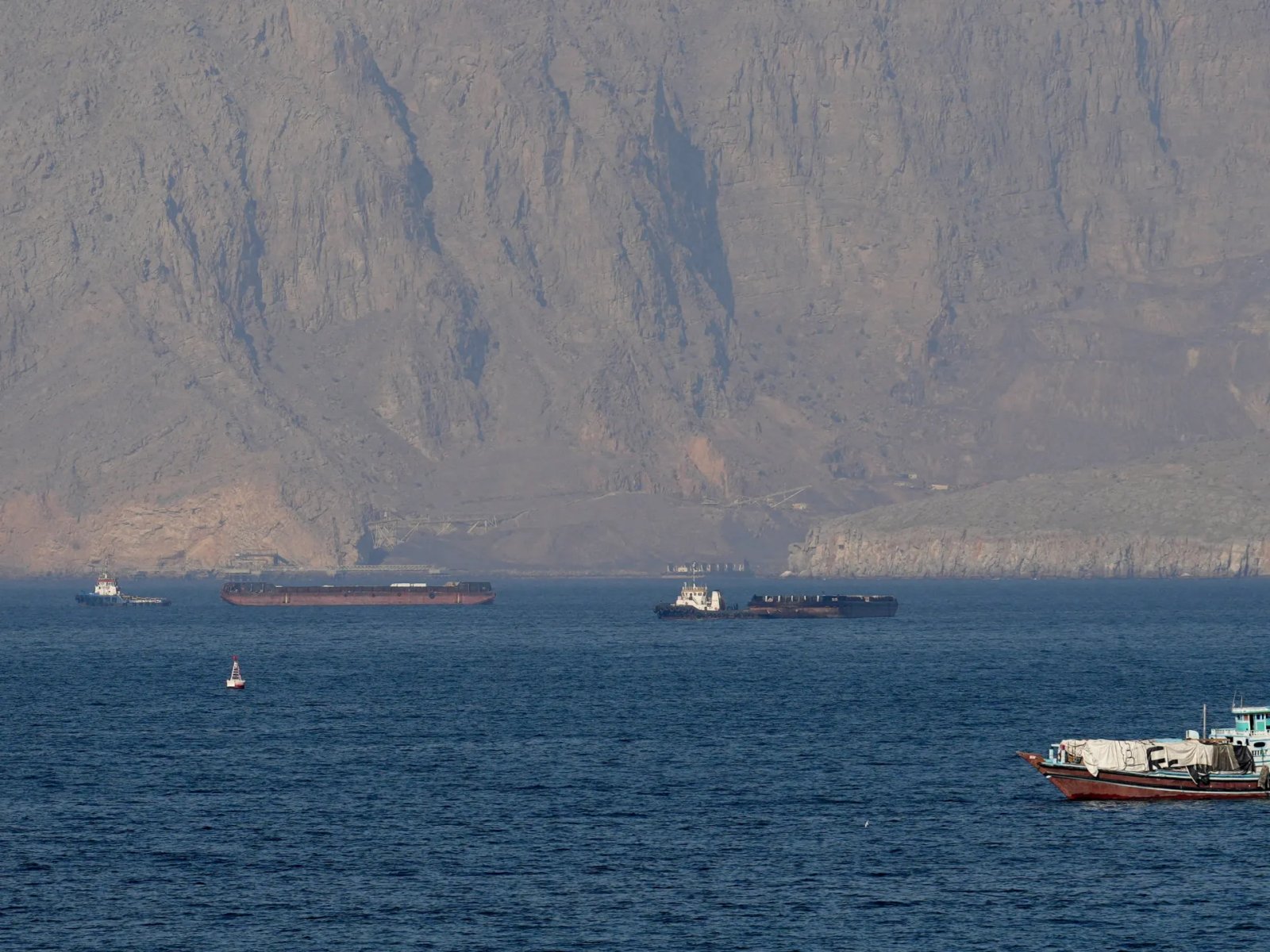
    As negotiations between the United States and Iran appear to move towards a possible breakthrough, the stakes extend far beyond diplomacy between two longstanding adversaries. At issue is not simply a ceasefire or a nuclear agreement. It is whether the world economy can avoid sliding deeper into widening energy, food and cost-of-living crises centred on the Strait of Hormuz.

    Recent reports suggest Washington and Tehran are discussing a deal that would reopen the strait as part of a broader arrangement. The proposal reportedly includes a 60-day truce, the reopening of shipping lanes, some sanctions relief and renewed talks on Iran’s nuclear programme.

    The urgency is obvious. Roughly a fifth of the world’s oil and a substantial share of liquefied natural gas supplies normally pass through the Strait of Hormuz. Over recent weeks, disruptions to shipping, military tensions and competing naval controls have driven up freight costs, energy prices and insurance premiums.

    If a durable agreement is not reached soon, the consequences are likely to spread rapidly across the global economy.

    To be sure, wealthier economies will feel the effects. Higher fuel prices will intensify inflationary pressures already weighing on households in Europe and North America. Governments confronting slowing growth and persistent cost-of-living concerns will face renewed political pressure as transportation, electricity and food prices rise once again.

    But the effects will be far more severe in the Global South.

    Advertisement

    Many developing economies remain deeply dependent on imported fuel, imported fertiliser and imported food. Energy shocks, therefore, cascade through entire economies. Transport costs rise. Agricultural production becomes more expensive. Food inflation accelerates. Public finances deteriorate as governments try to shield populations from rising prices through subsidies or emergency support.

    This dynamic is already visible. Across several import-dependent countries in Africa and South Asia, governments are scrambling to secure alternative fuel supplies while confronting worsening fiscal pressures. The longer the uncertainty around the Strait of Hormuz continues, the greater the likelihood that inflationary shocks will deepen existing debt crises and social instability.

    Indeed, the global economy remains extraordinarily vulnerable to narrow geopolitical chokepoints. The Strait of Hormuz is not simply a regional waterway; it is one of the central arteries of global capitalism. When it becomes militarised or partially blocked, the consequences reverberate worldwide within days.

    Food prices are especially sensitive to these disruptions because energy markets and food systems are tightly interconnected. Fertiliser production depends heavily on natural gas. Shipping and refrigeration costs depend on oil prices. When energy markets are destabilised, grocery bills rise almost everywhere.

    This is why the current negotiations matter so profoundly.

    The issue is not only whether the US and Iran can avoid further military escalation. It is also whether a fragile global economy already strained by debt, climate shocks and geopolitical fragmentation can withstand another prolonged energy disruption.

    Recent years have demonstrated how quickly such shocks become political crises. Food inflation played a major role in unrest preceding the Arab uprisings more than a decade ago. More recently, rising living costs have fuelled political volatility from Latin America to Europe. Governments across the world are already confronting widespread distrust, stagnant wages and growing inequality. Another sustained surge in energy and food prices could intensify these pressures dramatically.

    The irony, once again, is that many of the countries likely to suffer most have little influence over the conflict itself.

    The populations now facing the gravest economic risks are often those least responsible for the geopolitical confrontation, yet they are the ones most exposed to rising import costs, worsening hunger and shrinking fiscal space. The global economy repeatedly externalises the costs of major-power conflict onto poorer societies through commodity markets and debt structures.

    Accordingly, reopening the Strait of Hormuz is not simply a matter of strategic stability for Washington or Tehran. It is also a global economic necessity.

    This does not mean the negotiations will be easy. Deep disagreements remain over sanctions, uranium enrichment, regional security arrangements and the future governance of shipping through the Gulf. Reports also indicate continuing tensions over who would ultimately control transit through the Strait of Hormuz and under what conditions.

    Nor is there any guarantee that a ceasefire would hold. Previous rounds of negotiations have repeatedly stalled amid renewed military escalation and mutual distrust.

    Yet the alternative is increasingly dangerous.

    A prolonged disruption in the Strait of Hormuz would not remain a regional crisis for long. It would deepen inflation, worsen food insecurity, strain humanitarian systems and increase the likelihood of broader political instability across vulnerable economies already under immense pressure.

    In that sense, the negotiations now under way are about far more than diplomacy between the US and Iran. They are about whether the world can avoid another cascading global crisis driven by energy insecurity, geopolitical fragmentation and rising inequality.

    The Strait of Hormuz cannot remain closed – economically or politically – without consequences for everyone.

    The views expressed in this article are the author’s own and do not necessarily reflect media’s editorial stance.

    Iran Middle East Opinions United States US & Canada US-Israel war on Iran
    Share. Facebook Twitter Pinterest LinkedIn Tumblr Email Telegram Copy Link
    Gulf News Week

    Related Posts

    Most Viewed News

    First Hong Kong astronaut launches into space onboard Chinese mission The 43-year-old police officer and mother of three serves as the team's payload scientist.4 hrs agoAsia

    May 25, 2026
    Most Viewed News

    The title battle finally came alive – then Antonelli took controlThe Formula 1 title battle caught light in Canada – but then took a potentially decisive turn, writes Andrew Benson.9 hrs agoFormula 1

    May 25, 2026
    Featured

    Eid Al Adha 2026: Dubai Police gift clothes to kids of female inmates

    May 25, 2026
    Most Viewed News

    Indian billionaires buy foreign companies as growth slows at homeIndia Inc spent $18bn on global buyouts in 2025 and the deal value could cross $15bn in the first half of 2026.10 hrs agoAsia

    May 25, 2026
    Featured

    Pakistani rupee strengthens to nearly 20-month high against UAE dirham, dollar

    May 25, 2026
    Featured

    Dubai Police warn of rise in beggars, street butchers during Eid Al Adha

    May 25, 2026
    Add A Comment

    Comments are closed.

    Editors Picks

    First Hong Kong astronaut launches into space onboard Chinese mission The 43-year-old police officer and mother of three serves as the team's payload scientist.4 hrs agoAsia

    May 25, 2026

    The world urgently needs a US-Iran deal now

    May 25, 2026

    The title battle finally came alive – then Antonelli took controlThe Formula 1 title battle caught light in Canada – but then took a potentially decisive turn, writes Andrew Benson.9 hrs agoFormula 1

    May 25, 2026

    Eid Al Adha 2026: Dubai Police gift clothes to kids of female inmates

    May 25, 2026
    Latest Posts

    First Hong Kong astronaut launches into space onboard Chinese mission The 43-year-old police officer and mother of three serves as the team's payload scientist.4 hrs agoAsia

    May 25, 2026

    The title battle finally came alive – then Antonelli took controlThe Formula 1 title battle caught light in Canada – but then took a potentially decisive turn, writes Andrew Benson.9 hrs agoFormula 1

    May 25, 2026

    Eid Al Adha 2026: Dubai Police gift clothes to kids of female inmates

    May 25, 2026

    Subscribe to News

    Get the latest sports news from NewsSite about world, sports and politics.

    Advertisement
    Demo
    Gulf News Week

    Your source for the serious news. This demo is crafted specifically to exhibit the use of the theme as a news site. Visit our main page for more demos.

    We're social. Connect with us:

    Facebook X (Twitter) Instagram Pinterest YouTube
    Latest Posts

    First Hong Kong astronaut launches into space onboard Chinese mission The 43-year-old police officer and mother of three serves as the team's payload scientist.4 hrs agoAsia

    May 25, 2026

    The world urgently needs a US-Iran deal now

    May 25, 2026

    The title battle finally came alive – then Antonelli took controlThe Formula 1 title battle caught light in Canada – but then took a potentially decisive turn, writes Andrew Benson.9 hrs agoFormula 1

    May 25, 2026

    Subscribe to Updates

    Get the latest creative news from FooBar about art, design and business.

    © 2026 Gulf News Week. Designed by HAM Digital Media.
    • Home
    • Politics
    • Economy
    • Sports

    Type above and press Enter to search. Press Esc to cancel.