
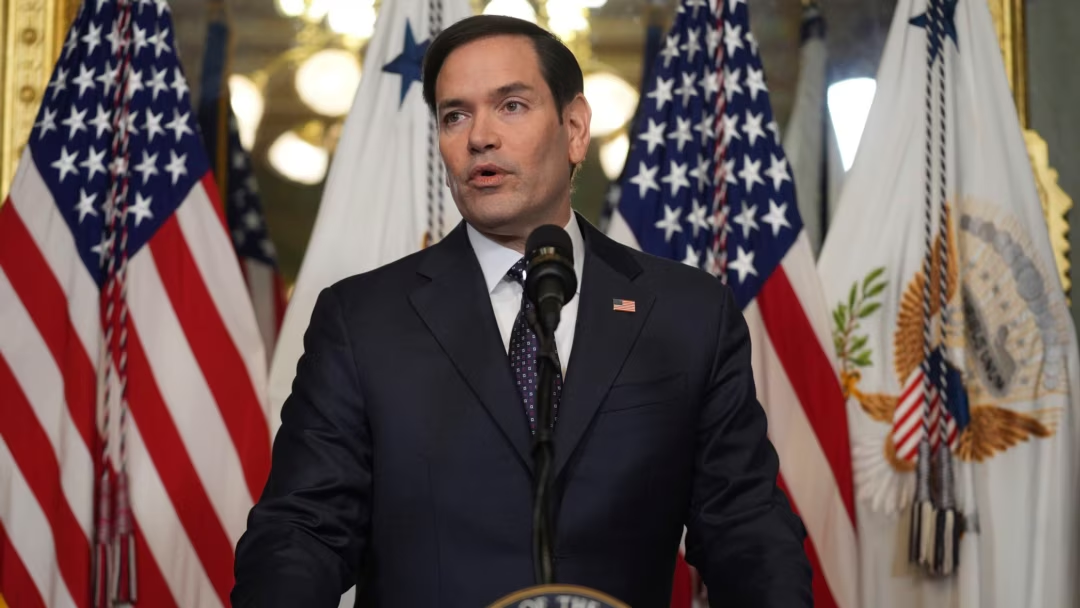
Secretary of State Marco Rubio walks back Trump’s “run the country” remark, saying the goal is narcotics enforcement, not long-term control, as Maduro faces U.S. trial.
WASHINGTON — The United States does not intend to govern Venezuela and will cooperate with its interim authorities, Secretary of State Marco Rubio said Sunday, seeking to clarify Washington’s position after a dramatic military operation captured former Venezuelan President Nicolás Maduro.
Rubio’s comments, delivered in multiple television interviews, came a day after U.S. special forces seized Maduro in Caracas and transported him to New York, where he is set to face narcotrafficking charges. The raid prompted President Donald Trump to declare the U.S. would “run the country” until a political transition occurs—a statement Rubio later tempered.
“We are fighting drug traffickers, not a war against Venezuela,” Rubio told NBC’s Meet the Press. He emphasized the administration is prepared to work with acting President Delcy Rodríguez, Maduro’s vice president, provided her government meets U.S. demands.
Contradictory Signals From Washington
Trump’s initial remarks on Saturday suggested deep, ongoing involvement, including the possibility of “boots on the ground” and long-term management of Venezuela’s affairs, largely centered on securing access to the world’s largest proven oil reserves.
Rubio reframed the mission Sunday as a law enforcement action, not an occupation. “We’re going to make an assessment on the basis of what they do, not what they say,” he told CBS’s Face the Nation, referring to Rodríguez’s administration.
He also called it “premature” to discuss new elections—a point that drew attention given Washington’s years of support for Venezuela’s opposition.
Calm in Caracas, Concern in Congress
In Venezuela’s capital, streets were reportedly calm Sunday. The military publicly recognized Rodríguez as interim leader and urged a return to normal life.
In Washington, however, lawmakers from both parties raised legal and strategic concerns. Senate Democratic Leader Chuck Schumer said Americans were left “scratching their heads in wonderment and in fear.” House Democratic Leader Hakeem Jeffries called the raid an act of war that required Congressional authorization.
Maduro in Custody, Focus Turns to Oil
Maduro, 63, appeared in a video released by the White House late Saturday, handcuffed and in sandals, telling agents, “Good night, happy new year.” He is scheduled for a court hearing Monday in Manhattan.
Beyond the legal proceedings, the operation reshapes geopolitics and energy security in the hemisphere. Rubio acknowledged that Venezuela’s crippled oil industry would need private investment, ideally from Western—not Russian or Chinese—companies.
To maintain pressure, the U.S. will enforce an oil embargo with naval patrols, giving Washington “tremendous leverage over what happens next,” Rubio said.
The capture of Maduro marks the climax of a prolonged pressure campaign that began with interdiction of drug boats off Venezuela’s coast and ended with a daring raid into the heart of Caracas.
