
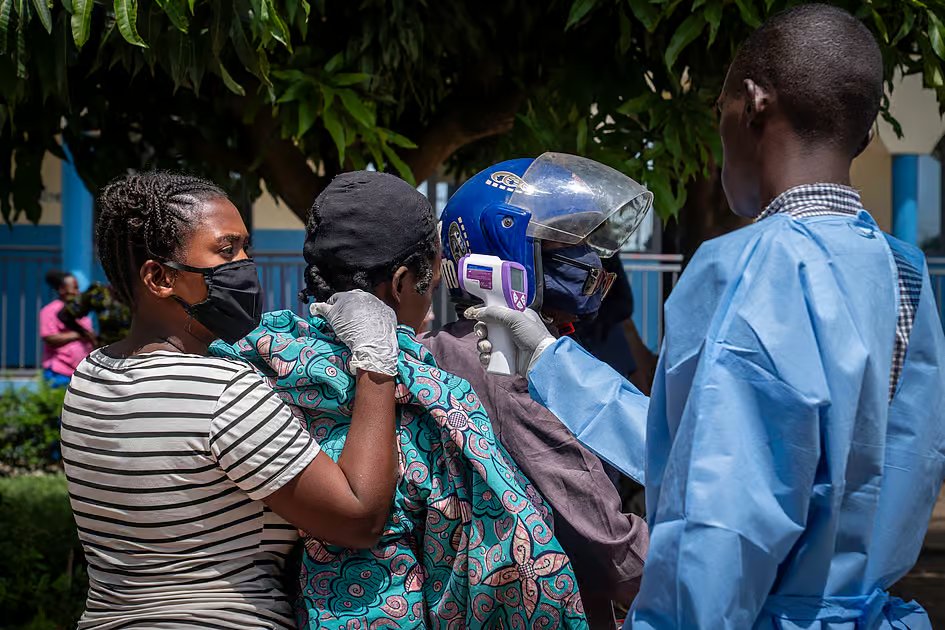
The UAE has confirmed that it is fully prepared with surveillance and response teams to deal with any emerging health developments
Amid an Ebola outbreak in the Democratic Republic of Congo, and a few other countries, the UAE health ministry has issued an advisory to residents, warning against misinformation on the disease.
Authorities in the UAE — namely the National Emergency Crisis and Disaster Management Authority (NCEMA) and the Ministry of Health and Prevention (MoHAP) — have reassured the public that the public health situation in the UAE remains stable.
Residents have been advised not to travel to three Ebola-hit countries, Uganda, Democratic Republic of Congo, and South Sudan except when necessary.
MoHAP on Tuesday shared a list of myths and facts about Ebola, aiming to tackle misinformation among the public.
1. Myth: Ebola spreads through the air like Covid-19.
Fact: Ebola spreads through direct contact with bodily fluids of an infected person or contaminated materials.
2. Myth: Anyone who travels internationally is at a high risk of contracting the disease.
Fact: Since infection requires direct contact with bodily fluids of an infected person, the risk to travellers is actually very low.
3. Myth: Ebola can spread from an infected person before symptoms appear.
Fact: Infected individuals are not generally considered contagious before symptoms begin.
4. Myth: Ebola outbreaks become global pandemics.
Fact: No Ebola outbreak has ever been classified as a pandemic before.
5. Myth: There is no preparedness or monitoring system in place.
Fact: The UAE continues to maintain surveillance, preparedness, airport readiness, healthcare preparedness, and precautionary monitoring measures.
The UAE has confirmed that it is fully prepared with surveillance and response teams to deal with any emerging health developments.
The public has been urged not to get information from untrustworthy sources, and to only rely on official sources for updates on the situation. MoHAP said that misinformation can especially spread quickly during public health events such as this one.
