
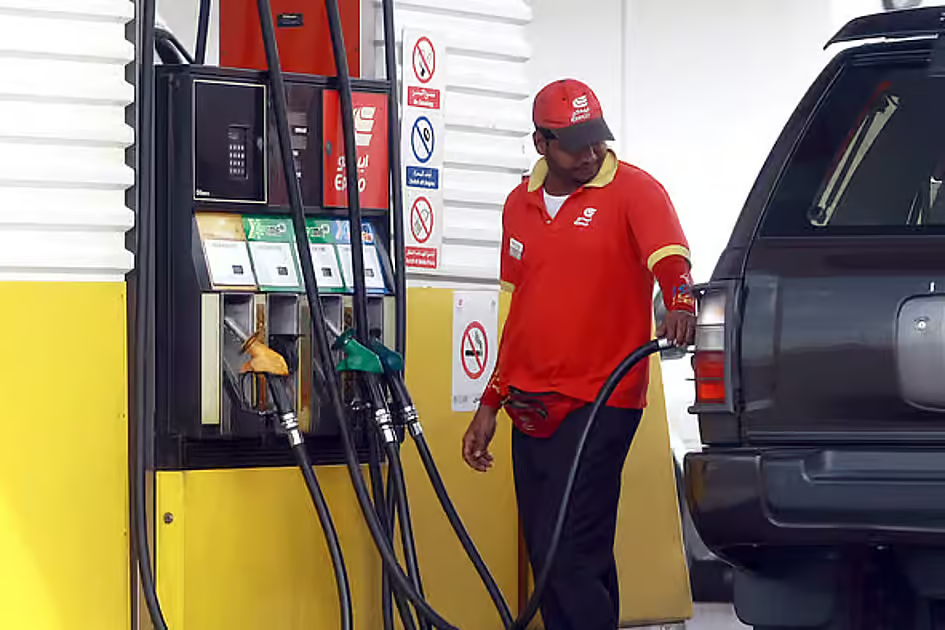
Petrol rates have been hiked for the past three consecutive months due to a rally in global oil rates, rising nearly 50% between February and May
The UAE has announced fuel prices for June 2026, marking its first pricing update as an independent oil producer following its exit from Opec and Opec+ in May.
The new rates listed below will apply from June 1, 2026, and are as follows:
-
Super 98 petrol will cost Dh3.95 a litre, compared to Dh3.66 in May.
-
Special 95 petrol will cost Dh3.83 per litre, compared to the current rate of Dh3.55.
-
E-Plus 91 petrol prices will cost Dh3.76 per litre, compared to the previous rate of Dh3.48 a litre.
-
Diesel will be charged at Dh4.33 a litre, compared to the current rate of Dh4.69.
Petrol prices have been on an upward trend for three consecutive months, including May, reflecting broader global oil movements.
Monthly petrol price changes in the UAE have a direct bearing on household finances, as fuel remains a regular and essential expense for most families. Even minor fluctuations can accumulate over time, and when prices rise, motorists often need to set aside a larger share of their income to cover fuel costs.
The UAE last saw record-breaking fuel rates in 2022 following the Russia-Ukraine war, when prices crossed Dh4 per litre for the first time. In July that year, rates peaked at Dh4.63 per litre for Super 98 and Dh4.52 for Special 95, marking the highest levels on record.
The UAE on April 28 announced its decision to exit the Opec and Opec+, effective May 1, 2026, after six decades of being a part of the organisation.
After Opec departure, the UAE could eventually increase output by up to 30 per cent above previous quota-constrained levels, depending on how quickly new capacity is deployed.
There are three possible outcomes for the oil market under the scenario. First, a gradual supply increase of 200,000 to 300,000 barrels per day would likely have little effect on prices. Second, a moderate rise of 500,000 to 1 million barrels per day could limit price rallies once shipping through the Strait of Hormuz returns to normal. If supply rises by more than 1 million barrels per day, prices may fall unless demand grows much faster. In the long run, the effect could be as much about market sentiment as actual supply.
Opec has traditionally depended on spare capacity to influence the market, so losing a major contributor could weaken its ability to guide expectations.
