
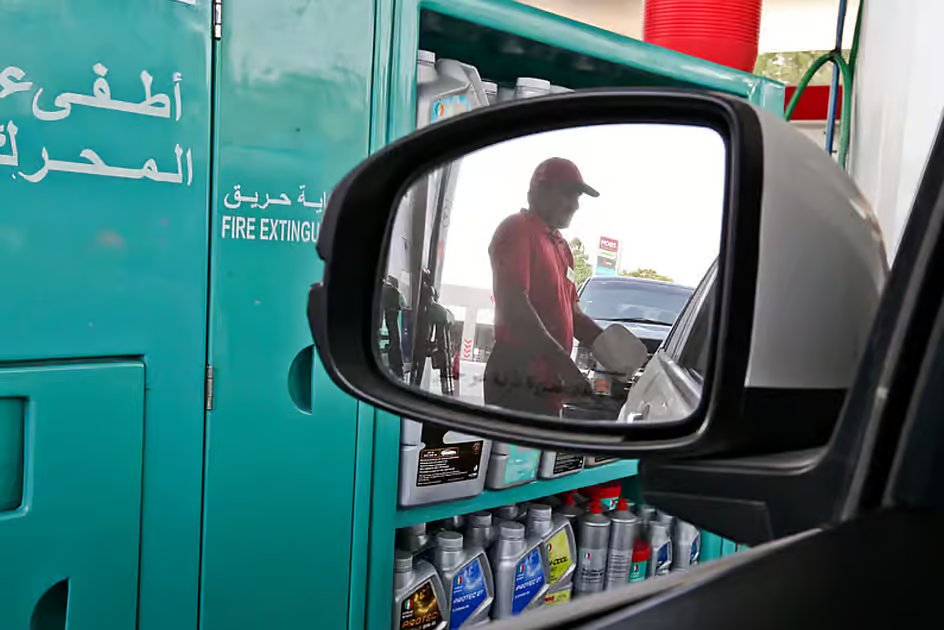
Analysts say that physical oil markets remain tight as shipping activity through Hormuz stays heavily constrained under ongoing blockades and security risks
Petrol prices in the UAE increased to a nearly four-year high for June 2026 due to a surge in global oil rates after the Middle East war and closure of the Strait of Hormuz.
Petrol prices for June 2026 increased eight per cent month-on-month as Super 98 price rose to Dh3.95 per litre in June compared to Dh3.66 in May, an increase of 7.92 per cent. Special 95 will cost Dh3.83 in June 2026 as against Dh3.55 in May this year, up 7.88 per cent.
E-Plus, a more economical variant, will cost 8.04 per cent more in June, selling at Dh3.76 per litre, up from Dh3.48 in May.
The petrol prices for the month of June are the highest since August 2022, when prices crossed Dh4 per litre for the first time in the country due to the Russia-Ukraine war. In August 2022, Super 98, Special 95 and E-Plus 92 were priced at Dh4.03, Dh3.92, and Dh3.84 per litre, respectively.
The UAE announced deregulation of local petrol and diesel prices in 2015 to bring them in line with global rates. Since then, the local retail fuel rates are revised at the end of every month to align with global oil prices.
As reported by media earlier, petrol prices were expected to increase for June as Brent’s average closing price was around $106 a barrel as of May 25, compared to around $99 a barrel in April.
Brent hit as high as $114.44 a barrel in early May 2026 due to the regional war, which severely impacted crude oil supply after the closure of the Strait of Hormuz. Prices eased after the ceasefire was announced, but are still trading in the $90s a barrel. Brent and WTI closed the week at $91.12 and $87.37 a barrel, respectively.
Vijay Valecha, chief investment officer, Century Financial, said fresh US strikes on Iranian military targets and reports of retaliatory attacks by Iran’s Revolutionary Guards have pushed geopolitical risk premiums back into oil prices.
“Physical oil markets remain tight as shipping activity through Hormuz stays heavily constrained under ongoing blockades and security risks. API weekly crude inventories fell by 2.8 million barrels, marking another drawdown in US stockpiles and reinforcing signs of tightening supply conditions despite easing from the previous week’s sharper 9.1 million-barrel decline,” added Valecha.
In addition, he said, rising transportation costs and disruptions to energy cargo flows are also adding pressure to global markets.
