
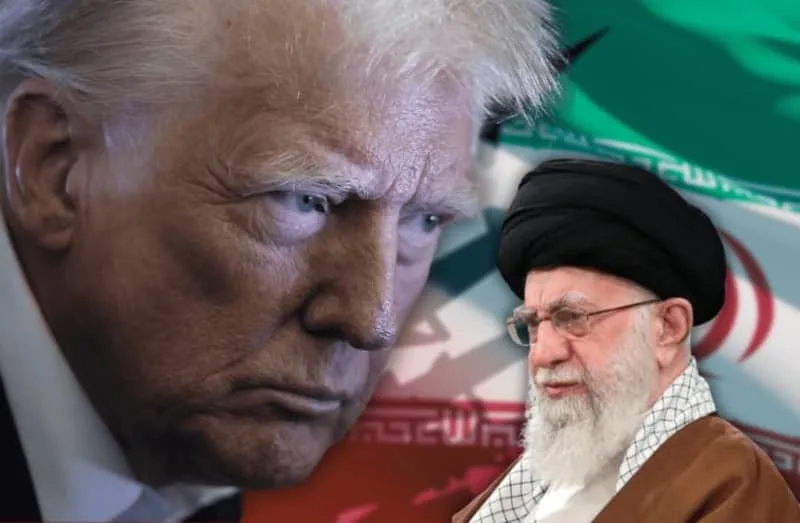
Trump administration considers targeting Iranian leaders and military assets to spur regime change, while Gulf allies warn of catastrophic blowback and Tehran prepares for confrontation.
DUBAI – The Trump administration is actively considering military strikes against Iranian security forces and leadership figures with the explicit aim of inspiring renewed anti-government protests and creating conditions for regime change, according to multiple U.S. and regional sources.
The deliberations, confirmed by two U.S. officials familiar with the discussions, come in response to Iran’s brutal crackdown on nationwide protests earlier this month that reportedly left thousands dead. Options under review range from targeted strikes against commanders and institutions blamed for the violence to larger-scale attacks on Iran’s ballistic missile capabilities or nuclear enrichment sites.
“Trump wants to create conditions for regime change,” one U.S. source said, explaining that the goal would be to give protesters “the confidence that they could overrun government and security buildings.”
The arrival of a U.S. aircraft carrier strike group in the Middle East this week has significantly expanded Washington’s military options, even as regional allies express grave concerns about potential escalation.
Regional Allies Voice Opposition
Israeli and Arab officials briefed on the discussions warn that airstrikes alone cannot achieve political change in Iran and could backfire disastrously.
“Instead of bringing people onto the streets, such strikes could weaken a movement already in shock,” said one Western diplomat whose government was briefed on the plans.
A senior Israeli official with direct knowledge of U.S.-Israeli planning was even more blunt: “If you’re going to topple the regime, you have to put boots on the ground. Even if you killed Khamenei, Iran would have a new leader that will replace him.”
Gulf states – including Saudi Arabia, Qatar, Oman and Egypt – have privately lobbied Washington against military action, fearing they would bear the brunt of Iranian retaliation through missile attacks or proxy strikes.
“The United States may pull the trigger,” one Arab official warned, “but it will not live with the consequences. We will.”
Iran’s Dual Response
Iranian officials say they are preparing for potential military confrontation while keeping diplomatic channels open.
A senior Iranian official told Reuters that Tehran was “preparing itself for a military confrontation, while at the same time making use of diplomatic channels,” but accused Washington of showing no openness to dialogue.
Iran’s UN mission stated the country was ready for talks “based on mutual respect and interests” but would defend itself “like never before” if attacked.
The Fragility of Iranian Leadership
The planning comes as Iran’s 86-year-old Supreme Leader Ayatollah Ali Khamenei has retreated from daily governance following Israeli strikes last year that killed several senior military leaders. While Khamenei retains final authority over major decisions, day-to-day management has shifted to figures aligned with the powerful Islamic Revolutionary Guard Corps (IRGC).
Regional analysts and officials warn that the absence of a clear successor to Khamenei creates dangerous uncertainty. In a power vacuum, the IRGC could consolidate control, potentially entrenching hardline rule rather than enabling democratic change.
The gravest risk, according to Middle East Institute analyst Alex Vatanka, is Iran fragmenting into “early-stage Syria,” with rival factions battling for control and resources – a scenario that could spill instability across the region and disrupt global energy supplies through the Strait of Hormuz.
As tensions escalate, the international community watches anxiously to see whether Washington will choose military confrontation or diplomatic pressure, with the future of the Middle East hanging in the balance.
