
 AFP via Getty Images
As increasingly frequent acts of violence against politicians have shocked the globe in recent years, Australia has watched on with a contradictory feeling: that attacks like that could not happen here, and that it was only a matter of time until they did.
Australians will tell you this is a largely peaceful society with a comparatively civil public discourse. Violence targeting politicians has been rare, the bungled assassination of Labor leader Arthur Calwell in 1966 now a distant and fleeting memory.
But MPs and public figures – backed by experts – have been warning of a volcano of threats against them as social cohesion cracks, polarisation intensifies and the tone of debate grows hotter.
And on Monday, their worst fears appear to have been realised.
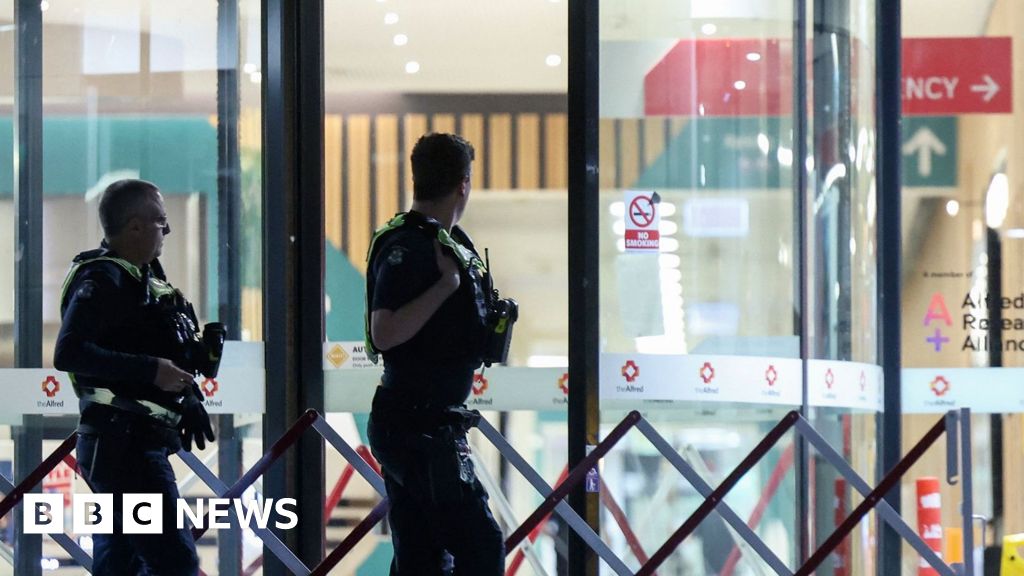
Police say a 43-year-old man was arrested at the scene, and a knife seized, but they have not said Haines was hit deliberately.
Prime Minister Anthony Albanese, however, swiftly described the incident as an apparent attack.
He was briefed by federal police – whose counter terror squad is helping state officers investigate – and told the national broadcaster: “This wasn’t an accident. There was a deliberate act, it would appear.”
Though he stressed no motive had been confirmed, Albanese earlier got emotional as he talked about the growing fear amongst MPs that they would end up targets.
Earlier this year Albanese himself was evacuated from his official residence over a bomb threat. As of August, about 20 cases in which people were accused of making violent threats against him were winding their way through courts around the country.
In recent years, politicians here have been mailed bullets. Female MPs – and in some cases their children – have been threatened with sexual violence. A Jewish MP’s office has been firebombed, a Sydney mayor’s car has been torched and countless other politicians have had their workplaces vandalised.
Just last week Small Business Minister Anne Aly said she had received a wave of death threats after a politician from the opposition said she should be “shamed and stoned in the square” over a tax policy.
According to government statistics, there were 1,067 reports of “harassing and threatening behaviour” against “high office holders” in the year to June: an increase on last year.
“We tend to bury our head in the sand and say, ‘Not here’, but this has been happening now for well over a decade,” Josh Roose, a Deakin University Professor on violent extremism, tells the BBC.
Socioeconomic strain, growing mental health problems in the community, “grifters” who benefit politically or financially from whipping up further discontent, and a “carcinogenic” online environment are drivers of the trend, he says, which has dramatically escalated since the pandemic.
But the political class must also take responsibility for their role, he adds.
“We’ve seen a willingness to cross previously sacred terrain – you know, not targeting individuals, not targeting their families – but we now see that this is part and parcel of Australian political life.
“This is occurring at both ends of the political spectrum.”
And experts like him warn it is not just politicians who are vulnerable: it is members of the media, academics, court officials and other public figures too.

 Getty Images
Mike Burgess, the head of Australia’s spy agency, has warned for years that the spectre of political violence is looming in Australia.
“Just as climate change increases the likelihood of extreme weather but does not forecast specific storms, politically motivated violence, including acts of terrorism, is more likely even though we cannot predict a specific attack,” he said in his annual threat assessment for 2026.
And the Federal Police have said it is not just ideology motivating cases in recent times. “Grievance” is radicalising people.
“They’re feeling distanced, they’re feeling alone, they’re looking for something to attach to, to give them meaning and purpose,” Commissioner Krissy Barrett told the ABC earlier this month.
There have been frustrated rumblings in Canberra from some MPs who say security arrangements have not changed with the climate and – if a political motivation for this incident is confirmed – one of the greatest tenets of the nation’s political culture could now be at risk.
It is not abnormal for you to run into your local member at the shops, or chat to them at the footy, and many open up their offices for constituents who want to raise concerns or share ideas.
Haines is particularly renowned and respected for that, Albanese said on Monday night.
“Here in Australia, it is a good thing that politicians are able to go about their community and engage with people,” he said.
“I don’t want to see a political system in which you can’t have conversations with people at the supermarket, in the street, at street meetings, public forums – that’s an important part of our democracy.”
