
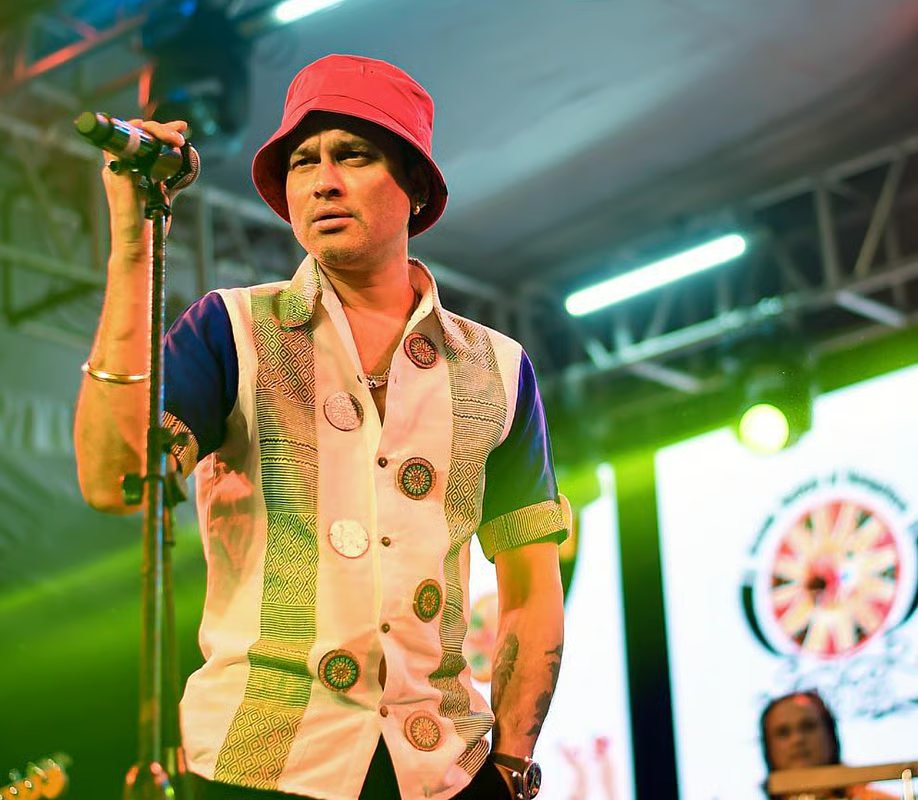
As thousands maintain a daily vigil at his shrine, a bitter political feud over the investigation into the singer’s drowning death threatens to overshadow his unifying message.
GUWAHATI: A month after the tragic death of musical legend Zubeen Garg, Assam remains a state in two halves: one lost in collective grief at a makeshift shrine, the other embroiled in a political firestorm over the circumstances of his drowning in Singapore.
While Zubeen’s cremation site in Kamarkuchi village has become a place of daily pilgrimage, with fans singing his hymns and volunteers vowing to serve indefinitely, his passing has ignited a fierce battle between the state government and the opposition, turning a personal tragedy into a public inquiry.
A Pilgrimage of Pain
The scenes at Kamarkuchi defy conventional mourning. The site is draped in traditional gamosas and garlands, with volunteers from across Assam managing the endless stream of devotees. Spontaneous renditions of his songs break out, reflecting a loss that feels both deeply personal and profoundly cultural.
“He was the symbol of Assamese pride,” said Joi Barua, a fellow Assamese musician. “His music gave people a sense of hope during very tough times.” This explains why his funeral drew an estimated 1.5 million people—a turnout only surpassed globally by Michael Jackson’s—and why the grief shows no sign of abating.
From Grief to Gridlock: The Political Battle
The immense public sorrow has fueled demand for a thorough investigation into his death. Zubeen, who had a history of epileptic seizures, drowned during a yacht party, and many fans blame his manager and the event organizer for negligence.
This public demand has become political fodder. Assam’s Chief Minister Himanta Biswa Sarma has accused the Congress party of exploiting the death to create instability, while opposition leader Gaurav Gogoi has alleged a government cover-up to protect the event organizer.
“I have no words to describe these dirty political games,” said Guwahati journalist Nitumoni Saikia. “It’s shameful to see his death become a political battleground.”
The Unifying Force Now Caught in Division
The political clash stands in stark contrast to Zubeen’s own life. A Hindu-born artist who donated generously to a Muslim orphanage, he was a fearless, apolitical voice who championed the common person. He defied insurgent groups, supported flood victims, and used his home as a Covid center.
“He was a true human being,” noted Dubai-based singer Suraj Verma, capturing the sentiment of millions who saw Zubeen as their moral and cultural compass.
Now, as investigators probe and politicians spar, the enduring image is of the people themselves—united in their vigil, ensuring that the memory of their “singing god” and his message of unity ultimately rises above the noise.
