
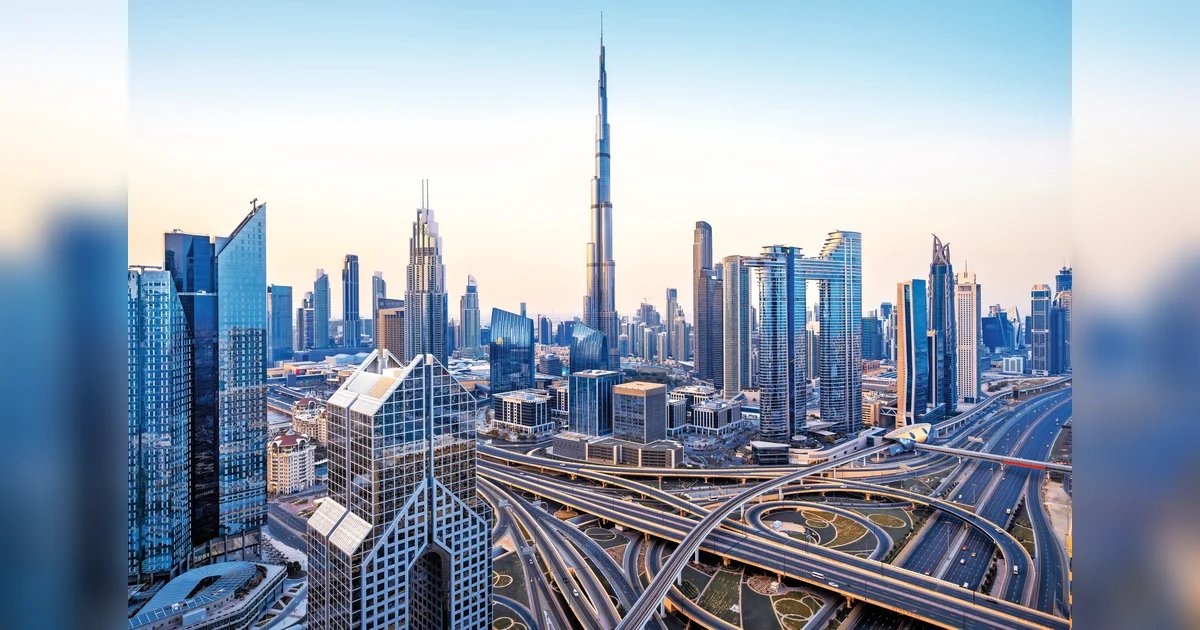
Fifty-four years after its founding, the UAE’s incredible growth story is far from finished. It is still being written — boldly, confidently, and with limitless possibility.
The Arab world’s most vibrant nation stands as one of the most remarkable nation-building stories of the modern era — an extraordinary journey of unity, resilience and visionary leadership. What began in 1971 as a federation of young emirates with limited resources has evolved into a global powerhouse of innovation, cultural vitality and sustainable development. The UAE’s transformation — from a subsistence economy and scattered desert communities to a centre of global commerce, advanced technology and space exploration — reads like a modern epic written through determination, foresight and national spirit.
Groundwork for prosperity
In the early years of the Union, the UAE’s leaders channelled initial oil revenues into building critical infrastructure — roads, schools, hospitals, ports and housing—laying the groundwork for long-term prosperity. Historical economic accounts show that “since independence in 1971, the UAE’s economy grew nearly 231 times to Dh1.45 trillion in 2013,” reflecting the extraordinary acceleration of development across four decades.
Today, that trajectory continues. The UAE’s GDP reached about $569 billion in 2025, with GDP per capita estimated at $51,290 (nominal) and more than $82,000 in PPP terms — placing it among the world’s wealthiest nations per capita. More importantly, the structure of the economy has been transformed. Where oil once accounted for more than 85 per cent of national output, the non-oil sector now contributes over 77 per cent of real GDP, according to the Federal Competitiveness and Statistics Centre. This diversification ensures that the nation’s prosperity is resilient and future-ready, insulated from global energy market volatility.
Diversification spurs growth
The UAE’s shift from an oil-dependent economy to one powered by knowledge, innovation and services is among its most defining achievements. By 2025, non-oil foreign trade reached Dh835 billion in the first quarter alone — evidence of robust activity across tourism, logistics, finance, advanced manufacturing, technology and renewable energy.
Tourism thrives through cultural districts, natural attractions and world-class events. Financial centres attract global banks and fintech pioneers. Aviation links continents. Meanwhile, vast investments in solar power, hydrogen and other renewables demonstrate the nation’s commitment to environmental stewardship.
This transformation reflects the vision of President Sheikh Mohamed bin Zayed Al Nahyan, who declared: “We will continue to diversify our economy, empower our youth and build a future based on knowledge, technology and innovation.”
Global leadership
In recent decades, the UAE has reinforced its status as a global leader in digital government, entrepreneurship and emerging technologies. Its pro-business environment, robust regulatory frameworks and strategic investment in advanced industries have positioned it among the world’s most competitive nations.
Space exploration
The UAE’s achievements in space exploration symbolise the ambition that defines the nation. The Hope Probe’s arrival at Mars in 2021 made the UAE the first Arab nation — and the fifth in history — to reach the Red Planet. Space exploration remains a strategic priority. In 2025, the UAE launched six satellites, including its first radar satellite, UnionSat. Through a landmark agreement with Thales Alenia Space, the Mohammed bin Rashid Space Centre secured a permanent role in NASA’s Gateway lunar station, ensuring priority access to scientific data and paving the way for Emirati astronauts to join future lunar missions.
The journey continues. The Rashid Rover 2, scheduled for 2026, will explore the Moon’s far side, while the Emirates Mission to the Asteroid Belt — the first Arab interplanetary mission to study seven asteroids — advances the UAE’s long-term vision of building world-class Emirati expertise in space technology.
These achievements echo the words of Sheikh Mohammed bin Rashid Al Maktoum: “The impossible is possible. The sky is not the limit; it is only the beginning.” The visionary architect of modern Dubai also has famously said, “Ïn the race for excellence there is no finish line.”
Entrepreneurship Hub
According to the Global Entrepreneurship Monitor 2024–25 report, the UAE ranks first worldwide for the fourth consecutive year. The nation placed first among high-income countries in 11 of 13 key indicators, including financing for entrepreneurial projects, ease of fund access, and government policies supporting start-ups. Complementing this, a separate analysis by TASC Corporate Services awarded the UAE a near-perfect score of 930/1000 for business friendliness, citing Golden Visas, competitive taxation and an ecosystem tailored for innovators. Around 70 per cent of adults see strong opportunities to start businesses, and 78 per cent of new entrepreneurs prioritise social and environmental impact—proof of a maturing, purpose-driven enterprise culture.
A Growth Outlook Grounded in Confidence
The Central Bank of the UAE forecasts real GDP growth of 4.4 per cent in 2025, with some global agencies projecting up to 6.2 per cent. While international economic uncertainties persist, the UAE’s diversified structure, stable political environment and investments in future-growth sectors — green energy, logistics, advanced manufacturing, AI — ensure resilience and momentum.
World-Class Infrastructure
The UAE’s infrastructure stands as one of the world’s great development success stories. From sandy tracks connecting small settlements, the country has constructed some of the most advanced cities, transport networks and logistical hubs on Earth.
Jebel Ali Port became one of the world’s largest and most efficient seaports. Dubai Drydocks transformed maritime services. The Dubai World Trade Centre evolved into a regional economic nerve centre. And the Burj Khalifa remains a testament to limitless ambition.
Aviation, led by Emirates, Etihad and Air Arabia, turned the UAE into a global crossroads. Digital infrastructure, smart city platforms and multi-modal transit systems have positioned the country as a model for twenty-first-century urbanisation.
As Sheikh Mohammed bin Rashid reminds us: “The future belongs to those who can imagine it, design it and build it.
Diverse, Dynamic Society
From a population of a few hundred thousand in 1971, the UAE has grown to around 10 million residents by 2025—more than 200 nationalities contributing to a vibrant multicultural society. This spirit of coexistence is rooted in the words of Sheikh Mohamed: “Our strength is in our unity, and our unity is in our diversity.”
The UAE’s stability, opportunity and openness continue to draw talent, investors and dreamers from around the world.
Honouring the Past
The UAE’s remarkable transformation honours the legacy of its founders—foremost among them the late Sheikh Zayed bin Sultan Al Nahyan, who taught that “A country’s real wealth lies in its people.” His belief in education, unity and human development remains the guiding light of national policy.
Indeed, as the Arab world’s second-largest and most modern economy stands on the threshold of its next chapter — advancing from Earth to the Moon, from hydrocarbons to hydrogen, from trade hub to global innovation leader — its incredible journey continues to inspire.
