
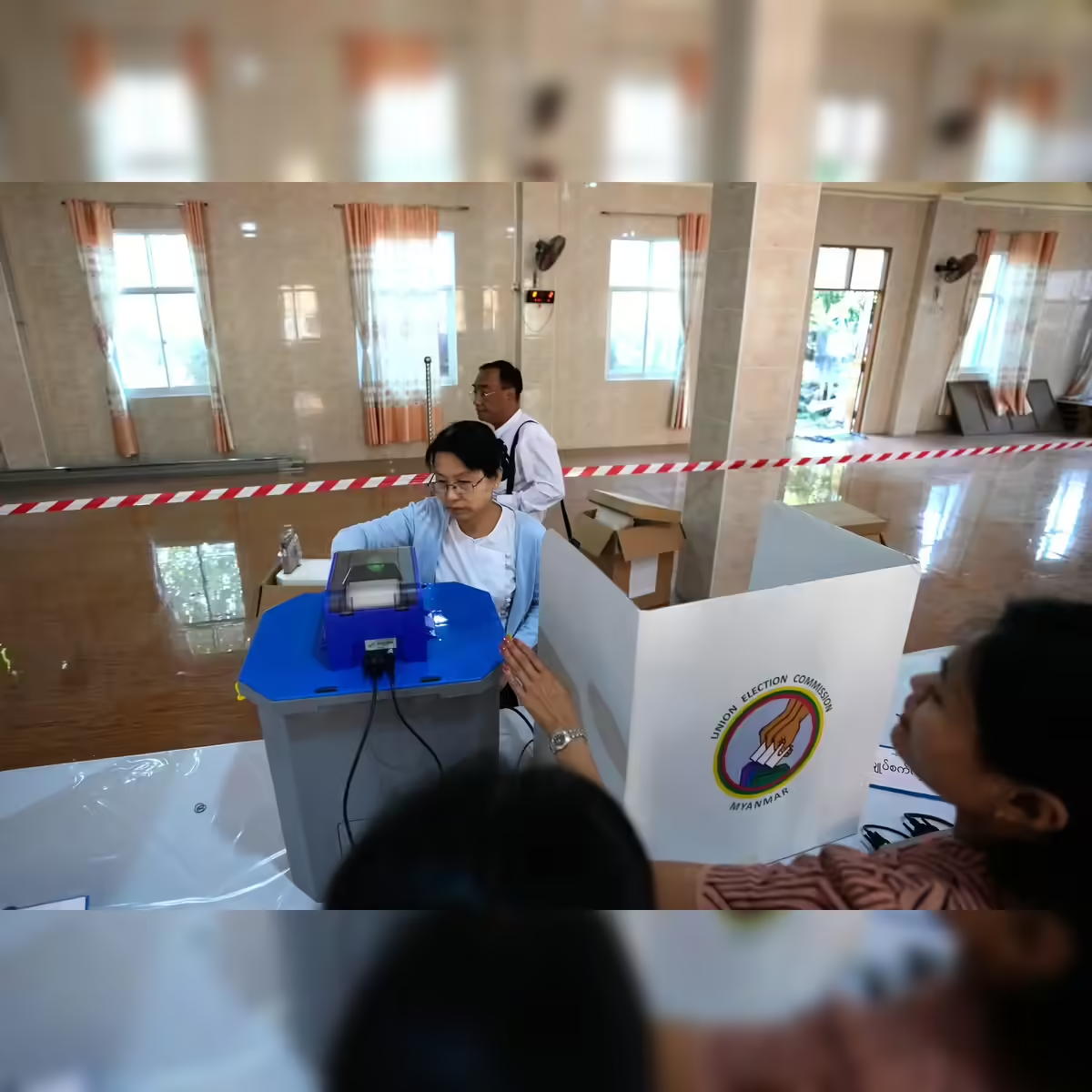
Second phase of voting proceeds in heavily controlled areas; UN expert denounces “engineered” poll designed to cement military rule.
YANGON, Myanmar – Myanmar’s military government held the second phase of a tightly controlled national election on Sunday, a process widely dismissed by democracy advocates and international observers as a sham designed to legitimize the junta’s rule.
Polling stations opened in select constituencies, including Kawhmu, the former seat of deposed leader Aung San Suu Kyi. Her National League for Democracy (NLD), which won a landslide in the 2020 election, was banned after the 2021 coup, and the military has since imprisoned more than 22,000 political opponents.
The junta has billed the three-phase election, concluding on January 25, as a return to civilian rule. However, analysts and rights groups say the vote is engineered to ensure victory for the military’s proxy party, the Union Solidarity and Development Party (USDP), which won nearly 90% of seats contested in the first round last month.
“The junta engineered the polls to ensure victory for its proxy, entrench military domination in Myanmar, and manufacture a facade of legitimacy while violence and repression continue unabated,” UN Special Rapporteur on Myanmar Tom Andrews said in a statement last week.
Turnout appeared markedly lower than in the last free election. The first phase recorded around 50% participation, compared to roughly 70% in 2020. Voting was canceled entirely in large swathes of the country where ethnic rebel groups and resistance forces operate beyond the military’s control, excluding millions from the process.
Despite a heavy security presence and laws that impose up to 10 years in prison for criticizing the election, public skepticism remains widespread. “This election has absolutely nothing to do with escaping this suffering,” a 50-year-old Yangon resident told AFP on condition of anonymity.
The election proceeds against the backdrop of a brutal civil war that has claimed an estimated 90,000 lives since the coup. The military has launched air and ground offensives ahead of voting in an attempt to assert control.
Under the military-drafted 2008 constitution, a quarter of all parliamentary seats are reserved for the armed forces regardless of electoral results, ensuring the military retains decisive political power.
