
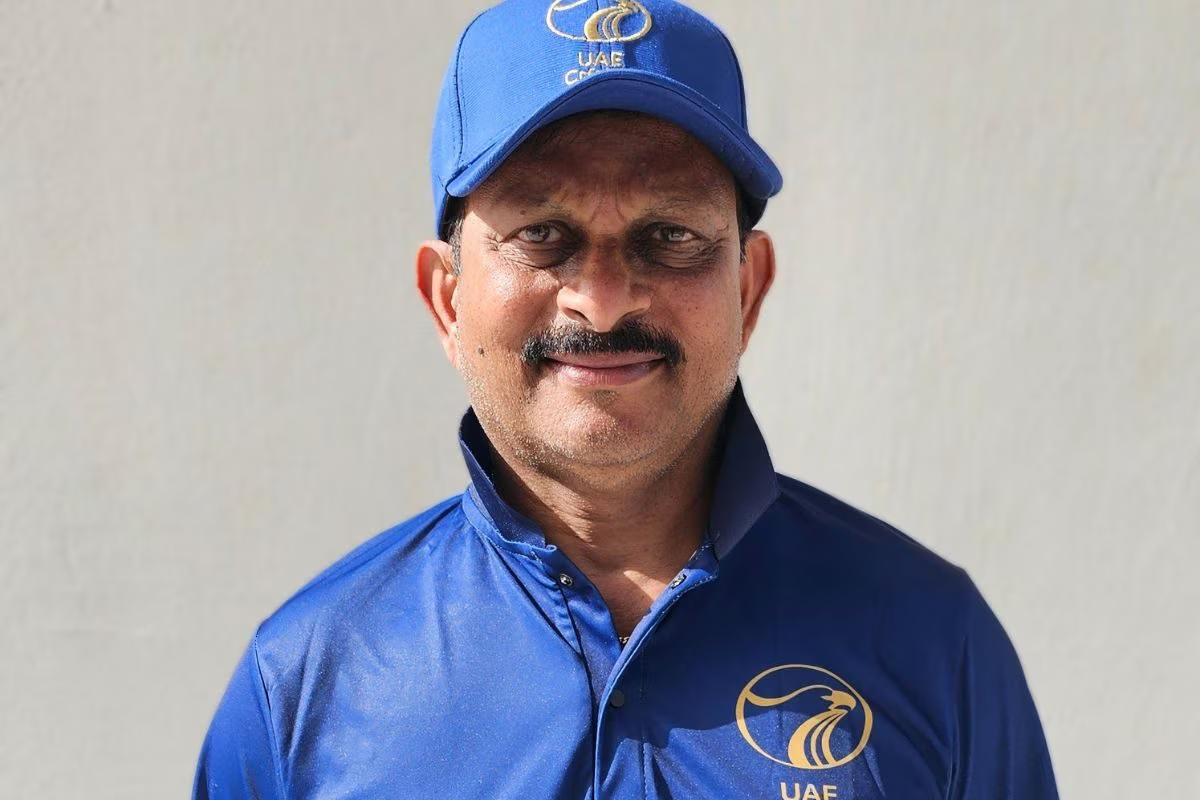
The former India World Cup-winning coach targets a major upset at the 2026 T20 World Cup, applying lessons from Mumbai’s tough cricketing culture to inspire the UAE’s associate-level squad.
Nearly two decades after masterminding India’s historic title run in the inaugural T20 World Cup, Lalchand Rajput is back on cricket’s biggest stage — but this time, his role could not be more different.
Now head coach of the United Arab Emirates national team, Rajput faces a challenge far removed from the resources and spotlight of a cricketing superpower. As the UAE prepares for only its third T20 World Cup appearance — placed in a tough Group D alongside South Africa, New Zealand, and Afghanistan — Rajput’s goal is clear yet daunting: earn global respect by toppling a test-playing giant.
“Our main goal for now will be to upset one good top-test playing nation,” Rajput told Reuters ahead of the tournament, co-hosted by India and Sri Lanka. “It will give these young players a taste of what is required to win against a strong team and prepare us for the next time.”
Navigating the Associate Cricket Landscape
For Rajput, who took charge in February 2024, the biggest hurdle is the limited exposure his players face compared to full-member nations.
“At the associate level, they don’t play much cricket. They don’t get that exposure,” he said. “That’s a challenge for any coach. But with my experience, definitely this year, we are better. The work is in progress because you cannot change overnight.”
His coaching philosophy hinges on incremental progress rather than radical transformation.
“I don’t want to change anything now. I tell my players I just want you to perform 10 per cent better than what you have been doing,” Rajput explained. “Nobody can just change a player’s performance by 50 per cent. There is a process. You must start with small increments.”
Instilling a Mumbai Mentality
Rajput’s approach is deeply influenced by his background in Mumbai’s fiercely competitive cricket scene, where a hard-nosed, winning mindset has been cultivated over decades of Ranji Trophy dominance.
“I come from Mumbai. I am a very tough character because Mumbai has won Ranji Trophy so many times,” he said. “We hate losing, and it’s been in-built in us.”
He contrasts this with the more comfortable cricketing environment in the UAE, where school cricket lacks depth and domestic leagues are limited.
“In Dubai, school cricket is not that popular and there are only a few teams who play in the top division league. They don’t go through those situations or processes. And plus, their life is so comfortable,” Rajput noted. “I have focused a lot on improving the work ethic with these players. The harder you work, the luckier you become.”
The Road Ahead
The UAE has never progressed beyond the group stage in their two prior T20 World Cup appearances. This time, with a coach who has lifted the trophy before, the aim is not just participation — it’s about creating a moment that can redefine the team’s trajectory.
Rajput’s journey from guiding a young MS Dhoni-led India to glory in 2007 to nurturing an emerging UAE side embodies the expansive, evolving narrative of global cricket. His task now is to translate his winning pedigree into a sustainable culture of belief and discipline within a team hungry for recognition.
The UAE’s campaign begins on Tuesday against New Zealand in Chennai — a first opportunity to test Rajput’s philosophy against the world’s best.
