
A wave of war-risk insurance cancellations is sending fresh tremors through global energy shipping, with tankers and LNG carriers anchoring in growing numbers off the UAE’s eastern seaboard as the Gulf conflict escalates.
Several leading marine insurers — including members of the 12-strong International Group of Protection and Indemnity Clubs — have issued notices terminating war-risk cover for vessels entering the Gulf and adjacent waters, effective March 5. Clubs such as Gard, Skuld, NorthStandard, the London P&I Club and the American Club have confirmed that cover related to war, terrorism and conflict-linked damage will no longer automatically apply in designated high-risk zones, including Iranian territorial waters and key shipping corridors leading into the Strait of Hormuz.
The decision marks one of the most significant insurance pullbacks in recent decades across a waterway that handles close to 20 per cent of global oil and a substantial share of liquefied natural gas trade. While hull and machinery policies remain in place, the removal of war-risk protection fundamentally alters the risk calculus for shipowners, charterers and energy traders.
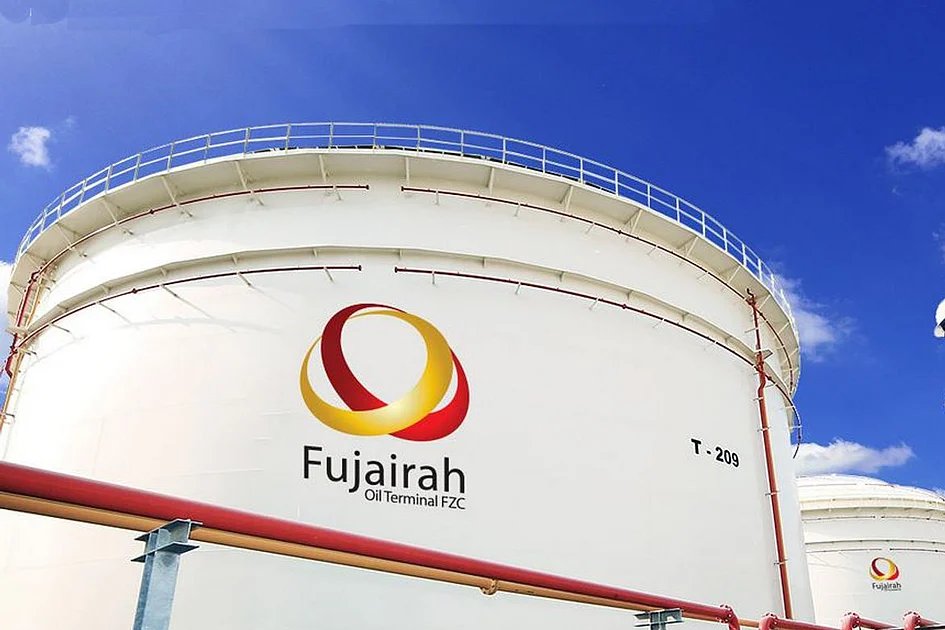
The impact is already visible in UAE waters. Ship-tracking data over the weekend showed at least 150 tankers — including crude carriers and LNG vessels — anchored in open Gulf waters beyond the Strait of Hormuz, with dozens more stationary on the opposite side of the chokepoint. A notable concentration has formed off Fujairah, one of the world’s largest bunkering hubs and a critical storage and trans-shipment centre outside the Strait.
Fujairah’s strategic geography, sitting just beyond the Strait on the Arabian Sea, has historically offered a degree of insulation from disruptions deeper inside the Gulf. But with navigation risk intensifying and insurers withdrawing automatic war-risk cover, vessel operators are reassessing whether to enter higher-risk zones at all. Several tanker owners and major energy trading houses have reportedly paused new voyage commitments through the Strait, awaiting clarity on security conditions and insurance pricing.
Nanoo Viswanadhan, a leading shipping and logistics consultant, said war-risk insurance is typically priced as a percentage of a vessel’s hull value for each voyage through a designated high-risk area. “In normal conditions, additional premiums may amount to a fraction of one per cent. In conflict scenarios, however, those rates can spike several-fold within days.”
Market participants indicate that underwriters are now quoting sharply higher premiums on a case-by-case basis, where cover is still available, reflecting the heightened probability of missile strikes, drone attacks or collateral damage.
The risks are no longer theoretical. At least three tankers have reportedly been damaged off the Gulf coast in recent days, with one fatality among seafarers. Such incidents not only raise human and operational concerns but also recalibrate insurers’ actuarial models, leading to immediate repricing of exposure.
Japan’s MS&AD Insurance Group has confirmed it has suspended underwriting certain war-risk policies in waters around Iran, Israel and neighbouring countries. Skuld, meanwhile, has indicated it is working on a potential “buy-back” option to reinstate cover, albeit likely at materially higher cost.
Because the International Group clubs collectively insure around 90 per cent of the world’s ocean-going tonnage for third-party liability, their coordinated withdrawal sends a powerful systemic signal. Even if alternative insurance can be sourced from specialist war-risk markets in London or elsewhere, capacity is limited and premiums are volatile.
Viswanadhan told media that the ripple effects are poised to move quickly through freight markets. “Shipowners unwilling to sail uninsured may demand significantly higher charter rates to compensate for elevated exposure. In turn, energy traders and refiners will factor those costs into delivered crude and LNG prices. The result could be a widening of regional crude differentials and a renewed inflationary pulse in global energy markets.”
Brent crude has already reacted, surging above $82 per barrel before easing slightly, as traders priced in a geopolitical risk premium. Analysts warn that sustained disruption to shipping flows — even without a full closure of the Strait — could push freight and insurance costs high enough to tighten effective supply.
For the UAE, the buildup off Fujairah underscores both vulnerability and resilience. The emirate has invested heavily in storage infrastructure and pipeline connectivity that allows Abu Dhabi crude exports to bypass the Strait via the Habshan–Fujairah pipeline. Yet the broader ecosystem — including LNG cargoes transiting from Qatar and crude shipments from across the Gulf — remains intertwined with the Strait’s navigability and insurability.
If tensions persist, insurance markets could become the decisive pressure point. Even absent physical blockades, the economic barrier created by surging war-risk premiums may curtail vessel movements, thin liquidity in spot freight markets and amplify volatility in oil and gas pricing.
However, analysts noted that dozens of tankers riding at anchor off Fujairah stand as floating symbols of uncertainty — insured for machinery and cargo, perhaps, but increasingly exposed to a conflict risk that insurers are no longer willing to absorb at yesterday’s prices.
