
Could Kurdish Fighters Join the War Against Iran? Risks and Limits of Trump’s Strategy
Dr Issac PJ
Dubai | March 7, 2026
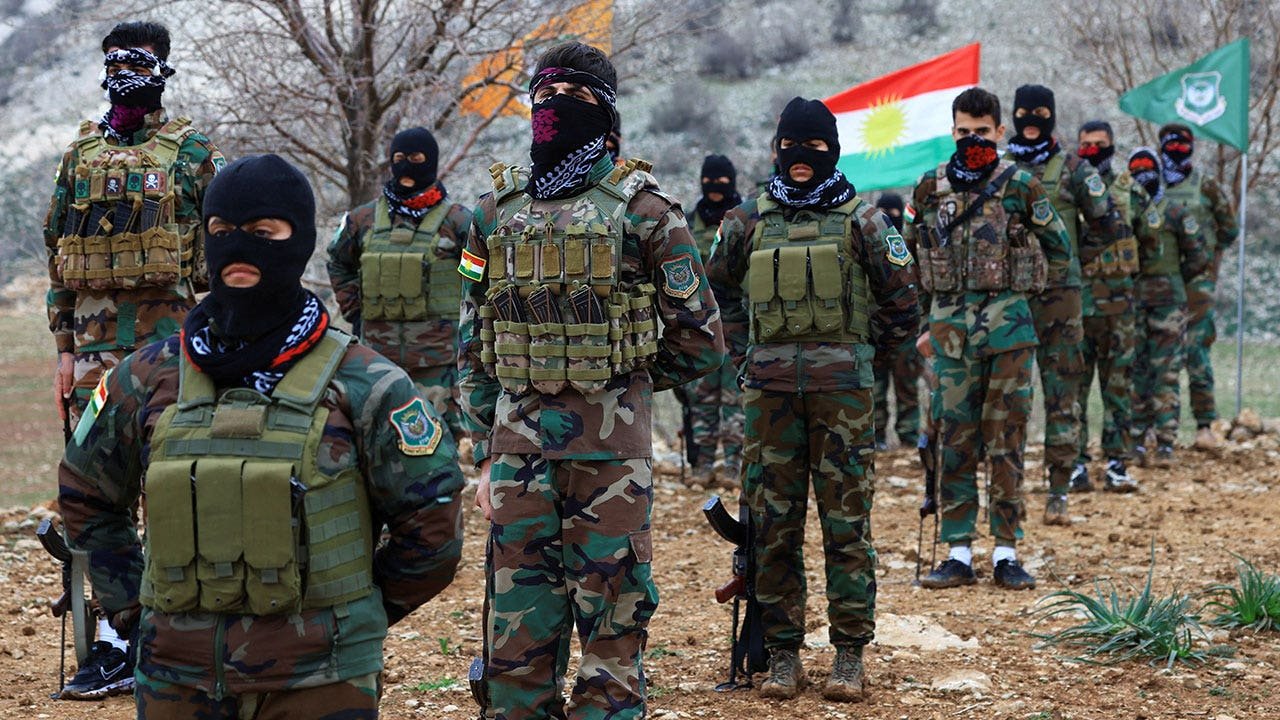
A new and potentially volatile dimension of the war between the United States, Israel and Iran is emerging along Iran’s western frontier, where Kurdish militant groups are weighing whether to join the conflict — a move that could open a new front inside Iran but also risk widening the war across the region.
US President Donald Trump signalled support for such a possibility this week, saying he would welcome Iranian Kurdish forces launching attacks against Tehran’s security apparatus.
“I think it’s wonderful that they want to do that — I’d be all for it,” Trump told Reuters when asked about Kurdish fighters potentially entering the war from neighbouring Iraq.
The remarks came as the seven-day conflict intensified, with Israel expanding strikes against targets in Tehran while Iran continued missile and drone attacks against Israel and US-aligned states across the Gulf, the Caucasus and parts of the eastern Mediterranean.
Kurdish militants weigh their options
Several Iranian Kurdish opposition groups based in Iraq’s semi-autonomous Kurdish region have been discussing whether to mount operations against Iranian forces inside western Iran, according to sources familiar with the talks.
These groups — which operate along the Iran-Iraq border — have long opposed Tehran and maintain small militant networks capable of conducting guerrilla attacks in Iranian Kurdish provinces.
Sources say Kurdish militants have recently consulted with US officials about the feasibility of opening a new front against Iran as US and Israeli forces intensify bombing of Iranian military infrastructure.
The Kurdish coalition has reportedly been training for such operations, hoping to weaken Iran’s military at a moment when Tehran is already under heavy pressure from air and naval strikes.
Yet Kurdish leaders themselves appear cautious about being drawn directly into the conflict.
Iraqi Kurdistan caught in the middle
The government of Iraqi Kurdistan, which governs the autonomous Kurdish region in northern Iraq, has so far adopted a policy of neutrality.
Local officials fear that allowing Kurdish fighters to launch attacks on Iran from Iraqi territory would trigger devastating retaliation from Tehran.
“The Kurds must not be the tip of the spear in this conflict,” a senior Kurdish government official told Axios.
Iran has already issued explicit warnings. A senior Iranian security official said that if Kurdish militants were allowed to stage attacks from Iraqi Kurdistan, Iran would strike targets across the Kurdish region.
The threat is taken seriously in Erbil. Kurdish authorities acknowledge they have no effective air defence systems, leaving their cities vulnerable to Iranian missile or drone strikes.
“They don’t need hypersonic missiles to hurt us,” one Kurdish official said. “Two hundred Shahed drones could cause enormous damage.”
Pressure from Kurdish fighters
Despite the official stance of neutrality, pressure is building from Iranian Kurdish militant factions that see the war as an opportunity to challenge Tehran’s rule in Kurdish-majority areas of western Iran.
Leaders of some groups say fighters are already inside Iran, but insist that a major uprising would only occur if the United States offers direct backing.
“In the past, Kurdish uprisings were not supported, which allowed the regime to survive,” said Amir Karimi, a leader of the Kurdish-Iranian Kurdistan Free Life Party (PJAK).
However, other Kurdish factions acknowledge they lack the manpower, equipment and training to mount a large-scale offensive.
Analysts say Kurdish militant groups in Iraq are far smaller and less battle-hardened than Kurdish forces that fought ISIS in Syria and Iraq.
Strategic gamble for Washington
The possibility of Kurdish involvement underscores the strategic gamble facing Washington as the war intensifies.
Trump has repeatedly hinted at regime change in Iran, even suggesting the United States should have a role in choosing Iran’s next leader after airstrikes killed Supreme Leader Ayatollah Ali Khamenei.
But senior US defence officials have sought to distance themselves from that rhetoric.
US Defence Secretary Pete Hegseth said Washington’s objectives remain limited.
“There’s no expansion in our objectives. We know exactly what we’re trying to achieve,” he said, referring to US operations aimed at destroying Iran’s missile capabilities, navy and nuclear infrastructure.
Israel pushes for broader pressure
While Washington appears cautious about opening new fronts, Israeli officials are believed to favour a more aggressive strategy.
Some Kurdish officials say Israel is encouraging Iranian Kurdish groups to challenge Tehran directly as part of a broader effort to destabilise the Iranian state.
Israel’s military campaign has already expanded significantly, targeting infrastructure across Tehran and other cities while also striking Hezbollah positions in Lebanon.
Risks of a wider regional war
The Kurdish question illustrates how the conflict could easily spill into neighbouring countries.
Iran has already targeted Israel, Gulf states, Azerbaijan and Turkish-aligned areas, while attacks have also occurred in Iraq and the Indian Ocean.
Azerbaijan is preparing retaliation after Iranian drones crossed its border and injured civilians in the Nakhchivan enclave.
Meanwhile Hezbollah has warned Israeli residents near the Lebanese border to evacuate, signalling the risk of further escalation along Israel’s northern front.
A war with uncertain outcomes
For Kurdish leaders, the biggest concern is what happens if the war ends without fundamentally weakening Iran’s regime.
“If we get involved and the regime survives, who will defend us?” one Kurdish official said.
There is also deep scepticism about the longevity of US policy.
Trump leaves office in two years, and Kurdish leaders remember previous moments when Washington withdrew support from Kurdish allies after conflicts ended.
For now, Kurdish authorities appear determined to avoid becoming the next battlefield in a war already
stretching from the Gulf to the Caucasus.
But if Kurdish militants do join the fight — whether independently or with outside backing — the conflict could enter a far more dangerous phase, opening a new front inside Iran and dramatically increasing the risk of a prolonged regional war.
