
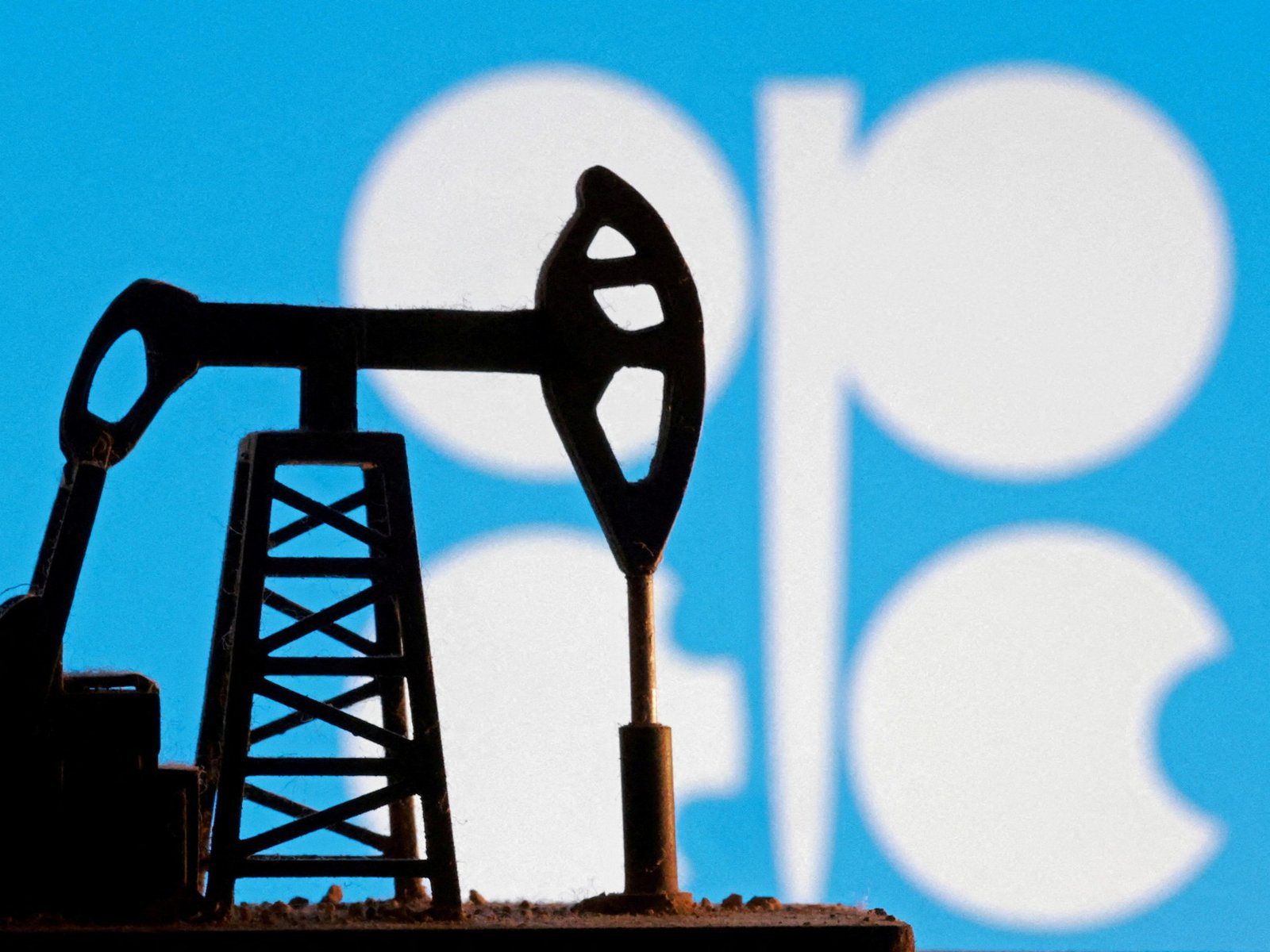
The move reflects a widening confrontation with Saudi Arabia and a fundamental realignment of alliances.
For decades, the Organization of the Petroleum Exporting Countries (OPEC) functioned as far more than an oil cartel. For its Gulf members, the organisation embodied a form of collective sovereignty over their primary resource: the capacity of Arab producing states to weigh together on the global economy, defend a shared rent and speak with a coordinated voice to Western consumers. That institutional fiction has just collapsed.
When the United Arab Emirates (UAE) announced its withdrawal from OPEC and the expanded coalition known as OPEC+, effective May 1, 2026, the immediate reflex was to reach for a technical explanation. Energy Minister Suhail Al Mazrouei carefully dressed the decision in the language of energy policy: flexibility, productive capacity, long-term national interest. Markets noted that the timing, with the Strait of Hormuz partially closed, would limit the immediate price impact. Analysts pointed to the longstanding tension with the quotas imposed on Abu Dhabi National Oil Company’s (ADNOC) ambition to reach five million barrels per day.
All of that is real. But focusing on these technical dimensions means missing what matters.
The UAE’s departure is, above all, the visible sign of a deep regional rupture between Riyadh and Abu Dhabi first, but beyond that, between two incompatible visions of what Gulf order should look like.
A rivalry that stopped being discreet
The Saudi-Emirati fracture is not new, but it crossed a qualitative threshold in late 2025. On December 29 , Saudi Arabian air strikes targeted an Emirati weapons convoy at the port of Mukalla in Yemen, an act without precedent between two nominal allies. Riyadh then publicly demanded the withdrawal of all UAE forces from Yemeni territory and in early 2026, that call was answered with the dissolution of the Southern Transitional Council (STC), Abu Dhabi’s principal proxy in the country.
This is not a tactical dispute. It is the expression of a deep strategic contradiction. Saudi Arabia seeks to preserve the territorial integrity of Arab states and to position itself as a regional stabilising power. The UAE has built, since 2015, a doctrine founded on force projection through non-state actors in Libya, Sudan, Somalia and Yemen. Riyadh now reads that doctrine not as a partner policy, but as a structural threat to its own security environment.
Remaining within OPEC under an architecture effectively controlled by Riyadh would have meant accepting institutional subordination at the precise moment when the bilateral relationship was hardening into open rivalry. The exit is also an act of sovereign disengagement from that tutelage.
A distinction that must be made
Some will compare this departure to Qatar’s in 2019. That would be an analytical error. Doha left OPEC as a marginal oil producer whose energy identity had long since shifted towards liquefied natural gas. The Qatari exit was a sectoral reorientation, not a political rupture. The UAE was the organisation’s third-largest producer, accounting for roughly 12 percent of its total output. Their departure is an amputation. It signals that even the most central members of the cartel can now calculate that their interests are better served outside the organisation than within it.
What this exit reveals about OPEC
The organisation is facing an internal legitimacy crisis that this departure makes brutally visible. Since the invasion of Ukraine, OPEC+ has been perceived in Washington as an instrument serving a price discipline that objectively converges with Russian interests, maintaining oil revenues to finance the war. The Trump administration said so explicitly, linking American military support in the Gulf to oil prices. By choosing production freedom, Abu Dhabi sends a signal of distancing from that architecture, one whose geopolitical value in Washington is immediately legible.
In doing so, the UAE makes a choice that goes well beyond energy policy. It is purchasing American strategic goodwill with barrels, at the precise moment when its regional alliance framework is collapsing and when it needs a substitute security guarantee. With Iran having conducted direct attacks on Emirati territory and shipping, and with Saudi Arabia having shifted into open confrontation mode, Abu Dhabi’s strategic calculus has fundamentally changed. Washington is no longer a preferred partner. It has become a necessity.
The real loser
The real loser is not Saudi Arabia, whose economy can absorb the shock. The real loser is the idea itself of a collective capacity for Arab fuel-producing states to shape the global energy order. Each departure, Qatar yesterday, the UAE today, reduces the organisation to an increasingly unrepresentative instrument, increasingly identified with Saudi interests alone.
The question that now arises is not whether other members will follow. It is whether OPEC, stripped of its third-largest producer within the context of a regional war and a realignment of alliances, can still credibly claim to fulfil its historical function.
For now, the answer looks like no.
The views expressed in this article are the author’s own and do not necessarily reflect media’s editorial stance.
