
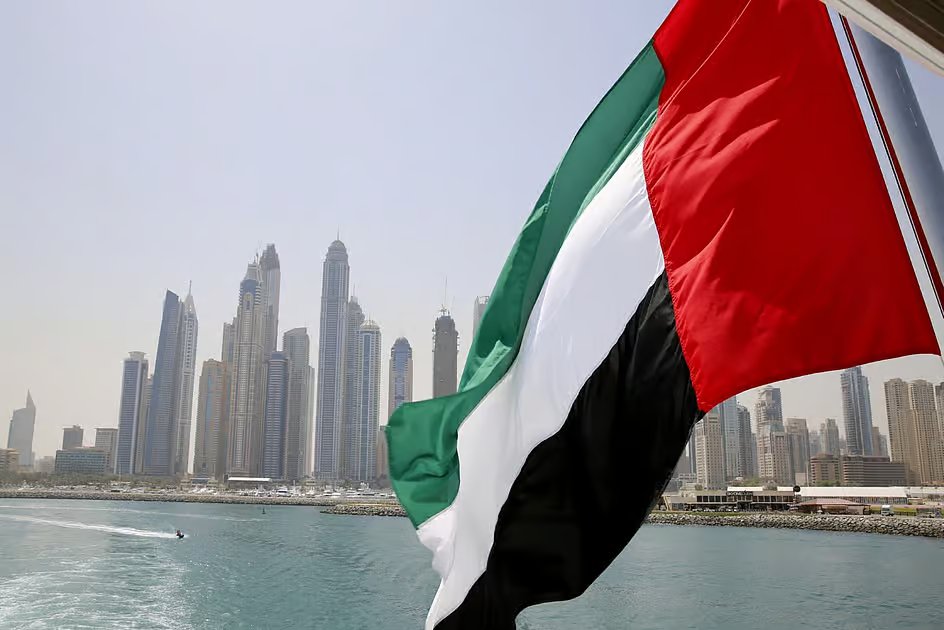
A fragile ceasefire between the US and Iran was brought into question on Monday, May 4, after Iran launched fresh attacks on the UAE. The long-awaited deal was brokered on April 8 — 40 days after the US, Israel and Iran traded fire in what they called preemptive and retaliatory aerial strikes.
World leaders have since condemned the severe escalation in hostilities in the Middle East, which occurred during a week both Iran and the US had ramped up their war rhetoric — despite ongoing attempts to negotiate a peace proposal. Here’s a breakdown of the events that unfolded on Monday evening.
What happened on May 4? How did the attacks start?
At 4.59pm on Monday, residents across the UAE received an emergency alert warning of a potential missile threat, urging them to remain indoors or move to safe locations until the threat had passed.
The alerts were the first they received in 26 days since a ceasefire was declared on April 8 and came into effect the following day. Authorities issued at least five alerts over the course of 3.5 hours, advising residents on when to seek shelter and when the situation was safe.
How many missiles, drones did Iran launch toward UAE?
During the initial wave of interception, four cruise missiles were detected heading towards the country. Authorities said three were successfully shot down, while the fourth fell into the sea.
The UAE later confirmed its air defence systems had engaged a total of 12 ballistic missiles, three cruise missiles, and four drones launched from Iran on May 4.
This brings the tally of attacks from the beginning of Iran’s aggression on February 28 up to 549 ballistic missiles, 29 cruise missiles, and 2,260 UAVs or drones — nearly 3,000 attempts, of which the vast majority were successfully intercepted.
What happened in Fujairah?
Iranian drones targeted Fujairah’s Petroleum Industries Zone (FOIZ), triggering a fire at the site. Officials in Fujairah also reported that three Indian nationals sustained moderate injuries as a result of the incident. The injured individuals were taken to the hospital for treatment, while emergency response teams secured the area and managed the aftermath of the strike.
Why did Iran attack?
Tensions between the US and Iran have been simmering in the days leading up to the escalation, with both sides exchanging warnings and accusations. On May 3, US President Donald Trump announced ‘Operation Project Freedom’, a military-backed initiative to guide and escort stranded commercial vessels through the Strait of Hormuz, which Iran had effectively restricted amid the ongoing conflict.
Iran strongly opposed the move, calling it a violation of its sovereignty and warning against foreign military presence in the strait. As rhetoric intensified, Iranian officials accused the US of “military adventurism” in the region. According to an unnamed military official cited by state TV, US efforts to facilitate or protect shipping movements through the strait amounted to “illegal ship transit” and Monday’s aggression was a consequence of this violation.
Were ships attacked?
The British maritime security agency UKMTO reported two ships had been hit off the coast of the UAE, while the Emirati oil company Adnoc said one of its empty oil tankers was hit by Iranian drones.
Has the ceasefire broken?
One of the conditions of the ceasefire deal, brokered on April 8, was the cessation of all hostilities. Monday’s attacks were an effective violation of the truce deal. In subsequent statements, while world leaders have stopped short of explicitly describing the renewed Iranian actions as a ceasefire breach, condemnation of the escalation has been unanimous.
Meanwhile, the escalation extended beyond UAE territory on Monday, with the US military reporting its Apache and Seahawk helicopters hit six Iranian boats that were threatening commercial shipping, while its forces repelled missiles and drones on Monday. This followed President Donald Trump’s order to send the Navy to escort stranded tankers through the Strait under the ‘Project Freedom’ operation.
Iran views the broader US naval escort operation and movement through the Strait as a breach of the ceasefire framework.
On Tuesday, US Defence Secretary Pete Hegseth categorically said, “The ceasefire is not over,” and that a US operation to protect commercial ships in the Strait of Hormuz from Iran is temporary. He said Washington is not looking for a fight and that the ceasefire with Iran remains in effect.
Does this mean a return to hostilities?
Since last night, no further escalations have been reported, suggesting a temporary stabilisation after the latest wave of attacks. While the ceasefire has been violated in practice by both the US and Iran, it remains in a fragile and contested state rather than fully collapsed. The situation remains highly volatile, but a return to sustained hostilities is unconfirmed at this time.
Are flights affected?
UAE aviation authorities have not reported any disruption to air traffic operations after Monday’s attacks. media has reached out to the concerned authorities for clarity or revised guidelines.
Indian airline IndiGo, however, issued travel advisories, urging passengers to check their flight status due to possible schedule changes. Citing flight tracking service Flightradar24, Reuters reported that some UAE-bound flights were diverted to Muscat in Oman, while other inbound aircraft were noted circling over Saudi Arabia.
Have schools issued new directives in light of Monday’s events?
Schools, universities, and nurseries in the UAE have shifted back to distance learning temporarily following the recent attacks. Remote learning will remain in place until Friday as a precautionary measure.
The shift comes just weeks after students across the UAE resumed in-person learning on Monday, April 20, following nearly seven weeks of distance education.
Any impact on markets?
Stocks sank across Asian exchanges as a fresh spike in Middle East tensions fanned fears over the fragile US-Iran ceasefire, and oil prices fell back slightly after gains on Monday.
Gold prices also edged higher after hitting a five-week low in the previous session. Meanwhile, the Indian rupee slid to a record low, breaching 95 against the US dollar and nearing 26 against the UAE dirham.
How did the UAE react?
Condemning the renewed and unprovoked strikes, the UAE said the attacks are unacceptable and a direct threat to the country’s security, stability, and territorial integrity. It stressed that the UAE will not tolerate any threat to its sovereignty and reserves the full right to respond in line with international law to protect its national security and the safety of its citizens, residents, and visitors.
Top Emirati diplomat, Dr Anwar Gargash, called Iran’s dangerous escalation “a moral bankruptcy for a regime that has chosen aggression as its approach to dealing with its neighbours.”
How did India react?
India condemned the attack in Fujairah that left three Indian nationals injured, calling the targeting of civilians and infrastructure “unacceptable.” Prime Minister Narendra Modi expressed firm solidarity with the UAE and reiterated India’s support for resolving disputes through dialogue and diplomacy. Modi stressed the importance of “ensuring safe and unimpeded navigation through the Strait of Hormuz,” saying it is “vital for enduring regional peace, stability and global energy security”.
What did Donald Trump say?
President Donald Trump warned Iranian forces on Monday that they would be “blown off the face of the Earth” if they attempted to target US ships in the Strait of Hormuz or Persian Gulf.
The president said on Truth Social Monday afternoon that the military “shot down” seven Iranian boats in the strait after Tehran targeted other boats trying to traverse the passage.
Did Israel react after the recent ceasefire violation?
An Israeli military official said Monday that the army remained on high alert and was monitoring the situation after the US said it had downed the Iranian missiles and drones.
What is Iran saying now?
Post the missile attacks on the UAE, Iran is urging a return to peace talks. Iranian Foreign Minister Abbas Araqchi said Monday’s events showed there was no military solution to the crisis. He said peace talks were progressing with Pakistan’s mediation, and warned the US and the UAE against being drawn into a “quagmire.”
Iran’s chief negotiator warned the United States against any further escalation in the Strait of Hormuz, after a spate of attacks risked reigniting the Middle East war. “We know full well that the continuation of the status quo is intolerable for America; whilst we have not even started yet,” Mohammad Bagher Ghalibaf, who is also Iran’s parliament speaker, wrote in a post on X.
How did world leaders react?
World leaders on Tuesday piled pressure on Tehran to stick to diplomacy to bring an end to the Middle East war, after a salvo of attacks in the region left a ceasefire crumbling.
“These attacks are unacceptable,” EU chief Ursula von der Leyen said on X, adding that “security in the (Gulf) region has direct consequences for Europe”.
German Chancellor Friedrich Merz also implored Tehran to “return to the negotiating table and stop holding the region and the world hostage”, echoing calls from French President Emmanuel Macron and British Prime Minister Keir Starmer.
Saudi Arabia joined the calls on Tuesday to de-escalate and called for “diplomatic efforts to reach a political solution”, while several other GCC countries rallied around the UAE with phone calls to Sheikh Mohamed bin Zayed or statements of their own condemning the attacks.
