
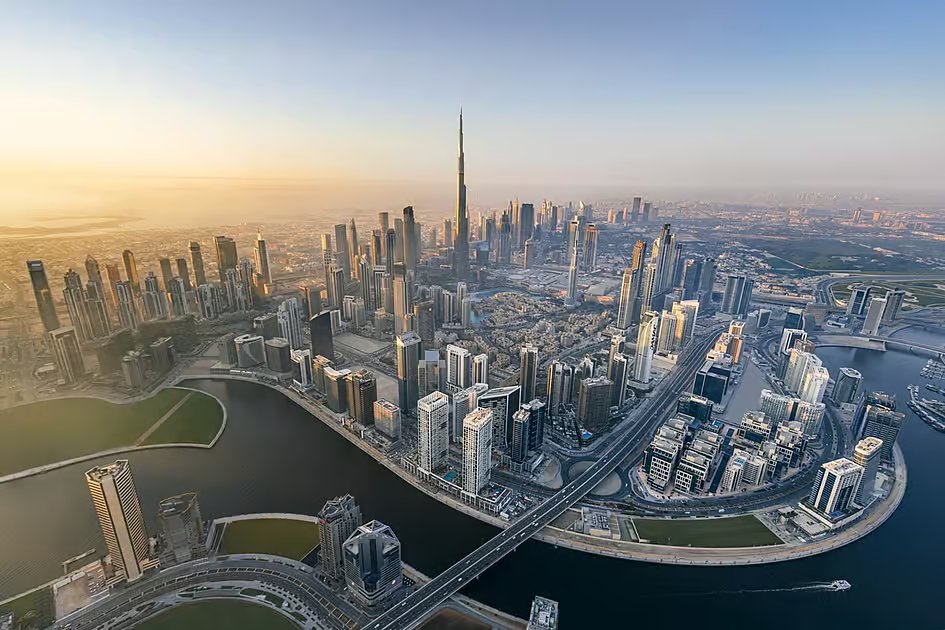
Dubai’s real estate market extended its strong growth trajectory in 2025, with villas, office spaces and retail properties leading price gains amid rising investor confidence, sustained population growth and continued economic expansion.
New data released by Dubai Data and Statistics Establishment, part of Digital Dubai, showed the emirate’s Residential and Commercial Real Estate Price Index recorded broad-based growth across most property segments during 2025.
The data underlined the increasingly important role of digital intelligence and market analytics in shaping investment decisions and improving transparency across Dubai’s rapidly evolving property sector.
According to the index, Dubai’s overall residential real estate market recorded annual growth of 9.81 per cent in 2025 compared with the previous year, reflecting continued momentum across the emirate’s housing market despite growing expectations of price moderation in some segments.
Villa prices emerged as the strongest-performing residential category, surging 14.83 per cent year-on-year as demand continued to rise for larger homes and integrated lifestyle communities.
Apartment prices also recorded solid growth of 7.38 per cent, highlighting continued demand from both end-users and international investors attracted by Dubai’s high rental yields, residency incentives and tax advantages.
Younus Al Nasser, chief executive of Dubai Data and Statistics Establishment at Digital Dubai, said the index reflected the growing maturity of Dubai’s data ecosystem and its role in supporting strategic economic decision-making.
“The results of Dubai’s Real Estate Price Index reflect more than the market’s continued growth,” Al Nasser said.
“They highlight the strength and maturity of Dubai’s data ecosystem, which serves as a strategic enabler of economic decision-making across the emirate.”
He added that data in Dubai had evolved beyond a monitoring tool into a strategic asset that helps investors, businesses and policymakers anticipate market trends and make more accurate decisions.
The latest figures come as Dubai continues to attract strong foreign capital inflows into its property sector, supported by economic diversification, infrastructure investments and population growth.
According to the Dubai Land Department, the emirate recorded property transactions worth more than Dh760 billion in 2025, one of the highest annual transaction values on record.
The market has also seen a structural shift towards long-term ownership rather than speculative trading, with recent studies showing Dubai homeowners are holding properties for longer periods comparable to mature global markets such as London and New York.
Commercial real estate also recorded strong momentum during 2025, with the overall commercial property index rising 9.54 per cent year-on-year.
Office spaces led commercial sector growth with a sharp 15.86 per cent increase, reflecting strong demand from multinational corporations, financial institutions, technology firms and startups expanding operations in Dubai.
The continued expansion of sectors such as fintech, artificial intelligence, wealth management and digital commerce has significantly boosted demand for Grade A office space, particularly in key business districts including DIFC, Business Bay and Dubai Internet City.
Retail shops also posted strong annual growth of 11.52 per cent, supported by rising consumer spending, tourism growth and continued expansion in Dubai’s retail and hospitality sectors.
Mohammed Ali Al Badwawi, CEO of the Real Estate Registration Sector at Dubai Land Department, said the 2025 indicators reflected the market’s ability to sustain balanced growth across multiple segments.
“The indicators recorded in 2025 reflect the continued evolution of Dubai’s real estate market and its ability to sustain balanced growth across various segments, supported by an advanced regulatory framework and integrated digital infrastructure,” Al Badwawi said.
He added that Dubai Land Department continued to leverage digital technologies and real estate data to enhance market efficiency and transparency in line with the Dubai Real Estate Sector Strategy 2033 and the broader vision of Digital Dubai.
Dubai’s hospitality real estate sector also recorded positive growth during the year as tourism and business travel remained robust.
The hospitality segment recorded annual growth of 4.80 per cent compared with 2024, supported by sustained tourism demand and continued expansion in Dubai’s events and leisure sectors.
Hotel apartments outperformed traditional hotel rooms, recording growth of 6.25 per cent amid rising demand for long-stay and flexible accommodation options from business travellers, remote workers and relocating professionals.
Hotel room prices recorded comparatively modest growth of 0.85 per cent, reflecting stable performance in the traditional hospitality market.
Industry analysts say Dubai’s real estate market continues to benefit from multiple structural demand drivers, including strong economic growth, rising foreign direct investment, Golden Visa incentives and the emirate’s growing reputation as a global safe-haven destination for capital and high-net-worth individuals.
The expansion of digital governance and data-driven regulation is also increasingly strengthening investor confidence by improving transparency and market intelligence.
Analysts expect Dubai’s property market to move into a more balanced phase during the coming years, characterised by selective price moderation in overheated segments while maintaining overall long-term growth momentum supported by economic expansion and population inflows.
The latest real estate price index reinforces Dubai’s position not only as a major global property investment destination but also as one of the world’s leading examples of how digital transformation and data intelligence are reshaping modern urban economies.
