
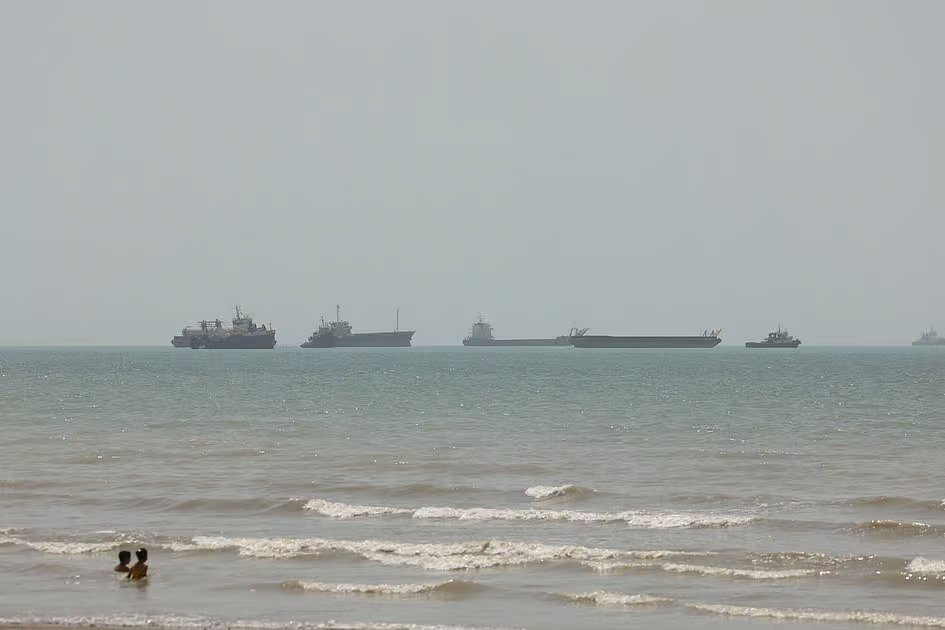
Global oil markets are preparing for a prolonged period of elevated prices and volatility as fears of sustained supply disruptions in the Middle East continue to overshadow hopes of a diplomatic breakthrough between the United States and Iran.
A new Bloomberg Intelligence survey of 126 asset managers and energy strategists showed that traders increasingly expect crude prices to remain structurally high over the next 12 months, with Brent crude projected to average between $81 and $100 a barrel as war-related risks become embedded into long-term market expectations.
The findings underscore mounting concerns that the closure and disruption around the Strait of Hormuz — through which nearly 20 per cent of global oil supplies pass — could reshape global energy markets well beyond the current crisis.
Brent crude climbed back towards $106 a barrel on Thursday after suffering a sharp 5.6 per cent decline a day earlier, triggered by comments from US President Donald Trump suggesting negotiations with Iran were in their “final stages”. US benchmark West Texas Intermediate also rebounded above $99 a barrel after the selloff.
Despite intermittent optimism around diplomacy, traders and analysts remain deeply skeptical about the prospect of a quick resolution.
“The oil market remains overly sensitive to Iran-related headlines,” ING commodities strategists Warren Patterson and Ewa Manthey said in a note, warning that investors have repeatedly overestimated the chances of a breakthrough in US-Iran talks.
More than 40 per cent of respondents in the Bloomberg Intelligence survey said “demand destruction” — slowing economic activity and weaker fuel consumption caused by high prices — would ultimately become the main balancing force in the market amid what many analysts describe as the worst supply disruption in modern oil history.
Another 21 per cent believed logistical rerouting and supply-chain adjustments would partially offset lost supplies, while 13 per cent pointed to Opec+ spare capacity and emergency policy responses as key stabilising tools.
Yet the most alarming signal came from the 12 per cent of respondents who believed that “nothing will materially offset the disruption”.
The crisis has intensified after Iran moved to tighten control over maritime traffic by launching a new body called PGSA, aimed at regulating shipping movement through the Strait of Hormuz. Tehran had earlier announced plans to impose tolls on vessels crossing the strategic waterway.
Although limited tanker movement has resumed, traffic remains well below normal levels. Ship-tracking data suggests only a fraction of pre-war shipping activity has returned despite Iranian claims of increased vessel crossings.
The prolonged disruption is now raising fears of a structurally tighter oil market extending into 2027.
Sultan Al Jaber, group chief executive officer of Adnoc, warned this week that even if hostilities ended immediately, Middle East oil flows would not fully normalise until well into 2027 because of extensive logistical disruptions and insurance bottlenecks affecting global shipping.
“This is the most severe supply disruption on record,” he said.
The UAE has emerged as one of the few regional producers capable of partially insulating exports from the Hormuz bottleneck through alternative infrastructure. Abu Dhabi’s 380km Habshan-Fujairah pipeline enables crude exports to bypass the strait entirely, allowing around 1.5 million barrels per day to continue flowing directly to the Gulf of Oman.
However, analysts warn that such contingency infrastructure can only soften — not eliminate — the impact of prolonged regional instability.
The supply squeeze is already visible in global inventories. Fresh US government data showed crude stockpiles plunged by 7.9 million barrels last week, almost three times more than analysts expected. The drawdown was driven largely by surging US exports as refiners and governments scrambled to replace disrupted Middle East supplies.
Goldman Sachs said global crude and refined product inventories are now declining at one of the fastest rates on record.
At the same time, signs of weakening fuel demand are beginning to emerge as higher energy prices filter through to consumers and businesses worldwide. US gasoline inventories fell less than expected despite the start of the summer driving season, reinforcing fears that elevated pump prices may already be curbing consumption.
Analysts say the market is now caught between two competing forces — geopolitical supply fears and economic demand destruction.
Rabobank’s global energy strategist Joe DeLaura noted that even if a peace agreement were reached soon, markets would not see immediate relief because global energy logistics have been severely disrupted.
“It takes up to 55 days to get oil from the Gulf to its final destination,” he said.
The oil rally has already sent shockwaves through major importing economies, especially in Asia. India, which imports more than 85 per cent of its crude requirements, faces mounting pressure from a widening trade deficit, rising inflation and renewed weakness in the rupee if oil prices remain elevated for a prolonged period.
For the Gulf economies, however, higher crude prices are providing a temporary fiscal cushion even as governments accelerate efforts to diversify trade routes, strengthen supply chains and protect critical infrastructure.
Analysts believe the latest crisis may ultimately accelerate a broader transformation in global energy and logistics systems, with countries increasingly prioritising resilience and security over pure efficiency.
Even if diplomacy succeeds in easing tensions, traders appear convinced that oil markets have entered a new era where geopolitical risk premiums are likely to remain permanently embedded in crude prices for years to come.
