
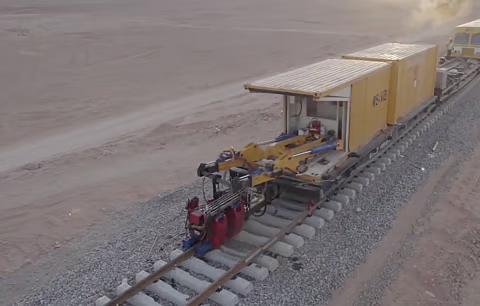
The 1,000-km state-funded line, built with Chinese partners, aims to fuel steel ambitions, cut $1.2bn in imports, and diversify from oil and gas.
ALGIERS – Algeria on Sunday opened a strategic 1,000-kilometer railway designed to unlock one of the world’s largest iron ore deposits, marking a pivotal step in the country’s plan to become an African steel powerhouse and reduce its dependence on hydrocarbons.
President Abdelmadjid Tebboune inaugurated the desert line, which connects the remote Gara Djebilet mine near Tindouf to the northern city of Béchar. From there, ore will be transported to a steel plant in Oran. Hailing it as “one of the largest strategic projects in the history of independent Algeria,” Tebboune oversaw the first ore shipment northward and welcomed the inaugural passenger train from the south.
Financed entirely by the Algerian state and constructed partly by a Chinese consortium, the railway is the critical artery for a mining project of colossal scale. Operated by the state-owned Feraal Group, the Gara Djebilet mine is projected to produce 4 million tons of iron ore annually initially, tripling to 12 million tons by 2030, with a long-term target of 50 million tons per year.
The economic implications are significant. Algerian media reports the project will slash the nation’s iron ore imports, saving an estimated $1.2 billion annually. Experts see the mine and its new railway as a cornerstone of Algeria’s economic diversification, shifting reliance away from oil and gas revenues toward industrial mineral production.
“The launch of this railway is not just an infrastructure achievement; it’s the starting point for a new industrial era,” President Tebboune stated during the ceremony in Béchar, broadcast on national television.
By integrating the mineral-rich but isolated Sahara into the national economy, Algeria aims to secure its raw material supply for steelmaking and position itself as a leading regional producer.
