
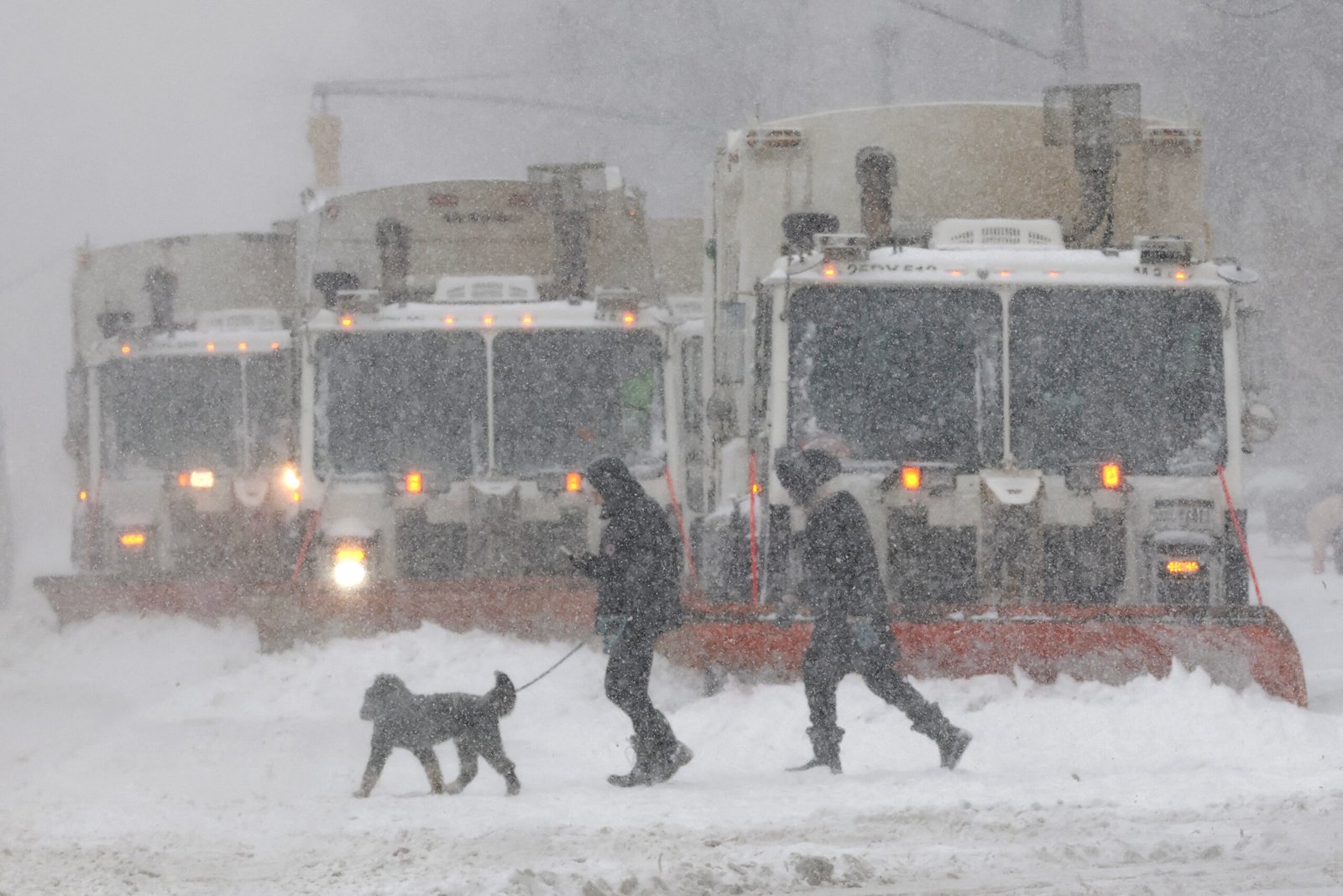
Arctic air mass brings historic cold and paralysis; recovery efforts hampered as freezing temperatures forecast to last into February.
A catastrophic winter storm fueled by a destabilized polar vortex has killed at least 30 people and left more than half a million customers without power across the United States, as a life-threatening Arctic air mass stalls over the nation.
The storm, delivering a brutal mix of heavy snow, freezing rain, and hurricane-force winds, has paralyzed regions from New Mexico to Maine. The National Weather Service (NWS) warned that much of the northern U.S. will see temperatures “continuously below freezing through February 1,” severely hampering recovery and raising fears of a prolonged crisis.
Mounting Human Toll
The fatalities, compiled from state and local reports, stem from hypothermia, traffic accidents, and other storm-related incidents. In a separate tragedy, seven people died when a small plane crashed during takeoff in a snowstorm in Bangor, Maine. New York City reported eight more deaths amid plummeting temperatures, with investigations ongoing.
Widespread Disruption
Despite some clearing skies, the aftermath is severe:
- Power: Over 540,000 customers, primarily in southern states like Tennessee, Texas, Mississippi, and Louisiana, remained without electricity Tuesday morning. Icy trees continue to fall, damaging restored lines.
- Travel: More than 9,000 flights have been canceled since the weekend, stranding travelers. “We don’t know if we are going to make it or not,” said passenger Alan Vazquez, stranded at Dallas-Fort Worth airport since Sunday.
- Snowfall: Parts of Connecticut recorded over 22 inches of snow, with Boston seeing more than 16 inches.
A Nation Strained
The storm’s national scale has overwhelmed resources. “A lot of those locations don’t have the means or the resources to clean up after these events,” said NWS meteorologist Allison Santorelli, noting that northern states usually able to aid the south are themselves inundated. Municipalities are opening emergency warming shelters as the deep freeze persists.
Scientists note that such severe disruptions of the polar vortex—which sent Arctic air sweeping across the continent—are occurring with increasing frequency, a trend potentially linked to climate change. With dry, “fluffy” snow reducing visibility and hindering road crews, officials warn that the most dangerous phase of the storm may be its protracted aftermath.
