
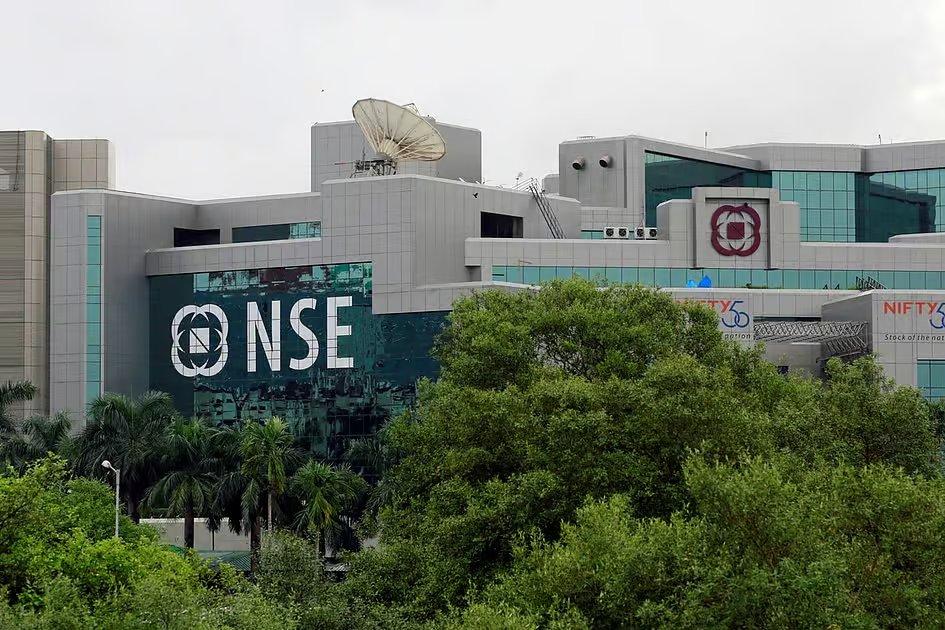
A Dubai-based Indian investor, who quietly accumulated shares in the National Stock Exchange (NSE) nearly a decade ago, is set to emerge as one of the biggest individual beneficiaries of what could become India’s largest-ever initial public offering, underscoring the rewards of patient investing in strategic national assets.
The NSE’s filing of its Draft Red Herring Prospectus (DRHP) marks a decisive step towards a public listing that market participants estimate could raise around Rs300 billion ($3.5 billion), potentially making it the largest IPO in Indian corporate history.
Among the beneficiaries is Siddharth Balachandran, a Dubai-based non-resident Indian investor, who began building his position in NSE in 2016 when the exchange’s listing prospects remained clouded by regulatory uncertainties and governance-related challenges.
Today, Balachandran owns approximately 9.315 million NSE shares, representing about 0.38 per cent of the exchange’s equity capital. Based on current estimates valuing NSE at more than $55 billion, his holding is worth over $250 million, making him one of the largest individual shareholders in the bourse.
The scale of the investment becomes even more significant when viewed alongside India’s most prominent market investors. Veteran investor Radhakishan Damani, founder of Avenue Supermarts, owns 39.1 million shares, or 1.56 per cent of NSE, while noted investor Dolly Khanna holds 1.516 million shares.
Balachandran is also a significant shareholder in the Bombay Stock Exchange (BSE), where he owns more than 8.2 million shares, representing about 2.01 per cent of the country’s second-largest exchange. His investments in both exchanges reflect a long-standing conviction in India’s expanding capital markets infrastructure.
The forthcoming NSE listing is widely regarded as a watershed moment for Indian financial markets. Founded in 1992, the exchange transformed India’s capital market ecosystem through electronic trading, transparent price discovery and the development of one of the world’s largest derivatives markets.
Today, NSE dominates India’s equity and derivatives trading landscape and consistently ranks among the world’s largest exchanges by trading volume. The exchange has benefited enormously from India’s rapid economic growth, financialisation of household savings, rising retail participation and increasing domestic institutional investment.
The IPO also comes at a time when India’s equity markets have achieved unprecedented scale. The country now ranks among the world’s largest stock markets by market capitalisation, while the number of retail investors has surged dramatically over the past five years, driven by digital platforms, financial inclusion initiatives and growing investor awareness.
For long-term shareholders, the listing represents the culmination of a journey marked by patience and conviction.
Unlike traditional private-equity investments that often target short-term exits, Balachandran’s investment thesis was built around the belief that institutions forming the backbone of India’s economic infrastructure would generate substantial value over time.
“Rather than viewing investments solely through the lens of financial returns, I have always preferred assets whose fortunes are closely linked to the long-term development and prosperity of the markets in which they operate,” Balachandran said.
His decision to invest in NSE came during a period when secondary-market trading in the exchange’s shares was relatively illiquid and the timeline for a public listing remained uncertain. The subsequent growth of India’s capital markets, combined with rising investor participation and increasing global interest in Indian assets, has dramatically enhanced the value of those holdings.
The draft prospectus also highlights the broad institutional interest in the offering. State Bank of India plans to sell 24.75 million shares through the offer for sale, while Bank of Baroda intends to divest nearly 11 million shares. Other significant sellers include GIC Re, The New India Assurance Company and Stock Holding Corporation of India.
Market observers believe the IPO will attract substantial demand from both domestic and international investors seeking exposure to India’s long-term growth story through a unique financial infrastructure asset.
While the public offering will provide shareholders with an opportunity to monetise part of their investments, the significance of the listing extends beyond liquidity. It represents the public market debut of a cornerstone institution that has played a pivotal role in shaping modern India’s financial system.
For Balachandran and a select group of early investors, the NSE IPO is more than a financial event. It is a validation of a decade-long bet on the future of India’s capital markets and a powerful reminder that some of the most rewarding investments are often those made long before the spotlight arrives.
