
The UAE’s non-oil private sector closed November on a firm upswing, with business activity, hiring and new orders all posting their strongest performance in nearly a year, according to the latest S&P Global PMI survey.
The seasonally adjusted UAE PMI climbed to 54.8, up from 53.8 in October, signalling the fastest improvement in operating conditions in eleven months and firmly above the long-run average of 54.3. The reading reflects strengthening demand conditions, rising client orders, and broader confidence across key industries as 2025 draws to a close.
S&P Global attributes the improved momentum to stronger market conditions, product innovation and technology upgrades that helped companies capture new sales. New orders increased at the quickest rate since January, reinforcing a supportive commercial landscape where firms reported larger contract wins and better conversion of sales pipelines. Several businesses also pointed to successful market diversification efforts, helping reduce reliance on traditional sectors.
Growth in output accelerated in tandem, with nearly a third of surveyed companies reporting increased activity since October. The expansion in production was one of the fastest seen in more than a year and a half, matching levels last recorded in December 2024. Rising workloads, however, brought renewed capacity pressures. Companies indicated higher backlogs, partially owing to payment delays on previous work, prompting a more active hiring stance in November.
Employment growth reached its strongest level since May 2024, marking an 18-month high. While the increase was moderate overall, it nonetheless signalled a clear turnaround in labour demand after a subdued period earlier in the year. Wage costs rose at the sharpest pace in fourteen months, driven by the need to attract skilled workers and keep pace with living-cost adjustments. Total staff expenses climbed at the fastest rate since April 2018, contributing to an overall rise in business input costs.
Firms responded to these pressures by increasing their selling prices, though the rise remained modest. Output charges recorded their steepest uplift in three months. Despite higher expenses, companies were broadly upbeat about the outlook for the next twelve months. More than 13 per cent of respondents anticipate stronger output in 2026, supported by healthy order books and a favourable business environment, while fewer than 1 per cent foresee any decline.
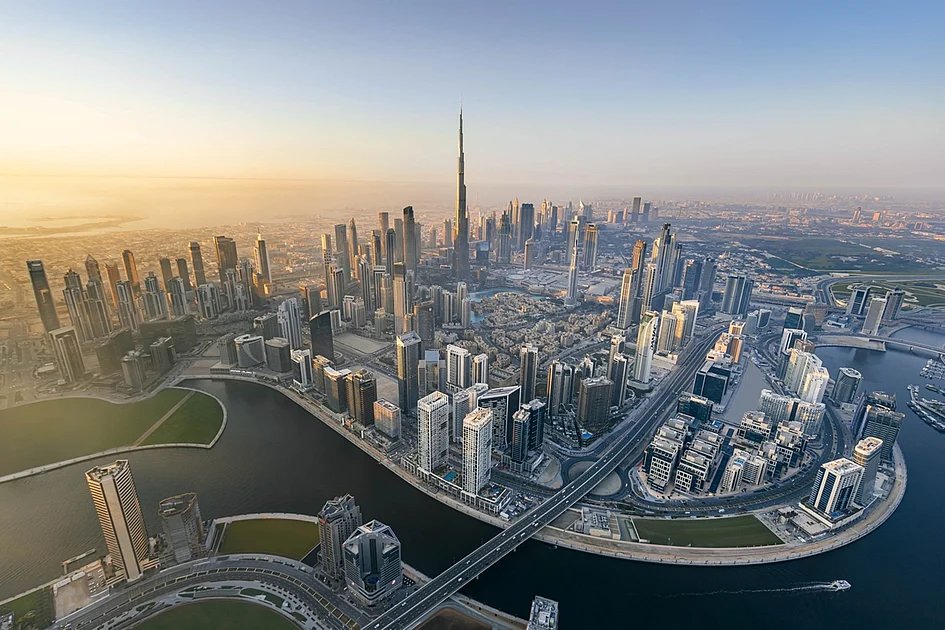
Dubai’s economy was a standout performer within the national picture. The emirate’s non-oil PMI held firm at 54.5, marking one of the fastest upturns since January. Activity growth accelerated noticeably as firms reported strong sales inflows and increased customer demand. Dubai’s job market also showed renewed vigour: staffing levels rose at the quickest pace in eighteen months, reflecting expanding business activity across retail, travel, real estate and professional services.
The improvement in employment aligns with broader labour-market trends reported by recruitment specialists such as Hays and Robert Walters, who note rising hiring intentions in technology, construction, hospitality and financial services heading into 2026. Dubai’s population growth—supported by continued expatriate inflows and company formation—remains a significant driver of non-oil sector activity. According to Dubai Statistics Centre and market analyses from JLL, the emirate has added tens of thousands of residents in 2025, boosting demand for services, logistics and consumer-facing businesses.
Input stocks in Dubai fell for the first time since August, suggesting firms are utilising inventories more intensively to meet rising demand. Supply chains, however, continued to strengthen, with delivery times improving at the fastest pace in a year. As in the wider UAE, input costs in Dubai rose due to higher salary pressures, prompting companies to raise output charges modestly.
Taken together, the latest indicators suggest the UAE is rounding out 2025 with renewed dynamism, especially in Dubai, and entering 2026 with conditions ripe for continued expansion in the non-oil economy, analysts noted.
David Owen, senior economist at S&P Global Market Intelligence, summarised November’s data as evidence of a “strong performance” driven by customer demand and healthier sales pipelines. Although wage-related cost pressures bear watching, he noted that the quickest rise in employment in one-and-a-half years is a constructive sign for the labour market and broader economic momentum.
While cost inflation remains a point of attention, analysts view the overall picture as encouraging. Colliers and Oxford Economics note that the UAE’s non-oil GDP is on track for growth of about 4.5–5 per cent in 2025, driven by tourism, trade, real estate and continued diversification. Strong visitor arrivals—supported by major events, expanded flight capacity and new hotel supply—are reinforcing demand for consumer services, while ongoing infrastructure and property development continues to stimulate economic activity.
Economists expect the upbeat trajectory to extend into early 2026. The combination of rising employment, solid order books and expanding business pipelines provides a solid foundation for continued non-oil growth. The UAE’s commitment to business-friendly reforms, coupled with sustained investment inflows, is set to further strengthen its position as one of the region’s most dynamic private-sector hubs.
