
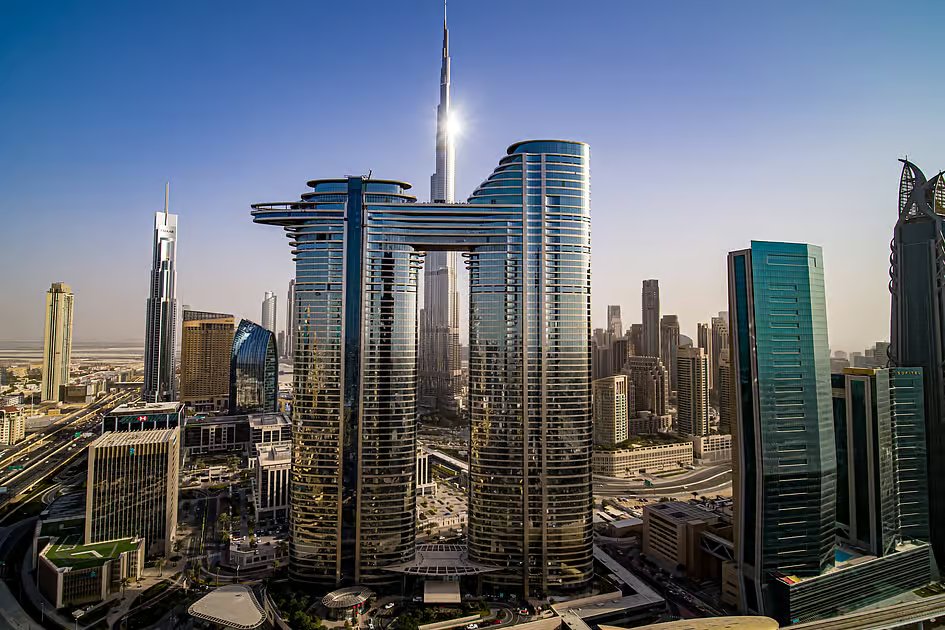
Dubai’s property market is showing signs of transitioning from a rapid-growth cycle into a more mature and stabilised phase, supported by strong economic fundamentals, infrastructure investment and sustained buyer confidence, even as more investors expect prices to soften in the coming months.
Fresh market data released by leading property consultancies and property portal propertyfinder.ae indicates that while residential sales and rental growth remain positive, the pace of expansion is moderating across several segments as supply rises sharply and buyers become increasingly selective.
The latest quarterly market assessments show Dubai crossed another key supply milestone during the first quarter of 2026, with apartment handovers exceeding 10,000 units for the second consecutive month.
Around 1,900 villas were also delivered during the quarter, while another 65,000 apartments and 12,500 villas are expected to enter the market before the end of the year, although some projects may spill into later periods.
Analysts say the influx of supply is beginning to reshape market dynamics after several years of exceptionally strong price appreciation driven by foreign capital inflows, population growth, Golden Visa reforms and robust economic expansion.
Despite the growing pipeline, rental performance remained resilient during the first quarter. Average apartment rents rose by around 2 per cent quarter-on-quarter, supported largely by sustained demand in the affordable housing segment. Villa rents remained broadly stable, although tenant behaviour has become more value-conscious at community level as affordability pressures rise.
The sales market also continued to expand, albeit at a slower and more selective pace. Off-plan sales remained closely tied to the frequency of new project launches, while activity in completed apartments and villas weakened progressively through March.
Still, average property prices continued to edge higher across both off-plan and secondary markets, underlining the underlying resilience of Dubai’s real estate sector despite signs of cooling momentum.
The office segment emerged as one of the strongest-performing sectors during the quarter, driven by a shortage of Grade A commercial space amid strong demand from multinational companies, financial firms and technology businesses expanding operations in Dubai.
Consultants say the shortage of premium office stock, especially in major business districts such as Dubai International Financial Centre and Business Bay, continues to push up office sales values and rents, although new commercial developments are gradually entering the pipeline.
The evolving market dynamics come as consumer sentiment surveys point to growing expectations of price corrections, even though buying appetite remains remarkably strong.
According to Property Finder’s latest bi-monthly Market Pulse survey, around 68 per cent of active property seekers in the UAE plan to purchase a property within the next six months, reflecting continued confidence in Dubai’s long-term growth story.
However, the survey also revealed a sharp shift in pricing expectations. Around 73 per cent of respondents surveyed in March and 70 per cent in April said they expect property prices to decline, a major reversal from the beginning of the year when buyers were almost evenly divided on future price movements.
Industry experts say the changing sentiment reflects a market that is becoming more balanced after years of rapid appreciation.
Dubai’s residential market has witnessed one of the world’s strongest post-pandemic rebounds, with luxury property prices in some prime locations more than doubling since 2020. But higher supply levels, rising competition among developers and greater buyer caution are now contributing to a more sustainable trajectory.
Outside Dubai, property markets across the Northern Emirates and Al Ain are also entering a more mature growth phase.
Sharjah, Ras Al Khaimah, Ajman and Umm Al Quwain are increasingly transforming from commuter-driven markets into standalone residential destinations offering affordability, integrated communities and lifestyle-focused developments.
Around 5,200 new residential units were launched across the Northern Emirates during Q1 2026, down nearly 60 per cent from the exceptionally high levels recorded in 2025. Sharjah led new launches with about 1,700 units, followed by Ras Al Khaimah, Ajman and Umm Al Quwain.
Rental growth in these markets moderated significantly during the quarter. Apartment rents in Sharjah and Ras Al Khaimah rose marginally by 1-2 per cent quarter-on-quarter, while rents in Ajman, Fujairah and Umm Al Quwain remained largely unchanged.
Project deliveries nevertheless maintained healthy momentum, with more than 1,100 apartments and 320 villas completed across major master-planned developments such as Aljada, Sharjah Sustainable City and Al Zahia.
Meanwhile, Al Ain’s real estate market continued to post stable, locally driven growth. Apartment rents rose 7 per cent year-on-year during Q1 2026, while villa rents increased 2 per cent annually. Retail and office segments also recorded moderate gains, particularly along Khalifa Street and Main Street corridors.
Property analysts say UAE real estate markets have so far remained largely insulated from broader regional geopolitical uncertainties and global economic volatility due to the country’s strong macroeconomic position, expanding non-oil economy and continued population inflows.
However, they caution that the coming quarters will be critical in determining whether higher supply levels and shifting buyer expectations result in a period of price stabilisation or a more pronounced slowdown in transaction activity.
