
The GCC economies have entered 2026 with renewed growth momentum, underpinned by a broad-based expansion in non-oil activity and a gradual recovery in hydrocarbon production, with the UAE emerging as one of the region’s strongest performers.
According to the World Bank’s latest Global Economic Prospects report, economic growth across the GCC is forecast to accelerate to 4.4 per cent in 2026, rising further to 4.6 per cent in 2027, reflecting the region’s success in diversifying beyond oil while maintaining energy-sector strength.
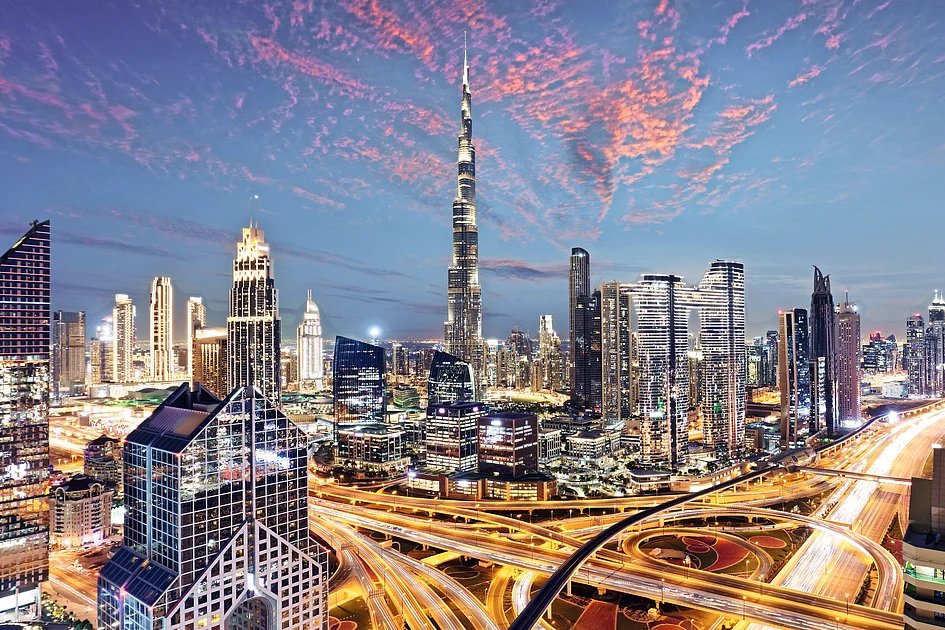
The UAE is expected to be at the forefront of this upswing. World Bank projections indicate that the country’s economy will expand by 5 per cent in 2026, followed by 5.1 per cent growth in 2027, driven by robust activity in trade, tourism, logistics, manufacturing, real estate and financial services. The outlook reinforces the UAE’s position as a regional growth anchor, supported by continued foreign investment inflows, major infrastructure spending and policy reforms aimed at strengthening the private sector and boosting productivity.
Across the region, Saudi Arabia is also poised for a stronger expansion phase. The World Bank expects the Kingdom’s real GDP to grow by 4.3 per cent in 2026 and 4.4 per cent in 2027, up from an estimated 3.8 per cent in 2025. A separate analysis by Standard Chartered similarly forecasts Saudi GDP growth of 4.5 per cent in 2026, outperforming the projected global average of about 3.4 per cent, with momentum coming from both hydrocarbon output and accelerating non-oil activity.
The World Bank said the improving growth outlook for GCC economies reflects the steady strengthening of non-hydrocarbon sectors, which now account for more than 60 per cent of total GDP across the bloc. Large-scale investment programmes, particularly in Saudi Arabia, the UAE and Kuwait, are expected to remain key drivers, supporting construction, tourism, transport, renewable energy and advanced manufacturing. For Saudi Arabia, this momentum aligns closely with the Vision 2030 strategy, which continues to prioritise economic diversification, private sector development and job creation to reduce long-term reliance on crude revenues.
Business sentiment indicators point to sustained expansion in the region’s non-oil economy. S&P Global data showed Saudi Arabia recorded the highest purchasing managers’ index reading in the GCC in December, at 57.4, supported by strong new orders, rising non-energy business activity and expanding employment. Similar trends have been observed in the UAE, where PMI readings have consistently remained in expansionary territory, reflecting resilient domestic demand and strong services-sector growth linked to tourism, aviation and trade.
Other GCC economies are also expected to benefit from the improving regional outlook. Oman’s GDP is forecast to grow by 3.6 per cent in 2026 and 4 per cent in 2027, supported by infrastructure development and industrial diversification. Qatar is projected to post growth of 5.3 per cent in 2026, accelerating sharply to 6.8 per cent in 2027, driven in part by the expansion of liquefied natural gas capacity and rising non-energy investment. Kuwait and Bahrain are expected to record growth of 2.6 per cent and 3.5 per cent, respectively, in 2026, reflecting gradual recovery trends and ongoing reform efforts.
The International Monetary Fund (IMF) has echoed the broadly positive outlook for the Gulf region. In its latest regional assessments, the IMF projected that GCC economies will continue to outperform many emerging and advanced markets in 2026, supported by strong fiscal buffers, high public investment spending and structural reforms aimed at strengthening private sector participation. The IMF has also highlighted the UAE’s role as a regional trade and financial hub, noting that continued reforms, liberalised business regulations and investment-friendly policies are helping to attract global capital and talent flows.
Beyond the GCC, growth across the wider Middle East, North Africa, Afghanistan and Pakistan (Menap) region is estimated to have reached 3.1 per cent in 2025 and is projected to strengthen to 3.6 per cent in 2026 and 3.9 per cent in 2027, largely driven by improved performance among oil-exporting economies and stabilising macroeconomic conditions.
For the UAE, the 2026 outlook reflects a structural shift in the composition of growth. Non-oil sectors now account for the bulk of economic activity, with tourism arrivals reaching record levels, trade volumes expanding and digital transformation reshaping financial services and logistics. Major public and private investments in renewable energy, artificial intelligence, manufacturing and advanced technology are also expected to support medium-term growth while reinforcing the country’s competitiveness.
However, global risks remain on the horizon. International institutions continue to flag geopolitical tensions, volatile energy markets, tighter global financial conditions and slower growth in major economies as potential headwinds. Even so, the GCC’s strong fiscal positions, diversified funding sources and continued reform momentum provide a buffer against external shocks.
As 2026 approaches, the Gulf’s economic narrative is increasingly defined by the pace of diversification, private-sector expansion and productivity growth, apart from oil. Economists argue that with the UAE leading regional performance and Saudi Arabia accelerating reform-driven expansion, the GCC appears set to enter the next growth cycle with stronger fundamentals and a more balanced economic base than at any time in recent decades.
