
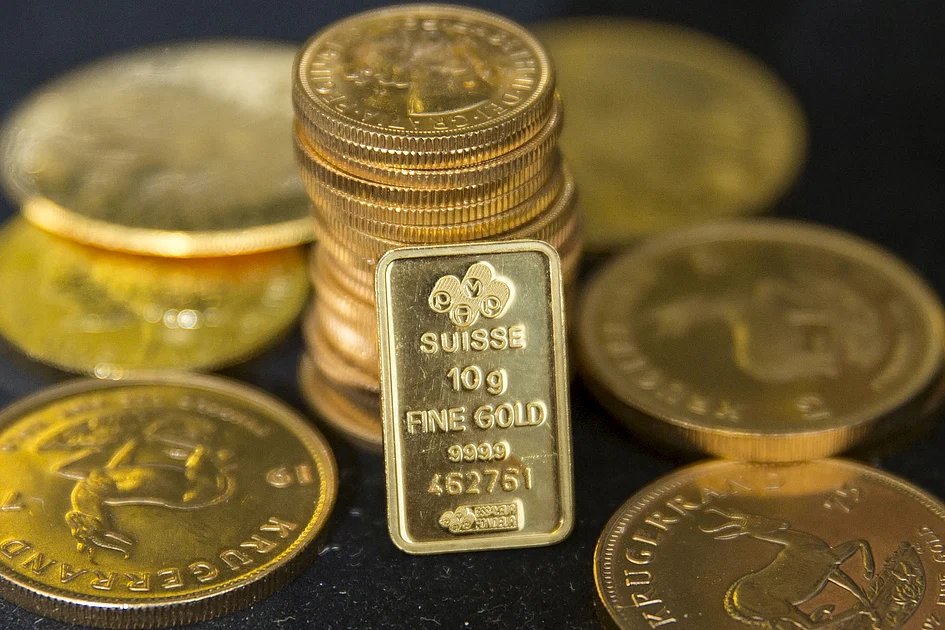
Gold is charging into 2026 with unprecedented momentum, fuelling growing conviction across global markets that the precious metal is on the cusp of breaking decisively above the psychologically powerful $5,000-an-ounce mark.
After delivering a stunning 64 per cent gain last year and adding more than 6 per cent in the first two weeks of the new year alone, bullion has transformed from a traditional defensive hedge into the centrepiece of a new “real assets” supercycle driven by geopolitical risk, monetary easing, relentless central bank buying and a structural shift in portfolio allocation.
Standard Chartered has emerged as one of the most influential bullish voices. Manpreet Gill, chief investment officer for Africa, the Middle East and Europe at the bank, said gold remains a core overweight position in the bank’s global asset allocation, reflecting what he described as resilient and broad-based demand that continues to underpin the multi-year rally. The bank has set ambitious price targets of $4,350 per ounce over three months and $4,800 over 12 months, but Gill’s broader outlook suggests that these milestones are stepping stones rather than end points.
Gill said emerging market central banks are set to play an even larger role in sustaining gold’s advance as they accelerate reserve diversification away from the dollar. This structural demand, combined with declining real yields and a softer dollar environment, creates, he said, a powerful macro backdrop for bullion. While he does not see current conditions mirroring past financial crises, Gill warned that widening dispersion across asset classes makes diversification increasingly critical, reinforcing gold’s role as a stabilising anchor when optimism around risk assets falters.
He added that even if near-term volatility follows US Federal Reserve interest rate cuts, any pullbacks in gold prices are likely to be shallow. Rather than signalling trend reversals, such moves should represent consolidation phases that build a stronger foundation for the next leg higher. In this context, gold’s rally is evolving into a structural re-rating rather than a short-lived speculative surge.
Market action is already reinforcing that narrative. Spot gold recently surged to a record high near $4,630 an ounce, while silver vaulted to an all-time peak above $86 an ounce. The rally has been turbocharged by a potent mix of geopolitical uncertainty, concerns over central bank independence in the United States, rising tensions in the Middle East and Latin America, and expectations that global monetary policy is entering a sustained easing cycle.
ANZ has gone a step further, forecasting that gold will rise beyond $5,000 an ounce this year as safe-haven demand intensifies. Major brokerages broadly agree that the combination of geopolitical risk, ETF inflows and central bank accumulation is creating an unusually strong demand floor.
According to the World Gold Council, gold prices set new records 53 times in 2025, while inflows into physically backed gold exchange-traded funds surged to a record $89 billion. Holdings of the world’s largest gold-backed ETF, SPDR Gold Trust, climbed to more than 1,073 metric tonnes by the end of December, the highest level in over three years.
Central banks have become the backbone of this bull market. China’s central bank extended its buying streak to 14 consecutive months in December, lifting its gold reserves to more than 74 million fine troy ounces. Analysts expect this trend to continue through 2026 as emerging economies seek to insulate reserves from currency volatility and geopolitical shocks.
Independent precious metals analyst Ross Norman said real assets are increasingly taking centre stage as traditional financial rules are being rewritten. In his view, gold reflects a world where geopolitical and monetary uncertainty is no longer episodic but structural. Tim Waterer, chief market analyst at KCM Trade, echoed this sentiment, saying that if geopolitical risks remain elevated and rate-cut expectations remain intact, gold could soon establish a sustained break above $4,600, opening the door to higher milestones.
Despite occasional warnings of overbought technical conditions, most analysts agree that any short-term corrections are unlikely to derail the broader uptrend.
Lukman Otunuga, senior market analyst at FXTM, said fundamentals remain firmly in gold’s favour due to persistent concerns over US monetary policy credibility, trade tensions and steady central bank demand. Even in consolidation phases, he believes the long-term structure remains decisively bullish.
Naeem Aslam, chief investment officer at Zaye Capital Markets, added that escalating geopolitical risks are reinforcing gold’s appeal as the primary hedge asset. With global tensions simmering across multiple flashpoints, he said investors are increasingly turning to bullion as the ultimate store of value.
Precious metal analysts argue that all these forces are reshaping the gold market. What began as a defensive allocation is now evolving into a core strategic asset for institutions, central banks and retail investors alike. “With supply growth constrained, demand structurally rising and macro uncertainty becoming the new normal, the path toward $5,000 gold is fast becoming the market’s base case.”
