
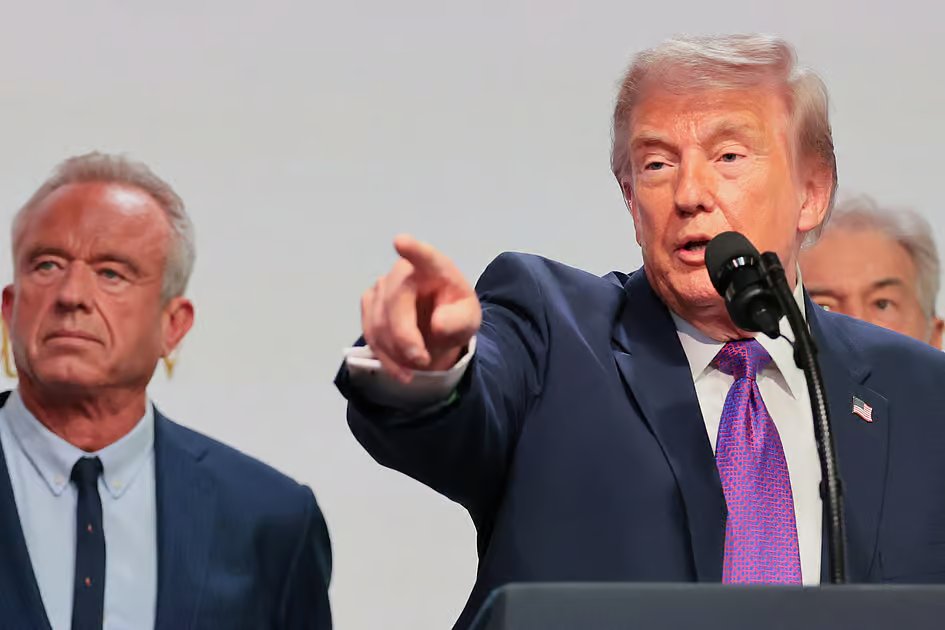
However, should an ‘acceptable’ deal not be reached, US will begin a ‘full, large scale assault of Iran, on a moment’s notice’, the US President claimed
US President Donald Trump said he is holding off on a “planned military attack” on Iran, initially scheduled for May 19, at the request of three Gulf leaders.
He named the UAE President Sheikh Mohamed bin Zayed Al Nahyan, Qatar Emir Sheikh Tamim bin Hamad Al Thani and the Crown Prince of Saudi Arabia, Sheikh Mohammed bin Salman bin Abdulaziz Al Saud.
Trump said based on his “respect for the leaders”, he had instructed US Secretary of War Pete Hegseth, Chairman of Joint Chiefs of Staff Daniel Caine, and the US military not to proceed with an attack he claims was scheduled for Tuesday, May 19.
The Gulf leaders pointed out that serious negotiations were going on, and they were “of the opinion that a deal will be made,” Trump said.
However, should an “acceptable” deal not be reached, he added, the US will begin a “full, large scale assault of Iran, on a moment’s notice”.
Iran-US negotiations bear no fruit so far
April 12: First round of negotiations ends in no deal after almost 21 hours of talks.
Washington’s reported 15-point proposal centred on Iran’s enriched uranium, ballistic missiles, sanctions relief and the reopening of the Strait of Hormuz. Tehran countered with a 10-point plan demanding control over the strait, a toll for vessels crossing the strait, an end to all regional military operations and the lifting of all sanctions.
April 13: US military said it will begin a blockade of all maritime traffic entering and exiting Iranian ports and coastal areas. The US Central Command said that the blockade would be “enforced impartially against vessels of all nations entering or departing Iranian ports and coastal areas.
April 26: Trump cancelled a trip by two US envoys to Iran’s war mediator Pakistan on Saturday, dealing a new setback to peace prospects after Iran’s foreign minister departed Islamabad after speaking only to Pakistani officials
April 28: Trump is not satisfied with Iran’s latest proposal to end the war. Iranian sources said the proposal sets aside the nuclear issue until after the conflict, while Tehran also stated that the US is no longer in a position to “dictate” policy to other nations.
May 1: After Iran delivered a proposal text to mediator Pakistan on Thursday evening, Trump said that he was “not satisfied” with the new Iranian negotiating proposal, blaming stalled talks on “tremendous discord” within Iran’s leadership.
May 4: Iran launches fresh attacks on UAE, with residents receiving emergency alerts. UAE confirmed its air defence systems had engaged a total of 12 ballistic missiles, three cruise missiles, and four drones. Iranian drones also targeted Fujairah’s Petroleum Industries Zone (FOIZ), triggering a fire at the site, and injuring 3 Indian nationals. Read the full media report for a full account of what happened in UAE on May 4.
May 11: Trump said Iran’s response to a US proposal was “unacceptable”. Tehran’s response focused on ending the conflict across all fronts, particularly in Lebanon, as well as ensuring the safety of shipping through the Hormuz Strait.
May 17: Iranian media says Washington’s latest five-point response to its proposal contained no concrete concessions, instead presenting demands seen as a potential obstacle to talks. Fars reported that the US conditioned any cessation of hostilities on all fronts on the start of negotiations.
The Iranian proposal also reportedly stressed that Tehran would continue managing the strategic Strait of Hormuz, a key global energy route that Iran has largely kept closed since the outbreak of the war.
May 19: Peace mediator Pakistan has shared with the United States a revised proposal from Iran to end the war in the Middle East, a Pakistani source told Reuters on Monday, warning that the sides “don’t have much time” to narrow their differences. The world awaits the US response
