
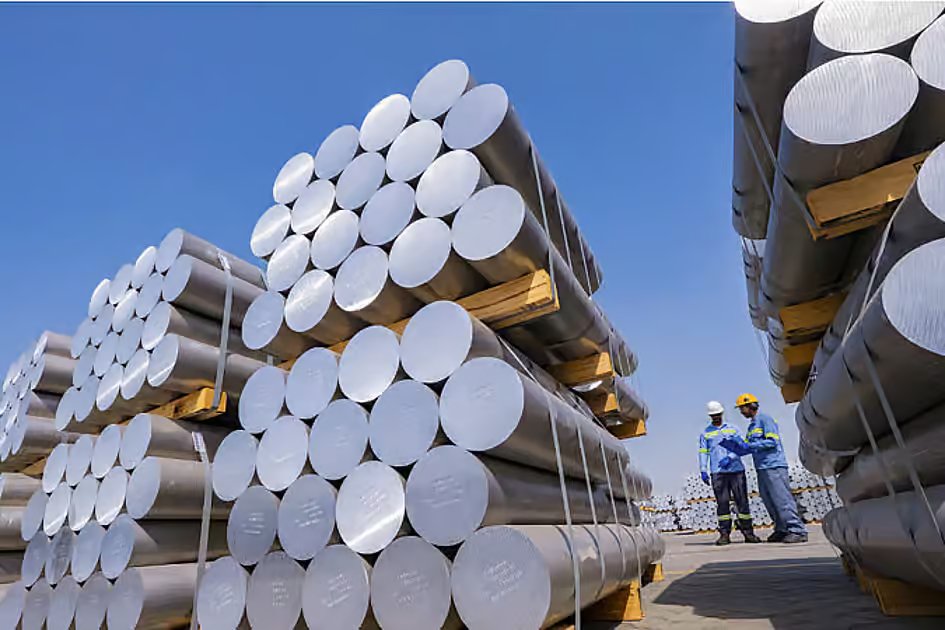
The UAE’s industrial transformation is accelerating, with the sector’s contribution to the country’s gross domestic product rising by nearly 70 per cent since 2021 and industrial exports surpassing Dh262 billion in 2025, highlighting the success of the nation’s strategy to diversify its economy and establish itself as a global manufacturing and advanced technology hub.
The latest figures, announced by Hassan Al Nowais, Undersecretary of the Ministry of Industry and Advanced Technology (MoIAT), underscore the growing role of industry as a key pillar of the UAE’s non-oil economy and a major driver of investment, exports and job creation.
Speaking on the sidelines of the Industrialists Career Exhibition 2026, Al Nowais said the strong performance reflects the effectiveness of the UAE’s industrial policies in enhancing the competitiveness of national products, attracting local and foreign investment and expanding the country’s industrial footprint in global markets.
“The industrial sector continues to achieve remarkable and impactful growth,” Al Nowais said, noting that the rise in industrial exports and output demonstrates the resilience and competitiveness of the UAE’s manufacturing ecosystem.
The growth comes under the umbrella of Operation 300bn, the UAE’s flagship industrial strategy launched in 2021 to increase the sector’s contribution to GDP from Dh133 billion to Dh300 billion by 2031. Since its launch, the programme has accelerated investment across strategic sectors including advanced manufacturing, pharmaceuticals, food processing, aerospace, defence industries, clean energy and industrial technologies.
The industrial push is also closely aligned with the UAE’s broader economic diversification agenda. According to official estimates, non-oil activities now account for more than 75 per cent of the UAE’s GDP, one of the highest levels among Gulf economies. The UAE economy expanded by around 4 per cent in 2025 despite global economic uncertainties, with manufacturing emerging as one of the strongest-performing sectors.
Analysts say the rapid expansion of the industrial sector reflects the success of government initiatives such as Make it in the Emirates, the National In-Country Value (ICV) Programme and incentives aimed at boosting domestic production and strengthening supply chains.
Beyond economic growth, the industrial strategy is also generating employment opportunities for Emiratis.
Al Nowais said the Industrialists Career Exhibition has already exceeded the target announced under the Make it in the Emirates initiative in 2023, achieving its employment objectives a full year ahead of schedule. More than 5,200 jobs have been created for UAE nationals in the industrial and advanced technology sectors in less than three years.
The achievement highlights the UAE’s efforts to align industrial expansion with human capital development and ensure that economic growth translates into sustainable, high-quality employment opportunities for citizens.
The exhibition, one of the key implementation platforms of both the Make it in the Emirates initiative and the ICV Programme, aims to connect industrial companies with Emirati talent while promoting careers in manufacturing, engineering and advanced technologies.
The 2026 edition attracted more than 4,500 job seekers over two days, reflecting growing confidence in the industrial sector as a long-term career destination. The first day alone saw over 1,800 attendees and more than 7,300 job interviews conducted.
More than 800 Emirati men and women were preliminarily shortlisted for employment opportunities, supported by over 1,000 vacancies offered by more than 70 leading national companies operating across strategic sectors such as artificial intelligence, engineering, advanced manufacturing, clean energy and industrial services.
Ibtisam Al Saadi, Acting Assistant Undersecretary for the Industrial Development Sector at MoIAT, said an increasing number of young Emiratis are actively pursuing opportunities in the private sector, attracted by the prospects for professional growth and skills development.
“Today you are finding people who are actually pushing to look for opportunities in the private sector because they understand that the opportunity to learn more is there,” Al Saadi said.
The growing participation of Emiratis in industrial careers marks a significant shift for a sector traditionally dominated by expatriate labour. As companies increasingly adopt automation, robotics, artificial intelligence and advanced manufacturing technologies, demand is rising for highly skilled local talent capable of supporting the UAE’s next phase of industrial development.
Industry experts note that the UAE’s strategic location, world-class logistics infrastructure, access to global markets and supportive regulatory environment continue to strengthen its appeal as a manufacturing and export hub.
With industrial exports reaching a record Dh262 billion, investment flowing into advanced industries and national employment targets being exceeded ahead of schedule, the UAE appears firmly on track to achieve its ambition of becoming one of the world’s leading centres for industry and advanced technology by the next decade.
