
The UAE economy is expected to weather the fallout from the Middle East conflict and return to a stronger growth trajectory from 2027, underpinned by rising oil production, expanding export infrastructure and one of the world’s strongest sovereign balance sheets, according to assessments by economists and analysts.
While the recent framework agreement between the US and Iran has improved prospects for regional stability, analysts at S&P Global Ratings cautions that the effects of the war will continue to weigh on economic activity in 2026, particularly in energy, tourism, trade and real estate. Nevertheless, the ratings agency believes the UAE’s vast fiscal and external buffers, coupled with its long-term diversification strategy, position it among the region’s best-placed economies to recover once trade and energy flows normalise.
S&P forecasts the UAE economy will contract by 2.7 per cent in 2026 after expanding 6.2 per cent in 2025, reflecting the impact of disrupted oil exports, weaker trade flows and a slowdown in key non-oil sectors. However, the agency expects growth to rebound strongly from 2027 onwards as oil production recovers and business confidence improves.
“The UAE will continue to benefit from the fundamental factors that have underpinned its fast growth, economic resilience and successful diversification,” S&P said in its latest Credit FAQ on the UAE economy.
The agency’s base-case scenario assumes disruptions in the Strait of Hormuz begin easing during the second half of 2026, allowing a gradual recovery in energy exports. Yet it warns that damaged infrastructure, shipping bottlenecks, elevated insurance costs and lingering risk aversion could slow the pace of normalisation.
The broader economic outlook remains closely tied to developments in the energy sector.
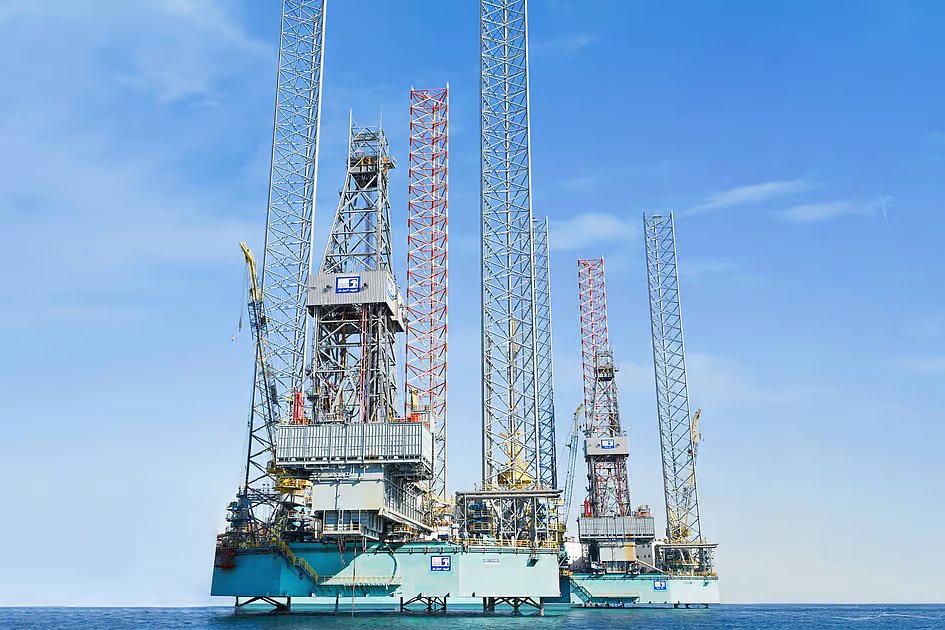
S&P expects UAE oil production to average between 2.5 million and 2.6 million barrels per day this year, down from 3.14 million bpd in 2025. However, production is projected to rise steadily to around four million bpd by 2027 and five million bpd by 2029, supported by Abu Dhabi National Oil Company’s ambitious expansion plans.
Adnoc has earmarked around $150 billion in capital expenditure between 2026 and 2030, targeting production capacity of five million bpd by 2027 while expanding gas output and supporting local industrial development through the “Make it in the Emirates” initiative.
The recovery outlook has also been strengthened by the UAE’s decision to accelerate alternative export routes. The country’s existing Habshan-Fujairah pipeline already provides direct access to the Indian Ocean, bypassing the Strait of Hormuz. A new West-East pipeline, expected to become operational by 2027, will further increase export flexibility and reduce geopolitical vulnerabilities.
Additional investments in Fujairah, Khor Fakkan and Dibba ports, together with new rail and road infrastructure, are intended to create a more resilient logistics network capable of withstanding future disruptions.
The International Energy Agency has repeatedly highlighted the importance of restoring full navigation through the Strait of Hormuz. Fatih Birol, executive director of the IEA, recently warned that while progress towards reopening the waterway was encouraging, a sustained recovery in global energy markets would depend on restoring confidence among shipping operators, insurers and traders.
The UAE’s fiscal strength remains its most important economic shock absorber.
S&P estimates the country’s liquid government assets at roughly 200 per cent of GDP, one of the highest levels globally. The agency said that even in an extreme scenario involving a complete halt in oil production and no fiscal adjustments, the UAE’s consolidated budget would only move into deficit after about six months.
The International Monetary Fund estimates the UAE’s fiscal breakeven oil price at around $45 per barrel, significantly lower than most oil-exporting economies due to low production costs and prudent fiscal management.
The recovery, however, is expected to be uneven across the federation.
Abu Dhabi, where hydrocarbons account for nearly half of economic output, is projected to contract by about nine per cent in 2026. Dubai’s economy is expected to shrink by around 2.5 per cent as tourism, hospitality, trade and property activity slow.
In contrast, Sharjah and Ras Al Khaimah are expected to continue expanding by around two per cent, benefiting from more diversified economies and growing domestic demand.
Azad Zangana, senior economist at Oxford Economics, said the economic damage from the conflict remains concentrated in sectors directly affected by energy and trade disruptions. However, he noted that the GCC could experience a sharp rebound once transport links normalise and energy exports recover.
ICAEW and Oxford Economics recently forecast GCC economic growth of 8.1 per cent in 2027 following a regional contraction in 2026, underlining expectations that the current downturn will prove temporary rather than structural.
For investors, the message from S&P is that the war has interrupted the UAE’s growth story but has not fundamentally altered it. Supported by large sovereign wealth assets, expanding export infrastructure, rising production capacity and a proven ability to adapt to external shocks, the UAE appears well positioned to emerge from the crisis stronger and more resilient than many of its regional peers.
