
The US-Iran agreement has removed a key trigger for a global recession by easing concerns over oil supplies and restoring confidence in energy markets.
While the accord has helped calm investors and lower risk premiums, analysts warn it is not a silver bullet for an economy still grappling with slowing growth and persistent geopolitical uncertainty.
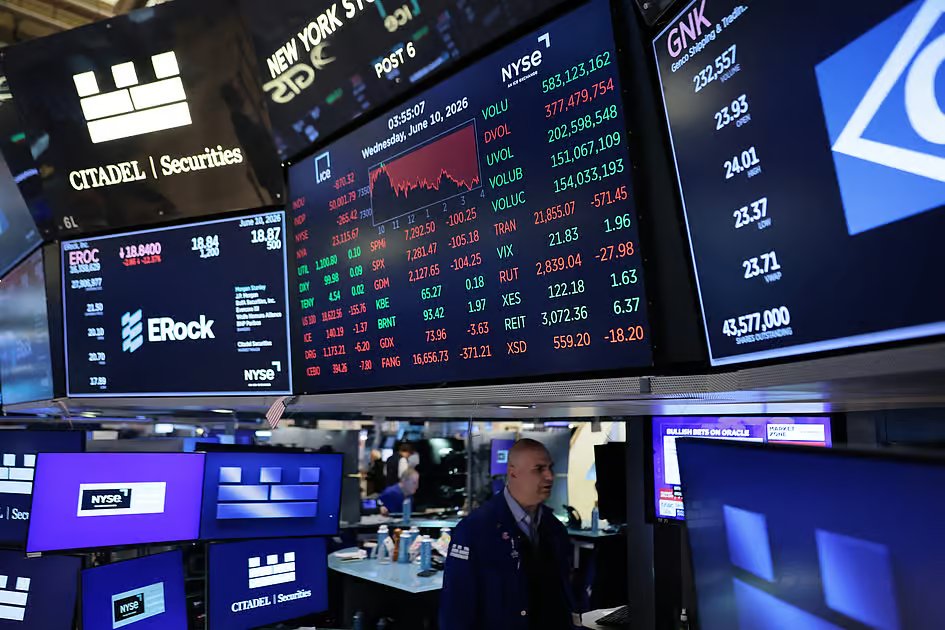
Markets responded enthusiastically to the announcement, with Brent crude prices falling sharply as traders scaled back expectations of prolonged supply disruptions. Global equities advanced and measures of market volatility declined as investors judged that the risk of a major energy crisis had receded.
The Strait of Hormuz, through which roughly one-fifth of global oil consumption passes, has been at the centre of market concerns since tensions escalated earlier this year. Any prolonged disruption to shipping through the waterway threatened to tighten global energy supplies, fuel inflation and undermine economic growth worldwide.
According to Oxford Economics, the agreement represents a significant diplomatic breakthrough and a meaningful step towards a broader settlement, even though substantial challenges remain. “While this is a significant step towards reaching a full-blown deal, there will likely be bumps in the road,” said Ben May, director of Global Macro Research at Oxford Economics.
He argued that the most important consequence of the announcement is the reduction in the risk of an extreme oil supply shock rather than any immediate increase in oil shipments. Oxford Economics had already assumed in its June baseline forecast that shipping through the Strait of Hormuz would begin recovering in late July. Consequently, the latest agreement does not necessarily imply a faster restoration of oil flows than previously anticipated.
What has changed is the balance of risks.
Before the agreement, economists had warned that a prolonged disruption could sharply reduce global oil inventories, triggering a surge in energy prices and creating renewed inflationary pressures across major economies. Such a scenario would have increased the likelihood of recession in economies already grappling with weak growth and elevated borrowing costs.
“The fact that both sides have announced an agreement reduces the tail risk of dwindling oil inventories prompting a recession-inducing oil price spike,” May said.
Bridget Payne, Head of Oil and Gas Forecasting at Oxford Economics, said the easing of geopolitical tensions has materially improved the near-term outlook for energy markets.
While shipping levels may still take time to return to pre-conflict levels, Payne argued that the probability of a severe inventory squeeze has declined substantially. As a result, Oxford Economics now expects to revise its near-term oil price forecasts lower in its forthcoming June update.
The reaction in energy markets suggests investors share that assessment. Brent crude prices fell around 5 per cent following news of the agreement, reflecting growing confidence that the worst-case scenario for global oil supplies is becoming less likely.
Independent analysts have reached similar conclusions.
Reuters reported that traders interpreted the breakthrough as a signal that the most severe phase of the crisis may be over, helping push oil prices to their lowest levels in several months. Investors increasingly believe that energy flows through the Strait of Hormuz will gradually normalise, reducing the likelihood of a prolonged supply shock.
However, industry experts caution that a return to normal conditions will not happen overnight.
Shipping companies, tanker operators and maritime insurers have warned that vessel traffic remains constrained by security concerns, de-mining operations and elevated insurance costs. Several major operators have indicated they will only gradually resume normal operations once safety conditions are verified. Industry observers suggest that a full return to pre-conflict shipping volumes could take months rather than weeks.
That view closely aligns with Oxford Economics’ assessment that the agreement does not automatically translate into a rapid increase in oil shipments. While markets have become more optimistic, the practical process of restoring maritime trade remains complex.
Geopolitical analysts have also urged caution. Several experts have described the agreement as an important breakthrough but emphasised that it remains a framework rather than a comprehensive settlement. Difficult negotiations still lie ahead over sanctions relief, security guarantees and longstanding disputes linked to Iran’s nuclear programme.
Those uncertainties help explain why economists remain cautious about the broader economic implications.
Lower oil prices are expected to reduce headline inflation across many advanced economies. Households and businesses should benefit from lower fuel and transport costs, easing some of the pressure created by recent energy market volatility.
However, Oxford Economics argues that the resulting boost to economic activity is likely to be modest.
The consultancy continues to expect global growth in 2026 to fall outside the relatively stable range of 2.8 per cent to 3.0 per cent recorded in recent years. While cheaper energy provides some support, it does not address the structural challenges constraining growth, including weak investment, subdued productivity gains and cautious consumer spending.
In other words, the agreement removes a major downside risk without fundamentally changing the trajectory of the world economy.
The implications for central banks may ultimately prove more significant than the impact on growth itself.
Oxford Economics believes that softer oil prices reinforce its long-held view that the US Federal Reserve and the Bank of England are unlikely to raise interest rates further. The reduced risk of energy-driven inflation also lessens the likelihood that central banks which have already tightened policy despite weak economic conditions will feel compelled to tighten again.
Financial markets appear to share that view. Lower oil prices have contributed to a decline in inflation expectations and reduced concerns that policymakers may need to respond to another energy-driven surge in consumer prices.
For policymakers, the agreement removes a major source of uncertainty. For investors, it lowers the probability of another inflation shock. And for consumers, it offers the prospect of some relief from elevated energy costs.
Yet the broader message from economists remains clear: the agreement reduces a serious downside risk, but it does not create a powerful new engine of global growth.
The world economy may now be less vulnerable to an oil shock, but it still faces a challenging combination of weak demand, geopolitical uncertainty and uneven economic momentum. The US-Iran breakthrough is undoubtedly good news for markets and policymakers alike. It is not, however, a game-changer for the global economy.
