
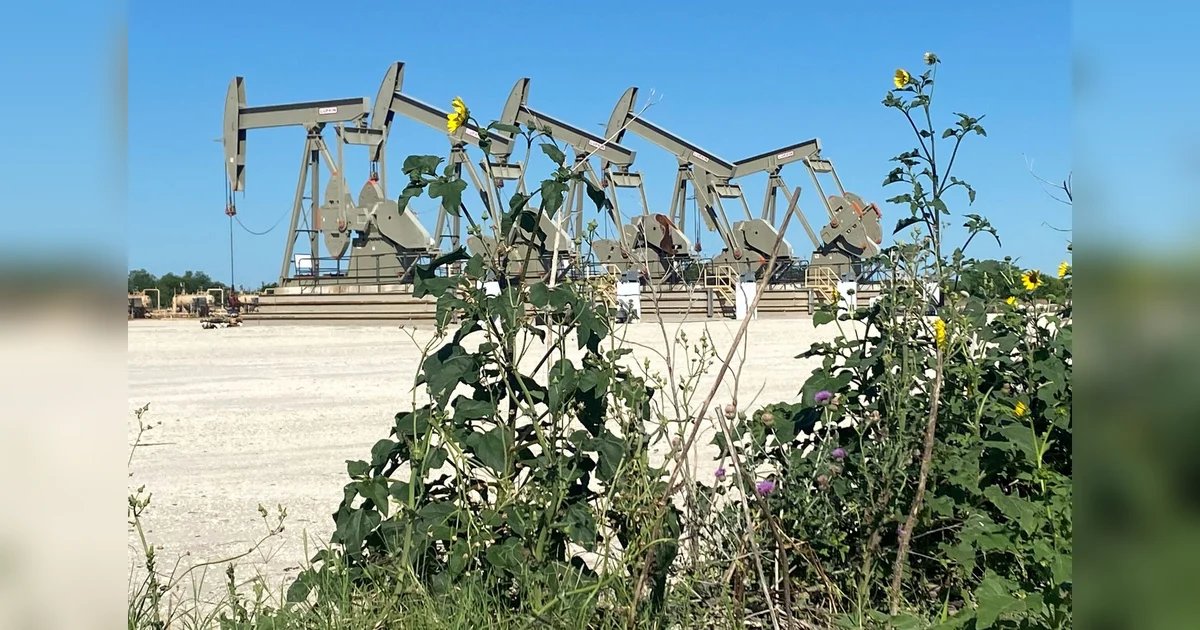
Global oil markets are bracing for a potential supply shock as the escalating conflict in the Gulf threatens to remove millions of barrels of crude from the market while pushing prices sharply higher.
Analysts warn that production losses could exceed 3 million barrels per day within days and rise above 4 million barrels per day if the disruption drags on, tightening supplies in a market already on edge over security risks in the region.
Oil prices have already begun climbing as attacks on tankers, refinery disruptions and the near halt of shipping through the Strait of Hormuz choke off vital energy flows from the Middle East. Brent crude rose above $83 per barrel, while US benchmark West Texas Intermediate approached $77, as traders priced in the risk that supply disruptions could deepen if tanker traffic and exports remain constrained.
The Strait of Hormuz — the narrow waterway linking the Arabian Gulf with global markets — handles roughly 20 per cent of the world’s seaborne oil trade and a significant portion of global liquefied natural gas shipments. Any disruption to this strategic chokepoint quickly reverberates through international energy markets because it serves as the main export route for major producers including Saudi Arabia, Iraq, the United Arab Emirates, Kuwait and Qatar.
Commodity analysts at JPMorgan estimate that the conflict could lead to production losses exceeding 3 million barrels per day by the end of the week, largely due to storage constraints, export bottlenecks and precautionary shutdowns across the region. If hostilities persist for more than a couple of weeks, those losses could climb beyond 4 million barrels per day, representing one of the largest short-term supply disruptions in recent years.
Iraq, the second-largest crude producer in Opec, has emerged as one of the most vulnerable suppliers in the current crisis. Officials say the country has already been forced to shut in roughly 1.5 million barrels per day of production as storage facilities approach capacity and export routes remain severely constrained.
Analysts warn that the production shutdowns could expand to as much as 3 million barrels per day, which would effectively halt most of Iraq’s crude exports if tanker traffic does not resume soon.
JPMorgan estimates that if the conflict continues, regional supply disruptions could intensify rapidly. By the 15th day of hostilities, shut-in production across the Gulf could reach about 3.8 million barrels per day, rising to roughly 4.7 million barrels per day by the 18th day as logistical challenges force producers to curb output.
Shipping disruptions are already compounding the supply shock. Data from ship-tracking firms such as Vortexa and Kpler show that tanker movements through the Arabian Gulf have dropped sharply as insurers and shipping companies reassess risks following multiple reported attacks on vessels.
Industry estimates suggest that hundreds of oil tankers are currently stranded in the Gulf, unable or unwilling to transit through the Strait of Hormuz amid escalating security concerns and soaring war-risk insurance costs.
Iran has warned it could target vessels attempting to cross the strait, dramatically raising the stakes for global energy markets. The threats have already pushed shipping rates and insurance premiums sharply higher, increasing the cost of transporting crude even for shipments that do manage to leave the region.
In response to the disruption, the United States has signalled it could consider providing naval escorts or insurance guarantees for tankers transiting the Arabian Gulf if the situation deteriorates further, echoing similar measures used during previous Gulf crises to keep vital shipping lanes open.
Energy infrastructure across the region has also come under pressure. Saudi Aramco reportedly shut down its largest domestic refinery temporarily after it was targeted by drone attacks, while QatarEnergy declared force majeure on liquefied natural gas shipments after Iranian strikes disrupted operations at key processing facilities.
Security concerns have also spilled into the United Arab Emirates, where authorities reported a fire at an oil-related industrial facility in Fujairah following an intercepted drone attack earlier this week. Although the damage was limited, the incident underscored how rapidly the conflict could threaten critical energy infrastructure across the Gulf.
Despite the escalating tensions, some analysts believe markets are still pricing the conflict as temporary rather than prolonged. Deutsche Bank said the sharpest spikes have been concentrated in near-term oil contracts, while longer-dated futures have moved far less, suggesting traders expect supply disruptions to ease once hostilities subside.
Economists also point to the availability of spare production capacity within Opec producers as a potential buffer. Saudi Arabia and the United Arab Emirates together hold several million barrels per day of spare capacity, which could help offset lost output if the crisis continues.
However, analysts caution that the biggest risk currently lies in trade disruptions rather than production capacity. Even if producers have spare output, rerouting exports away from the Strait of Hormuz would be extremely difficult.
Bridget Payne, head of energy forecasting at Oxford Economics, said the global oil market remains relatively well supplied despite the current shock. However, she warned that logistical disruptions could still drive significant volatility in prices.
“Spare capacity in Saudi Arabia and the UAE can offset some lost production, but alternative routes can only reroute around one-third of normal Strait of Hormuz oil flows,” Payne said.
She expects Brent crude to average around $79 per barrel in the second quarter if supply flows normalise later this year. However, analysts warn that a prolonged conflict that keeps the strait effectively closed could push prices well above $100 per barrel, raising the spectre of a broader global energy crisis.
Analysts say markets remain highly sensitive to developments on the ground. With tanker traffic severely constrained and millions of barrels of supply potentially at risk, even a brief disruption could tighten global energy balances and send oil prices sharply higher in the weeks ahead.
